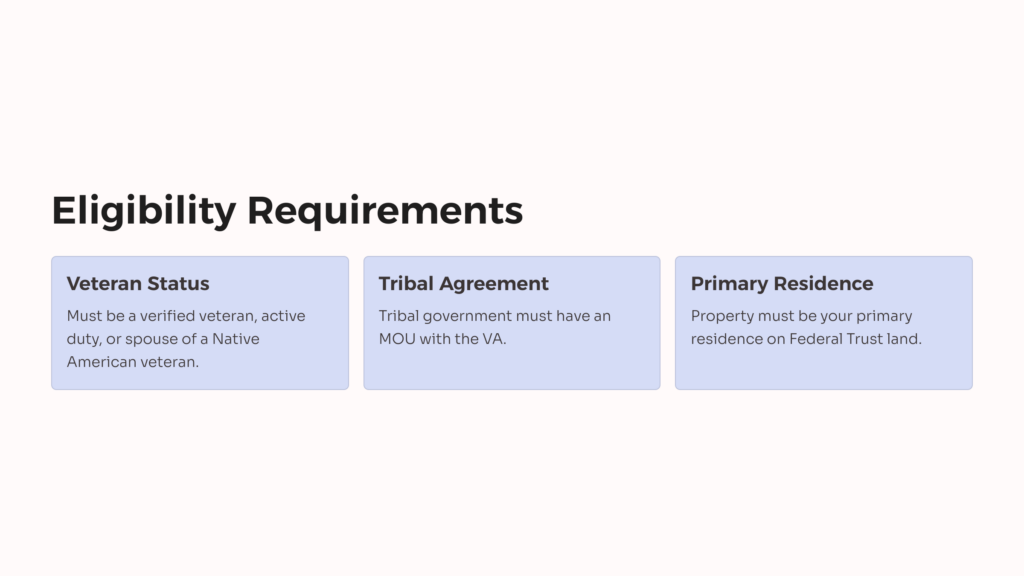
Unlocking Homeownership on Tribal Lands: A Comprehensive Review of VA Native American Direct Loan (NADL) Eligibility for Veterans
For many veterans, the dream of homeownership is a cherished aspiration, a tangible reward for their selfless service to the nation. The Department of Veterans Affairs (VA) has long been a cornerstone in making this dream a reality through its various home loan programs, renowned for their generous terms like no down payment and competitive interest rates. While the general VA Home Loan program is widely known, a specialized and equally vital program exists for a specific segment of our veteran community: the VA Native American Direct Loan (NADL) program.
This comprehensive review will delve deep into the VA NADL loan eligibility, meticulously examining its intricacies, highlighting its significant advantages, acknowledging its unique challenges, and ultimately providing a clear "recommendation for application" for those who qualify. With a target length of 1200 words, we aim to equip veterans, particularly those of Native American heritage or those married to Native Americans, with the knowledge needed to navigate this powerful path to homeownership on tribal lands.
What is the VA Native American Direct Loan (NADL) Program?
The VA Native American Direct Loan (NADL) program is a unique and invaluable initiative designed to help eligible Native American veterans, or veterans married to Native Americans, purchase, construct, improve, or refinance a home on Native American trust lands. Unlike the standard VA loan, which is administered by private lenders and guaranteed by the VA, the NADL program is directly funded and serviced by the VA itself. This direct relationship can sometimes streamline processes and offer more personalized support.
The core purpose of the NADL program is to address the specific challenges of securing conventional mortgage financing on tribal lands. Traditional lenders often face complexities regarding property ownership, collateral, and legal jurisdiction when dealing with land held in trust by the U.S. government for Native American tribes or individuals. The NADL program bypasses these hurdles by providing a direct lending solution tailored to this unique context.
Key Eligibility Criteria: Who Qualifies for an NADL?
Eligibility for the VA NADL program involves a two-tiered assessment: general VA home loan eligibility and specific NADL program requirements. Understanding both is crucial.
1. General VA Home Loan Eligibility:
Before even considering the NADL’s specific criteria, a veteran must first meet the fundamental requirements for any VA home loan benefit. These typically include:
- Service Requirements: The veteran must have served for a minimum period (which varies based on when and where they served – e.g., 90 consecutive days during wartime, 181 days during peacetime, or 6 years in the National Guard or Reserves).
- Character of Service: The veteran’s discharge must be under conditions other than dishonorable.
- Certificate of Eligibility (COE): This document, obtainable from the VA, verifies a veteran’s service history and entitlement to VA home loan benefits.
2. Specific NADL Program Eligibility:
Once general VA eligibility is established, the following specific conditions must be met for the NADL program:
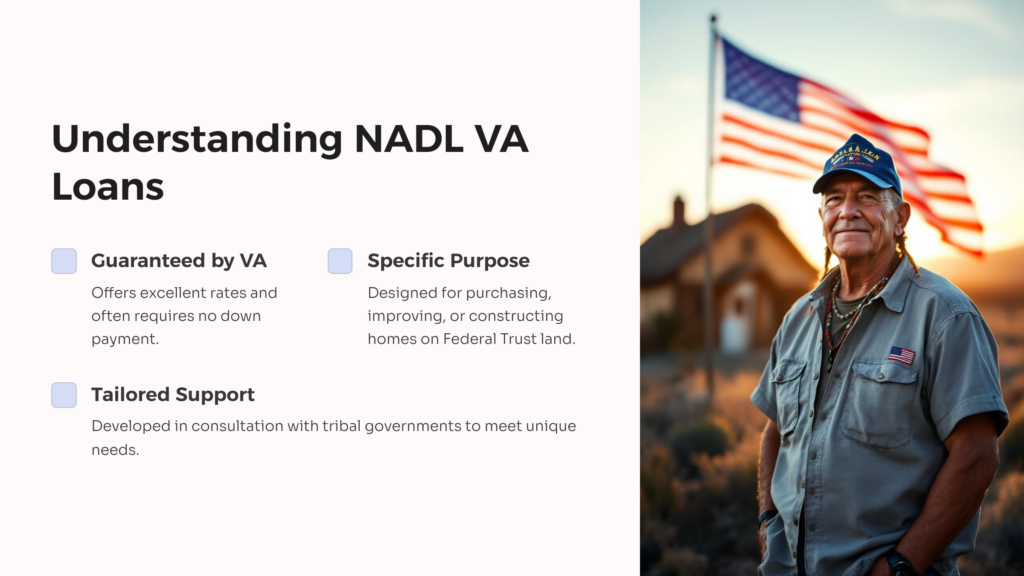
- Native American Heritage or Marital Status: The veteran must be a Native American veteran, or a non-Native American veteran whose spouse is a Native American. This is a foundational requirement, linking the applicant directly to tribal lands.
- Location on Native American Trust Land: This is perhaps the most critical and defining eligibility criterion. The home must be located on federally recognized Native American trust land. This means the land is held in trust by the U.S. government for a Native American tribe or individual Native Americans.
- Valid Interest in the Land: The veteran (or their spouse, if the spouse is Native American) must possess a valid and assignable interest in the land. This typically takes the form of a long-term lease (e.g., 50-year or longer) from the tribe or individual Native American land owner. The lease must be legally sound and acceptable to the VA as collateral. Fee simple ownership on tribal land is generally not possible, making the leasehold interest paramount.
- Tribal Resolution: The tribal organization must have an agreement or Memorandum of Understanding (MOU) with the VA, allowing for NADL program participation on their lands. Furthermore, the tribe must approve the veteran’s (or spouse’s) leasehold interest and their proposed home construction or purchase. This tribal approval process is unique to the NADL and requires direct engagement with tribal authorities.
- Creditworthiness and Income: While VA loans are known for flexibility, applicants must still demonstrate a reasonable credit history and sufficient, stable income to meet the monthly mortgage payments and other housing-related expenses. The VA will assess the veteran’s debt-to-income ratio (DTI) to ensure affordability.
- Occupancy: The veteran must intend to occupy the home as their primary residence.
The Application Process: Navigating the NADL Journey
Applying for an NADL involves several distinct steps, some of which differ significantly from a traditional VA loan:
- Obtain Your Certificate of Eligibility (COE): This is the first step for any VA loan.
- Contact the VA: Unlike other VA loans, you apply directly to the VA for an NADL. You’ll work with a dedicated VA Loan Technician.
- Engage with Tribal Authorities: This is a crucial and often lengthy step. You will need to work closely with your tribal housing authority or tribal council to secure a leasehold interest in the land and obtain tribal approval for your housing project. The tribe must also have an existing MOU with the VA.
- Application Submission: Complete the VA NADL application form, providing all necessary financial documents, income verification, and details about the proposed property.
- Appraisal and Underwriting: The VA will order an appraisal to determine the property’s value, ensuring it meets VA minimum property requirements. The VA will then underwrite the loan, assessing your credit, income, and overall financial stability.
- Closing: Once approved, the loan closes, and funds are disbursed directly by the VA.
Advantages (Pros) of the VA NADL Loan
The NADL program offers a compelling suite of benefits, particularly for its target demographic:
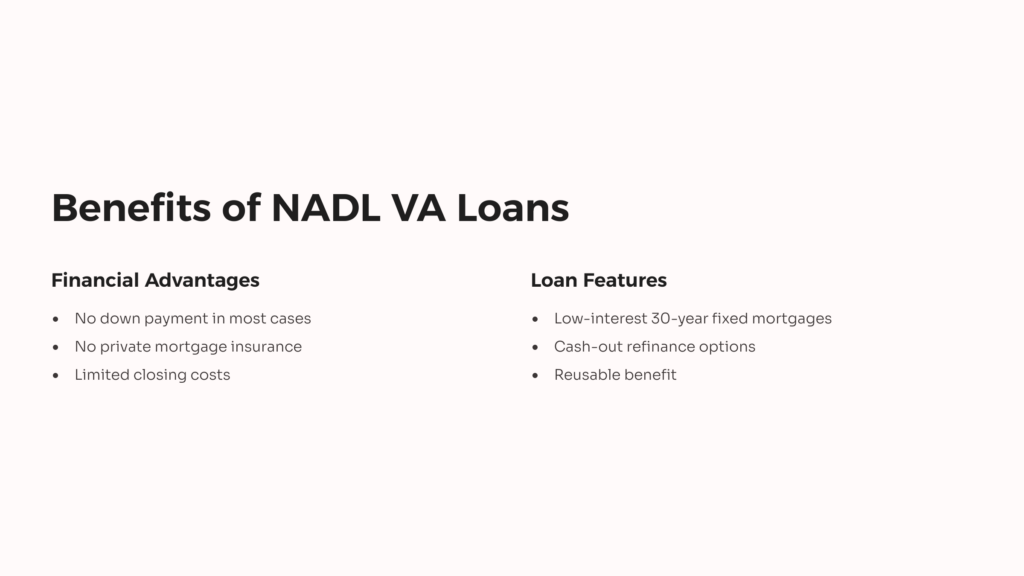
- Zero Down Payment: A cornerstone of VA loans, the NADL allows eligible veterans to purchase or build a home without requiring any money down, significantly reducing the upfront financial barrier to homeownership.
- Low Fixed Interest Rates: NADL loans typically come with highly competitive, fixed interest rates directly set by the VA. This provides financial stability, as your monthly principal and interest payments remain consistent over the life of the loan.
- No Private Mortgage Insurance (PMI): Unlike conventional loans with less than 20% down, VA loans (including NADL) do not require private mortgage insurance, saving veterans hundreds of dollars per month and reducing the overall cost of the loan.
- Flexible Credit Standards: While a good credit history is beneficial, the VA tends to be more flexible with credit scores and past financial challenges compared to conventional lenders. They look at the overall financial picture and extenuating circumstances.
- No VA Funding Fee for Disabled Veterans: Veterans receiving VA compensation for a service-connected disability are typically exempt from the VA funding fee, a one-time fee normally charged to help offset the cost of the program.
- Direct VA Support: As the lender and servicer, the VA provides direct assistance throughout the loan process. This can lead to more personalized support and guidance, especially valuable when navigating the unique aspects of tribal land ownership.
- Opportunity for Homeownership on Trust Lands: This is the program’s most significant advantage. It provides a unique and often sole pathway for Native American veterans to achieve homeownership on their ancestral or tribal lands, preserving cultural ties and fostering community development.
Disadvantages (Cons) of the VA NADL Loan
Despite its significant benefits, the NADL program also presents unique challenges and limitations:
- Strict Land Ownership Requirements: The absolute necessity for the home to be on federally recognized Native American trust land, with a valid leasehold interest, is the program’s biggest hurdle. This is a very specific condition that limits its applicability to a small percentage of all veterans.
- Limited Geographic Availability: Due to the land requirements, the NADL is only available in specific geographic areas where Native American trust lands exist and where the tribe has an agreement with the VA. This makes it a highly niche program.
- Complexity of Tribal Approval: Navigating tribal regulations, securing tribal council approval for the lease, and ensuring the tribe has an MOU with the VA can be a complex and time-consuming process. It requires strong communication and cooperation between the veteran, the VA, and tribal authorities.
- Potentially Longer Processing Times: The added layers of tribal review and direct VA processing can sometimes lead to longer processing times compared to a standard VA loan through a private lender. Patience and proactive engagement are key.
- Leasehold Interest vs. Fee Simple: While providing homeownership, it’s crucial to understand that the veteran typically holds a leasehold interest, not outright fee simple ownership of the land. While functionally similar for many aspects of homeownership, it’s a legal distinction that some veterans might find less appealing than traditional land ownership.
- Not for All Veterans: The highly specific eligibility criteria mean the NADL is not a suitable option for the vast majority of veterans who do not have ties to Native American tribal lands or do not wish to live on them.
Who is the NADL Loan For?
The VA NADL loan is ideal for:
- Native American veterans (or veterans married to Native Americans) who desire to purchase, build, or improve a home specifically on federally recognized Native American trust lands.
- Veterans who have a strong connection to their tribal community and wish to reside within it.
- Individuals who are prepared to navigate the unique legal and administrative processes involving tribal governments and the VA.
Who is the NADL Loan NOT For?
The VA NADL loan is generally not suitable for:
- Veterans who are not of Native American heritage and are not married to a Native American.
- Veterans who wish to purchase a home on non-tribal land, even if they are Native American.
- Veterans seeking a quick closing process without unique land-related complexities.
- Veterans who prefer to own the land in "fee simple" (outright ownership) rather than a leasehold interest.
Recommendation for Application: Is the VA NADL Loan Worth It?
The VA Native American Direct Loan program is not merely a financial product; it is a profound opportunity, a bridge connecting service, heritage, and homeownership. For the specific demographic it serves, the NADL program is an unequivocal and highly recommended pathway to homeownership.
If you meet the stringent eligibility criteria, particularly the Native American heritage/marital status and the desire to live on tribal trust land, the NADL program offers unmatched benefits: zero down payment, low fixed interest rates, no PMI, and direct support from the VA. These advantages are simply not replicable through conventional financing on tribal lands.
However, the "purchase recommendation" comes with a strong caveat: due diligence and patience are paramount. The complexities of tribal land tenure and the need for tribal approval mean that the application process can be more involved and potentially take longer than a standard VA loan.
Before pursuing an NADL, we strongly recommend the following:
- Verify Your Eligibility: Confirm you meet both general VA and specific NADL requirements.
- Engage with Your Tribe Early: Contact your tribal housing authority or leadership to understand their specific processes, requirements for leasehold interests, and whether they have an existing agreement with the VA for NADL participation.
- Contact the VA Directly: Reach out to the VA’s Loan Guaranty Service to speak with a NADL specialist. They can provide detailed guidance and answer specific questions related to your situation.
- Be Prepared for a Detailed Process: Understand that securing an NADL requires collaboration between you, the VA, and your tribal government.
Conclusion
The VA Native American Direct Loan program stands as a testament to the VA’s commitment to serving all veterans, recognizing the diverse needs and unique circumstances within the veteran community. It is a specialized, powerful tool that empowers Native American veterans to achieve the dream of homeownership on their ancestral lands, fostering economic stability, cultural preservation, and community growth.
While its specific requirements limit its reach, for those who qualify, the NADL is not just a loan; it’s an opportunity to build a future, a home, and a legacy within the heart of their community. For Native American veterans eyeing a future on tribal trust lands, the VA NADL program is not just recommended, it is an essential and potentially life-changing resource that deserves thorough exploration and diligent pursuit.


