
Comprehensive Guide: Native American Home Loans for U.S. Military Veterans
Introduction
To our brave U.S. Military Veterans, your service and sacrifice are deeply appreciated. As you transition back to civilian life or seek to establish roots, securing a home is often a top priority. For Native American veterans, or veterans married to Native Americans, there are unique and valuable home loan programs designed to facilitate homeownership on Native American trust lands and in tribal areas.
This guide provides a comprehensive, step-by-step tutorial to navigate these specialized loan options. We will cover the primary programs available, eligibility requirements, the application process, and crucial considerations to help you achieve your dream of homeownership.
Understanding the Landscape: Trust Land vs. Fee Simple Land
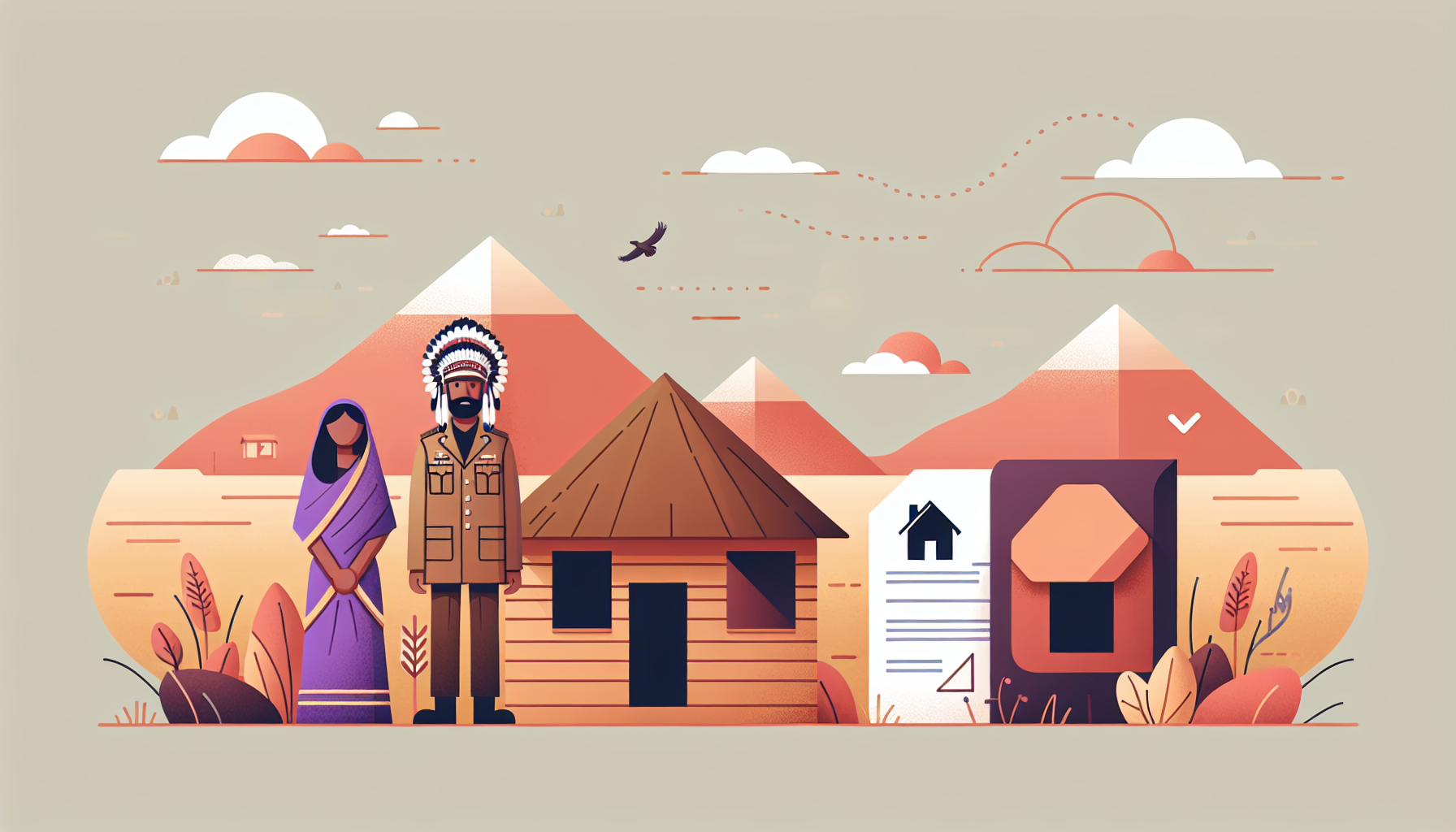
Before diving into specific loan programs, it’s essential to understand a fundamental distinction that heavily influences Native American home loans:
- Trust Land: This land is held in trust by the U.S. government for the benefit of Native American tribes or individual Native Americans. It is not owned outright by the individual in the traditional "fee simple" sense. Transactions on trust land require specific tribal and federal approvals, often involving a leasehold interest rather than a direct deed transfer. Most specialized Native American loan programs are designed for properties on trust land.
- Fee Simple Land: This is the most common form of land ownership, where the owner has full and complete rights to the property. If a home is located on fee simple land within or near a tribal area, standard VA, FHA, or conventional loans may apply, but the specific "Native American" loan programs are generally not the primary option unless a tribal member is involved with HUD Section 184.
The distinction between trust and fee simple land is paramount, as it determines which loan programs are applicable and the complexity of the transaction.
Key Loan Programs for Native American Veterans
Two primary loan programs are specifically tailored to address the unique challenges and opportunities of homeownership on Native American lands:
1. VA Native American Direct Loan (NADL) Program (Section 376 of Title 38, U.S. Code)

This is the most direct and often the most advantageous program for eligible Native American veterans.
- Purpose: To help Native American veterans (or their non-Native American spouses) purchase, construct, improve, or refinance a home on Native American trust land.
- Key Features:
- Direct Lender: The Department of Veterans Affairs (VA) is the direct lender for NADL, not a private bank.
- No Down Payment: Typically requires no down payment.
- No Private Mortgage Insurance (PMI): Similar to other VA loans, NADL does not require PMI.
- Low Interest Rates: Competitive interest rates set by the VA.
- Limited Closing Costs: Generally lower closing costs compared to conventional loans.
- Reusable Benefit: Can be used multiple times, provided the veteran has entitlement remaining.
- Eligibility Highlights:
- Must be a Native American veteran or a non-Native American veteran married to a Native American.
- Must meet standard VA loan eligibility requirements (service time, character of discharge).
- The home must be on Native American trust land.
- The tribal organization must have a Memorandum of Understanding (MOU) with the VA, agreeing to allow the NADL program to operate on their lands.
- Must be a satisfactory credit risk.
2. HUD Section 184 Indian Home Loan Guarantee Program
While not exclusively for veterans, this program is highly beneficial for Native American veterans who are members of federally recognized tribes.
- Purpose: To provide mortgage financing opportunities for Native American and Alaska Native families, individuals, and tribal governments. It can be used for purchasing, constructing, or rehabilitating homes, as well as refinancing, on both trust land and fee simple land within eligible areas.
- Key Features:
- Guaranteed by HUD: The U.S. Department of Housing and Urban Development (HUD) guarantees loans made by approved private lenders. This guarantee encourages lenders to offer loans in tribal areas.
- Lower Down Payment: Typically requires a low down payment (e.g., 2.25% for loans over $50,000, 1.25% for loans up to $50,000).
- Flexible Underwriting: Underwriting guidelines are designed to be flexible and culturally sensitive, considering tribal income sources and unique credit histories.
- Competitive Interest Rates: Interest rates are typically fixed and competitive.
- Single Mortgage Insurance Premium: A one-time upfront premium (currently 1%) and an annual premium (0.35%) are charged, but these are generally lower than FHA.
- Eligibility Highlights:
- Borrower must be an enrolled member of a federally recognized tribe.
- Must meet standard credit and income requirements set by the lender and HUD.
- The property must be located in an eligible area (typically within tribal jurisdiction or approved Native American areas).
3. Other Potential Options (on Fee Simple Land)
- Standard VA Home Loan: If the property is on fee simple land and the veteran meets VA eligibility, a standard VA home loan is an excellent option, offering no down payment and no PMI.
- USDA Rural Development Loan (Section 502): For properties in eligible rural areas (which can include some tribal areas if on fee simple land), USDA offers 100% financing to low- and moderate-income individuals.
- FHA Loan: If the property is on fee simple land, an FHA loan (insured by HUD) offers low down payment options and flexible credit requirements.
Step-by-Step Guide to Securing Your Native American Home Loan
This process combines elements applicable to both NADL and HUD Section 184, with specific nuances highlighted.
Step 1: Determine Your Veteran Eligibility & Obtain Your Certificate of Eligibility (COE)
- For ALL Veterans: Your first step is to confirm your eligibility for VA benefits. You typically need to have served a minimum period of active duty, or in the Guard/Reserves, or have a service-connected disability.
- Obtain Your COE: The Certificate of Eligibility (COE) is required for NADL and demonstrates your basic VA home loan entitlement. You can obtain it online through the VA’s eBenefits portal, by mail, or through your chosen lender.
Step 2: Understand the Land Status of Your Desired Property
- Crucial Distinction: Determine if the land where you wish to buy or build is trust land or fee simple land. This will guide your loan program choice.
- How to find out: Contact the tribal housing authority, the Bureau of Indian Affairs (BIA) land office, or a local real estate professional experienced in tribal land transactions.
Step 3: Identify the Right Loan Program for You
Based on your eligibility and the land status:
- If on Trust Land and you are a Native American veteran (or spouse): The VA Native American Direct Loan (NADL) is likely your best option.
- If on Trust or Fee Simple Land within a tribal area and you are an enrolled tribal member (veteran or not): The HUD Section 184 Loan is highly suitable.
- If on Fee Simple Land only, and you meet general VA eligibility: A Standard VA Home Loan is available.
- If on Fee Simple Land in a rural area: Consider a USDA Rural Development Loan.
Step 4: Find an Experienced Lender (if applicable)
- For NADL: The VA is the direct lender. You will work directly with a VA Loan Technician specializing in NADL. Contact your VA Regional Loan Center.
- For HUD Section 184: You will need to find a private lender approved by HUD to offer Section 184 loans. It is highly recommended to choose a lender with extensive experience in Section 184 and tribal land transactions.
- For other programs: Standard lenders for VA, FHA, or USDA loans.
Step 5: Secure Tribal Approval and Leasehold Agreement (for Trust Land)
This is a critical step unique to trust land transactions, particularly for NADL and Section 184.
- Tribal Housing Authority: You will work closely with the tribal housing authority or tribal government.
- Ground Lease: For trust land, you won’t own the land outright. Instead, you’ll enter into a ground lease with the tribe, allowing you to occupy and build on the land for a specific period (e.g., 50 years). The loan will be secured by this leasehold interest.
- Tribal Consent: The tribe must consent to the mortgage and the ground lease. This often involves specific tribal resolutions and agreements.
Step 6: Get Pre-Approved
- Once you’ve identified your program and lender, get pre-approved. This involves a preliminary review of your credit, income, and assets. Pre-approval gives you a clear budget and makes your offers more attractive to sellers.
Step 7: Find a Home/Property
- Work with a real estate agent who understands the nuances of tribal land and the specific loan programs. Ensure the property meets program requirements (e.g., located on eligible trust land for NADL).
Step 8: Complete the Loan Application & Underwriting
This is where the detailed work begins:
- Full Application: Submit a complete loan application with all required documentation (COE, income verification, bank statements, tax returns, tribal enrollment documents, DD-214, etc.).
- Property Appraisal: An appraisal will be conducted to determine the home’s value. Appraisals on trust land can be more complex due to fewer comparable sales, but experienced appraisers know how to handle this.
- Inspections: The home will undergo inspections to ensure it meets health, safety, and structural soundness standards.
- Underwriting Review: The lender (or VA for NADL) will thoroughly review all documentation, your credit history, and the property details to ensure all program guidelines are met. This includes reviewing the ground lease and tribal agreements.
Step 9: Loan Approval and Closing
- Loan Approval: Once underwriting is complete and all conditions are met, your loan will be approved.
- Closing: You will sign all final loan documents, including the promissory note, mortgage (or deed of trust), and the ground lease (if applicable). Funds are disbursed, and you officially become the homeowner.
Step 10: Post-Closing & Loan Servicing
- Your loan will be serviced by the VA (for NADL) or by the private lender (for Section 184). Make sure you understand your repayment terms and contact information for your servicer.
Key Considerations and Potential Challenges
- Land Ownership Complexity: The distinction between trust and fee simple land is the biggest hurdle. Ensure you understand the implications of a leasehold interest versus outright ownership.
- Lender Experience: Not all lenders are familiar with NADL or Section 184, or with tribal land transactions. Seek out those with proven expertise.
- Tribal Government Involvement: The tribal government’s role is significant. Be prepared for additional layers of approval and communication with tribal authorities.
- Appraisal Challenges: Finding comparable properties on trust land can be difficult, potentially extending the appraisal process.
- Infrastructure: Some homes on trust land may have unique challenges regarding utilities, access roads, or property boundaries.
- Patience is Key: Due to the multiple layers of approval (VA/HUD, tribal, lender), the process can sometimes take longer than a conventional loan.
Tips for a Successful Application
- Start Early: Begin gathering documents and researching options well in advance.
- Organize Your Documents: Have your COE, DD-214, tribal enrollment card, income statements, and credit history readily accessible.
- Communicate with Your Tribe: Establish a good relationship with your tribal housing authority and understand their specific processes and requirements.
- Work with Experienced Professionals: Partner with lenders, real estate agents, and appraisers who have a deep understanding of Native American home loan programs and tribal land.
- Understand Your Credit: Review your credit report, address any discrepancies, and ensure you have a solid credit history.
- Be Patient and Persistent: The process can be complex, but with diligence, it is highly achievable.
- Utilize Veteran Resources: Leverage the expertise of Veteran Service Organizations (VSOs) for guidance and support.
Valuable Resources
- U.S. Department of Veterans Affairs (VA): For NADL program details and to obtain your COE.
- Website: www.va.gov
- Specific NADL info: Search "VA Native American Direct Loan"
- U.S. Department of Housing and Urban Development (HUD): For Section 184 program details and a list of approved lenders.
- Website: www.hud.gov
- Specific Section 184 info: Search "HUD Section 184 Indian Home Loan Guarantee Program"
- Tribal Housing Authorities: Your local tribal housing authority is an invaluable resource for land status, tribal requirements, and local programs.
- Bureau of Indian Affairs (BIA): Provides information on trust land management.
- Veteran Service Organizations (VSOs): Organizations like the American Legion, VFW, Disabled American Veterans (DAV) can offer assistance and advocacy.
Conclusion
Securing a home on Native American lands as a U.S. Military Veteran is a unique and rewarding opportunity. While the process involves specific considerations related to land ownership and tribal governance, the VA Native American Direct Loan and the HUD Section 184 program offer powerful pathways to homeownership with favorable terms. By understanding the distinct program requirements, preparing diligently, and partnering with experienced professionals, you can successfully navigate this journey and establish a lasting home for yourself and your family. Thank you for your service, and we wish you the best in your homeownership endeavor.


