Unlocking Homeownership: A Comprehensive Review of Native American Home Loans in Nevada
The dream of homeownership is a cornerstone of the American experience, representing stability, wealth building, and a place to call one’s own. For Native Americans in Nevada, this dream, while deeply personal, often navigates a unique and complex landscape shaped by history, sovereignty, and specific financial realities. Fortunately, specialized loan programs exist that are designed to bridge these gaps, offering tailored pathways to homeownership for tribal members.
This comprehensive review will delve into the various Native American home loan options available in Nevada, examining their features, benefits, and potential drawbacks. We will primarily focus on the flagship HUD Section 184 Indian Home Loan Guarantee Program, while also touching upon other relevant avenues, to provide a holistic understanding and ultimately, a clear recommendation for prospective homebuyers.
The Unique Landscape: Why Specialized Loans?
Before diving into the "products," it’s crucial to understand the context. Native American communities, particularly those residing on tribal trust lands, face distinct challenges that traditional mortgage products often fail to address.

- Trust Land Ownership: A significant portion of Native American land is held in trust by the U.S. government for the benefit of individual tribes or tribal members. This means the land cannot be directly owned by individuals in "fee simple" (the most common form of private ownership), which creates complexities for lenders who typically require a clear title as collateral.
- Remote Locations: Many tribal lands are located in rural or remote areas, which can limit access to conventional lenders, appraisers, and necessary infrastructure.
- Economic Disparities: Historical and ongoing economic disparities can result in lower average incomes, limited credit histories, or challenges in accumulating down payments for some tribal members.
- Cultural Considerations: The process of homeownership can intersect with tribal laws, customs, and community structures, requiring a nuanced approach.
Nevada is home to numerous federally recognized tribes, including various bands of the Paiute, Shoshone, and Washoe nations. These tribes possess distinct lands and unique needs, making the availability of flexible and culturally sensitive loan products even more critical.
The Flagship Product: HUD Section 184 Indian Home Loan Guarantee Program
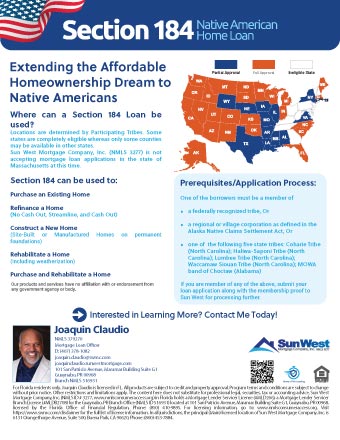
What it is: The Section 184 program is arguably the most significant and effective home loan product specifically designed for Native Americans and Alaska Natives. Administered by the U.S. Department of Housing and Urban Development (HUD), it guarantees loans made by private lenders to eligible Native American borrowers. This guarantee reduces the risk for lenders, encouraging them to offer loans with more favorable terms to a demographic they might otherwise overlook.

How it Works: Instead of HUD directly lending money, it promises to reimburse approved lenders for a significant portion of any losses incurred if a Section 184 borrower defaults. This guarantee allows lenders to be more flexible with their underwriting criteria, making homeownership accessible to more tribal members.
Eligibility for Borrowers:
- Must be an enrolled member of a federally recognized tribe.
- The property must be located within an eligible area (which includes most tribal lands and many off-reservation areas where Native Americans reside).
- Meet standard credit and income requirements, though these are often more flexible than conventional loans.
Key Features & Benefits (Pros of Section 184):
- Trust Land Eligibility: This is the program’s defining advantage. Section 184 is specifically designed to work with the unique legal framework of trust land. It allows for leasehold mortgages on tribal trust or allotted lands, where the borrower enters into a lease agreement with the tribe for the land, while the house itself serves as collateral. This opens up homeownership opportunities previously unavailable.
- Low Down Payment: Borrowers typically need a down payment as low as 2.25% for loans over $50,000, and just 1.25% for loans $50,000 or less. This significantly reduces the upfront cost barrier.
- Flexible Underwriting: Section 184 considers a broader range of credit histories and income sources than conventional loans. Lenders are encouraged to look at non-traditional credit references (e.g., utility payments, rent history) and can be more understanding of past financial challenges.
- Competitive Fixed Interest Rates: Loans are typically offered with attractive fixed interest rates, providing stability and predictable monthly payments for the life of the loan.
- No Mortgage Insurance (MI) for the Life of the Loan: Unlike FHA loans, which require mortgage insurance for the entire loan term, Section 184 charges an upfront guarantee fee (currently 1.5% of the loan amount, which can be financed into the loan) and an annual loan guarantee fee (currently 0.25%). While there are fees, the lack of ongoing monthly MI often results in lower overall costs compared to FHA.
- Versatile Use: Section 184 loans can be used for:
- Purchasing an existing home.
- Constructing a new home.
- Rehabilitating an existing home.
- Refinancing an existing mortgage (including rate/term and cash-out options).
- Purchasing and rehabilitating a home simultaneously.
- Property Types: Covers single-family homes, HUD-approved condos, and manufactured homes (permanently affixed to a foundation).
- Assumption Feature: Loans can be assumed by another eligible Native American borrower, which can be an attractive feature in a future sale.
Potential Drawbacks & Challenges (Cons of Section 184):
- Limited Lender Availability: While growing, not all mortgage lenders offer Section 184 loans. Borrowers in Nevada may need to search for a HUD-approved Section 184 lender, which might not be local.
- Lengthier Processing Time: The involvement of HUD and the need for tribal approval (especially on trust lands) can sometimes lead to a longer loan processing time compared to conventional loans.
- Tribal Approval Required (on Trust Lands): For properties on trust land, the tribal government must approve the leasehold agreement, which can add an additional layer of administrative process.
- Property Condition Standards: Homes financed with Section 184 must meet HUD’s Minimum Property Standards, which might require repairs on older homes.
- Appraisal Complexities on Trust Land: Appraising homes on trust land can be challenging due to a lack of comparable sales data, potentially leading to lower valuations or delays.
- Guaranteed Fees: While competitive, the upfront and annual guarantee fees are an added cost, though often outweighed by the benefits.
- Educational Requirement: Some lenders or tribal housing authorities may require borrowers to complete homebuyer education courses.
Other Relevant Home Loan Avenues for Native Americans in Nevada
While Section 184 is the star, other programs can also be viable depending on the individual’s circumstances:
1. VA Loans (Veterans Affairs)
- Pros: If an eligible Native American borrower is also a military veteran, a VA loan is an incredibly powerful option. It offers 0% down payment, no mortgage insurance, and competitive interest rates. The VA Native American Direct Loan (NADL) program specifically helps Native American veterans purchase, construct, or improve homes on trust lands.
- Cons: Only available to eligible veterans. The NADL program has specific requirements and limited availability.
2. FHA Loans (Federal Housing Administration)
- Pros: FHA loans are government-insured loans that offer low down payments (as low as 3.5%), flexible credit requirements, and competitive interest rates. They are widely available through most lenders.
- Cons: Requires both an upfront mortgage insurance premium (UFMIP) and ongoing monthly mortgage insurance (MIP) for the life of the loan (or a significant portion of it), which adds to the overall cost. Not specifically designed for trust land issues, though they can be used for fee simple properties.
3. USDA Rural Development Loans (Section 502 Direct & Guaranteed)
- Pros: These loans are designed for low-to-moderate-income individuals in eligible rural areas, some of which include tribal lands. The Section 502 Direct Loan offers 0% down payment for very low and low-income borrowers, while the Guaranteed Loan offers 0% down for moderate-income borrowers. They have flexible credit requirements.
- Cons: Strict income limits and geographic restrictions (only available in designated rural areas). Property must meet specific standards.
4. Conventional Loans
- Pros: Offered by private lenders, conventional loans often have a wider range of terms and are suitable for borrowers with strong credit and a substantial down payment (typically 5% or more).
- Cons: Generally have stricter credit requirements and higher down payment expectations. Not well-suited for properties on tribal trust lands unless specific tribal-lender partnerships exist. Mortgage insurance is required for down payments less than 20%.
5. Tribal Housing Programs & Down Payment Assistance
- Pros: Many tribes in Nevada operate their own housing authorities or have partnerships that offer direct financial assistance, grants, or counseling services to their members. These can often be layered with federal loan programs like Section 184 to further reduce costs.
- Cons: Varies greatly by tribe; availability and eligibility depend on specific tribal resources and policies.
Native American Home Loans in Nevada: An Overall Review
Let’s consolidate the "product review" aspects into a broader look at the overall landscape in Nevada.
Overall Strengths (Pros) of Pursuing Native American Home Loans in Nevada:
- Tailored Solutions for Trust Land: The existence of Section 184 is paramount for homeownership on tribal trust lands, a critical need in Nevada. It directly addresses the legal complexities that deter conventional lenders.
- Increased Accessibility: Programs like Section 184, FHA, and USDA lower the barriers to entry for many Native American families by reducing down payment requirements and offering flexible underwriting.
- Financial Empowerment & Wealth Building: Homeownership is a primary driver of intergenerational wealth. These programs provide a vital pathway for Native Americans in Nevada to build equity and secure their financial future.
- Community Development: By enabling more tribal members to own homes, these programs contribute to stronger, more stable tribal communities, fostering local economic growth.
- Cultural Sensitivity: These programs, particularly Section 184, are designed with an understanding of tribal sovereignty and cultural contexts, making the process more respectful and relevant.
- Support Systems: Many tribal housing authorities and Native American non-profits in Nevada offer counseling and assistance, guiding borrowers through the complex process.
Overall Weaknesses (Cons) of Pursuing Native American Home Loans in Nevada:
- Awareness & Education: Despite their benefits, many eligible borrowers and even some financial professionals are unaware of these specialized programs or misunderstand their nuances.
- Lender Network: While improving, the network of lenders proficient in Section 184 loans can still be limited in some parts of Nevada, potentially requiring borrowers to work with out-of-state lenders.
- Administrative Hurdles: The processes involving tribal governments (for trust land) and HUD can add layers of paperwork and review, potentially extending closing times.
- Appraisal Challenges: Especially on trust land, unique property characteristics and a lack of comparable sales can complicate appraisals, potentially impacting loan amounts or timelines.
- Perceived Stigma (Unwarranted): Occasionally, there can be an unfounded perception among some in the general public or less informed lenders that these loans are "riskier," which is not supported by the program’s success rates.
- Program Specifics Can Be Confusing: Navigating the different requirements, fees, and eligibility criteria across various programs (184, VA NADL, FHA, USDA) can be overwhelming without proper guidance.
Recommendation for Native American Home Loans in Nevada
Strong Recommendation: YES, absolutely pursue these programs!
For Native Americans in Nevada seeking homeownership, these specialized loan programs, especially the HUD Section 184 Indian Home Loan Guarantee Program, represent an invaluable and highly recommended pathway. They are specifically designed to overcome the unique historical, legal, and economic barriers that have traditionally made homeownership challenging for tribal members.
Who Should Use It:
- Any enrolled member of a federally recognized tribe in Nevada looking to purchase, build, or refinance a home.
- Individuals interested in owning a home on tribal trust lands.
- Borrowers who might not qualify for conventional loans due to lower down payment availability or less-than-perfect credit history.
- Veterans who are also tribal members should explore the VA Native American Direct Loan (NADL) in conjunction with Section 184 possibilities.
Why the Strong Recommendation:
The Section 184 program stands out because it directly addresses the most significant hurdle: land tenure on tribal lands. Its low down payment, flexible underwriting, and competitive fixed rates make it incredibly accessible and affordable. The ability to finance the guarantee fee also reduces upfront costs. While there are administrative steps, the long-term benefits of stable homeownership far outweigh these complexities.
Actionable Steps for Prospective Homebuyers in Nevada:
- Educate Yourself: Understand the specific requirements of Section 184 and other programs. HUD and tribal housing authorities are excellent resources.
- Verify Tribal Enrollment: Ensure you have documentation of your enrollment in a federally recognized tribe.
- Find an Approved Lender: Seek out lenders in Nevada or nationwide who are specifically approved to originate Section 184 loans and have experience working with tribal communities. Ask about their experience with trust land mortgages if applicable.
- Contact Your Tribal Housing Authority: Your tribe’s housing department or authority can provide invaluable guidance, support, and potentially direct assistance or partnerships with lenders.
- Get Your Finances in Order: While flexible, strong credit and a stable income will always make the process smoother. Work on improving your credit score and reducing debt.
- Consider Homebuyer Education: Many programs recommend or require homebuyer education, which can equip you with the knowledge needed for successful homeownership.
In conclusion, the specialized Native American home loan programs available in Nevada are not just financial products; they are instruments of empowerment, sovereignty, and community building. By leveraging programs like the HUD Section 184, Native Americans in Nevada can confidently step onto the path of homeownership, securing a brighter future for themselves and their families on their ancestral lands and beyond. The dream is within reach – take the first step today.


