
Navigating the Seasons of Homeownership: A Review of Native American Home Loans for Seasonal Workers
The dream of homeownership is a universal aspiration, a cornerstone of stability and a legacy to pass down. Yet, for many individuals working seasonal jobs, this dream can feel perpetually out of reach. The fluctuating income streams, the periods of high earnings followed by leaner months, often clash with the rigid income verification requirements of conventional mortgage lenders. This challenge is acutely felt within Native American communities, where seasonal work—from agriculture and fishing to tourism and cultural events—forms a significant part of the economic landscape.
Fortunately, specialized programs exist to address the unique needs of Native Americans seeking to own a home. Among these, the Section 184 Indian Home Loan Guarantee Program, backed by the U.S. Department of Housing and Urban Development (HUD), stands out as a critical resource. This article will review the Section 184 program as a "product" specifically for Native Americans engaged in seasonal employment, exploring its advantages, disadvantages, and offering a comprehensive recommendation for those navigating the path to homeownership.
Understanding the Landscape: Seasonal Income and Lending
Before diving into the specifics of Section 184, it’s crucial to understand why seasonal employment poses such a hurdle for traditional mortgage applicants. Lenders typically look for a consistent, verifiable income history, often requiring two years of steady employment and predictable earnings to calculate debt-to-income (DTI) ratios and assess repayment capacity.

For someone whose income peaks during a specific season and then tapers off, providing this "steady" income proof is difficult. Even if their annual income is substantial, the monthly fluctuations can be a red flag for conventional lenders who prefer the predictability of a salaried employee. This often leads to frustration, rejection, or the need for a co-signer, delaying or derailing homeownership plans.
The Section 184 program, however, was designed with a deeper understanding of the diverse economic realities within Native American and Alaska Native communities, making it potentially more adaptable to non-traditional income structures, including seasonal work.
The Product: HUD’s Section 184 Indian Home Loan Guarantee Program
The Section 184 program is not a direct loan from HUD, but rather a loan guarantee. This means HUD insures loans made by private lenders to eligible Native American and Alaska Native individuals, families, and tribal governments. This guarantee protects lenders from loss in case of borrower default, encouraging them to lend in areas and to populations they might otherwise deem too risky.
Key Features of Section 184:
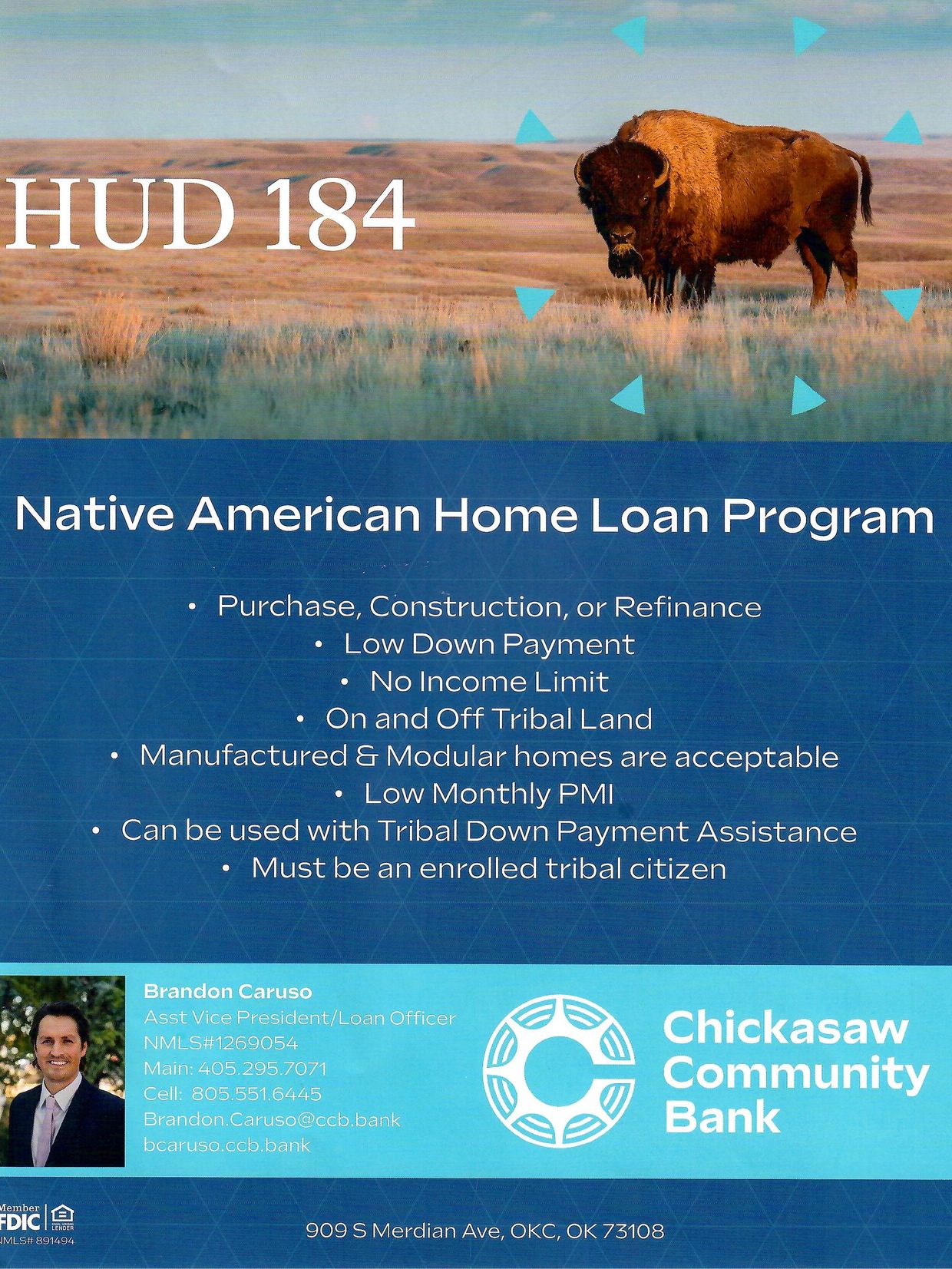
- Eligibility: Must be an enrolled member of a federally recognized tribe or an Alaska Native.
- Property Location: Loans can be used for homes on or off tribal trust land, in fee simple areas, and even for construction on tribal lands.
- Loan Uses: Purchase, refinance, rehabilitation, and new construction.
- Low Down Payment: Typically as low as 2.25% for loans over $50,000, and 1.25% for loans up to $50,000.
- No Monthly Mortgage Insurance (PMI): Instead, there’s a one-time upfront guarantee fee (1.5%) which can be financed into the loan, significantly reducing monthly costs.
- Flexible Underwriting: Designed to be more accommodating to diverse financial situations.
- Competitive Interest Rates: Often comparable to FHA loans.
- Streamlined Process: The program is administered by HUD’s Office of Native American Programs (ONAP), which understands the unique aspects of tribal land and governance.
Advantages for Seasonal Workers
For Native Americans working seasonal jobs, the Section 184 program offers several compelling advantages that make it a uniquely suitable "product" for their homeownership journey:
-
Flexible Underwriting Standards: This is arguably the most significant benefit. Unlike conventional loans that demand rigid proof of consistent monthly income, Section 184 lenders are often more experienced in evaluating non-traditional income streams. They are typically willing to look at a two-year average of earnings, even if those earnings fluctuate seasonally. This means a borrower can demonstrate their overall earning capacity rather than being penalized for periods of lower income. Lenders may also accept letters from employers detailing future work prospects, which is crucial for seasonal roles.
-
Lower Down Payment Requirements: Seasonal work often means that saving a substantial down payment can be challenging. The low down payment options (as little as 1.25% or 2.25%) of Section 184 significantly reduce the upfront financial burden, making homeownership more accessible for those who might struggle to accumulate the 5-20% required by conventional loans.
-
No Monthly Private Mortgage Insurance (PMI): The absence of monthly PMI payments is a substantial financial relief. For a conventional loan with less than 20% down, PMI can add hundreds of dollars to a monthly mortgage payment. For seasonal workers, every dollar saved on fixed monthly expenses is critical, especially during off-peak earning seasons. The one-time upfront guarantee fee, often financed into the loan, is a much more manageable cost structure.
-
Competitive Interest Rates: While not always the absolute lowest, Section 184 rates are very competitive and often more favorable than what a seasonal worker might secure through conventional channels given their income volatility. Lower interest rates translate directly to lower monthly payments, improving affordability and reducing the strain during periods of reduced income.
-
Understanding of Tribal Economies: Lenders approved for Section 184 are often more familiar with the economic realities and employment patterns within Native American communities. This inherent understanding fosters a more empathetic and flexible approach to income verification, recognizing that seasonal work is a legitimate and often essential part of these economies.
-
Support for Construction on Trust Lands: Many Native American communities desire to build homes on their ancestral lands. Section 184 facilitates this, including construction loans on trust land, which can be a complex undertaking for conventional lenders. This unique feature allows seasonal workers to build a home tailored to their needs and cultural preferences in their own community.
-
Educational Resources and Support: HUD ONAP and its partners often provide educational resources and counseling services tailored to Native American borrowers. This support can be invaluable for seasonal workers who need guidance on documenting income, budgeting, and navigating the home-buying process.
Disadvantages and Challenges for Seasonal Workers
Despite its significant advantages, the Section 184 program is not without its challenges, especially for those with seasonal income. Awareness of these potential hurdles is crucial for successful homeownership.
-
Income Verification Complexity Remains: While more flexible, verifying seasonal income still requires diligence. Borrowers will need meticulous records of their earnings over at least a two-year period, including W-2s, 1099s, tax returns, and potentially letters from employers confirming employment history and future prospects. Any gaps or inconsistencies, even if explainable, can still prolong the approval process or raise questions.
-
Limited Lender Pool: Not all mortgage lenders offer Section 184 loans. This means borrowers may have fewer options compared to conventional loans, potentially limiting their ability to shop around for the absolute best rates or customer service. Finding a lender experienced with seasonal income within the Section 184 framework is even more critical.
-
Appraisal Challenges on Tribal Lands: While Section 184 supports loans on tribal trust land, appraisals can sometimes be complex. The unique nature of tribal land ownership, lack of comparable sales, and varying tribal laws can make it difficult for appraisers to determine market value, potentially delaying the process.
-
Tribal Approvals and Lease Agreements: For homes on tribal trust land, additional steps involving tribal housing departments, tribal councils, and leasehold agreements are often required. These processes can add layers of bureaucracy and time to the overall loan application, which can be frustrating if not anticipated.
-
Still Requires Consistent Annual Income: While monthly fluctuations are tolerated, borrowers must still demonstrate sufficient annual income to comfortably afford the mortgage payments, property taxes, and insurance, especially when averaged over two years. If periods of unemployment are too long or too frequent, even Section 184 lenders may find it difficult to approve the loan.
-
Market Fluctuations and Job Security: Seasonal jobs are often tied to specific industries (e.g., tourism, agriculture) that can be vulnerable to economic downturns, weather patterns, or other external factors. While not a direct program flaw, the inherent instability of some seasonal work can add an element of risk to long-term mortgage repayment, regardless of the loan type.
-
Awareness and Education: Both among potential borrowers and even some lenders, there can be a lack of comprehensive understanding of how Section 184 specifically addresses seasonal income. Borrowers may need to actively seek out knowledgeable lenders and advocate for their income structure.
Strategies for Seasonal Workers: Maximizing Your Chances
To overcome the challenges and fully leverage the benefits of Section 184, seasonal workers should consider the following strategies:
- Document Everything: Maintain meticulous records of all income for at least the past two years. This includes pay stubs, W-2s, 1099s, bank statements, and tax returns. If self-employed seasonally, detailed profit and loss statements are essential.
- Obtain Employer Letters: Request letters from your employers detailing your work history, average earnings, and the likelihood of continued seasonal employment. These letters can provide crucial context to lenders.
- Build Savings and Reserves: Even with low down payment options, having a financial cushion (reserves) in your bank account is critical. This demonstrates financial responsibility and provides security during leaner months, reassuring lenders of your ability to manage the mortgage.
- Improve Your Credit Score: A strong credit score always helps. Pay bills on time, reduce debt, and monitor your credit report for errors.
- Work with Specialized Lenders and Housing Counselors: Seek out lenders who have extensive experience with Section 184 loans and, ideally, with seasonal income. Consider contacting HUD-approved housing counseling agencies specializing in Native American programs for guidance.
- Understand Tribal Processes: If planning to build or buy on tribal land, engage early with your tribal housing authority or relevant departments to understand their specific requirements and timelines.
- Create a Realistic Budget: Plan for the entire year, factoring in periods of lower income. Demonstrate to yourself and your lender that you have a viable plan to meet your mortgage obligations during all seasons.
Alternative Considerations
While Section 184 is often the best fit, seasonal workers might also explore:
- USDA Rural Development Loans: For properties in eligible rural areas, these offer 0% down payment and flexible underwriting, but have income limits and may not explicitly cater to tribal land nuances.
- VA Loans: If eligible through military service, VA loans offer 0% down and flexible credit, but are not exclusive to Native Americans.
- Tribal Housing Programs: Many tribes have their own housing programs, grants, or rental assistance that could complement a Section 184 loan or offer alternative paths.
- Conventional Loans with Co-Signer: As a last resort, if income challenges persist, a creditworthy co-signer might make a conventional loan feasible, but this comes with shared responsibility.
Recommendation: A Strong "Buy" with Preparation
For Native American individuals working seasonal jobs, the HUD Section 184 Indian Home Loan Guarantee Program is a strong "buy" recommendation, but with the crucial caveat that thorough preparation and diligent documentation are essential.
This program is not a magic bullet that makes seasonal income challenges disappear, but it is undoubtedly the most understanding and accommodating "product" available for this specific demographic. Its flexible underwriting, lower upfront costs, and intrinsic understanding of tribal economic realities position it far ahead of conventional mortgage options.
Why it’s a "Buy":
- It acknowledges and attempts to mitigate the core problem of fluctuating income.
- It significantly reduces the financial barriers to entry (low down payment, no PMI).
- It supports homeownership on ancestral lands, which is culturally significant.
- It’s backed by a federal guarantee, providing stability and competitive rates.
The "Preparation" Factor:
Success hinges on the borrower’s proactive approach. Seasonal workers must become meticulous record-keepers, proactive communicators with employers, and dedicated budgeters. Finding a lender well-versed in both Section 184 and seasonal income verification is paramount. This isn’t a passive application process; it requires an active partnership between the borrower and a knowledgeable lender.
In conclusion, the dream of homeownership for Native Americans in seasonal employment is not just attainable, but significantly more accessible through the Section 184 program. By understanding its unique advantages, preparing for its specific challenges, and leveraging available resources, seasonal workers can navigate the seasons of their work life and ultimately build a stable home for themselves and their families. It’s a testament to a program designed to bridge gaps and build futures, one home at a time.


