
Navigating the Alaskan Dream: A Review of Native American Home Loans in the Last Frontier
The dream of homeownership, a cornerstone of financial stability and generational wealth, often faces unique challenges in the vast and rugged landscape of Alaska. For Alaska Natives, who comprise a significant portion of the state’s population and cultural fabric, these challenges are often compounded by historical injustices, unique land tenure systems, and the sheer remoteness of many communities. Fortunately, a suite of specialized financial products, broadly categorized as Native American Home Loans, has emerged to address these specific needs.
This article provides an in-depth review of these crucial loan programs in the Alaskan context, dissecting their advantages and disadvantages, and offering a comprehensive recommendation for prospective homebuyers. Our aim is to shed light on how these tools can unlock the door to homeownership for many Alaska Natives, while also acknowledging the hurdles that still need to be overcome.
The Alaskan Context: A Unique Landscape for Homeownership
Before delving into the specifics of the loan programs, it’s vital to understand the unique environment in which they operate. Alaska is not just another state; it’s a frontier with distinct characteristics that profoundly impact housing:

- Vast Geography and Remoteness: Many Alaska Native communities are off the road system, accessible only by plane or boat. This dramatically increases the cost of materials, labor, and transportation for construction and repairs.
- High Cost of Living: Alaska consistently ranks among the most expensive states, with housing costs often reflecting this, particularly in urban hubs and even more so in remote villages.
- Unique Land Tenure Systems: Unlike the Lower 48, Alaska’s land ownership is complex due to the Alaska Native Claims Settlement Act (ANCSA) of 1971. This act established 12 regional and over 200 village corporations, which received land and money. As a result, land can be:
- ANCSA Corporation Land: Owned by Native corporations, often leased for residential use.
- Restricted Allotments: Lands allotted to individual Alaska Natives prior to ANCSA, held in trust by the federal government, making them difficult to use as collateral.
- Tribal Trust Land: Less common in Alaska compared to the Lower 48, but still a factor.
- Patented/Fee Simple Land: Standard private ownership, but often scarce or expensive in Native communities.
These complexities significantly impact appraisal, titling, and a lender’s ability to secure collateral.
- Infrastructure Deficiencies: Many rural Alaska Native communities lack basic infrastructure such as municipal water and sewer systems, paved roads, and reliable internet, which are often prerequisites for conventional financing.
- Cultural Considerations: Homeownership is not just a financial transaction; it’s deeply tied to cultural practices, community ties, and subsistence living. Loan programs need to be flexible enough to accommodate these unique aspects.
These factors make conventional home loans often unsuitable or unattainable for many Alaska Natives, highlighting the critical role of specialized programs.
The "Products": Key Native American Home Loan Programs
When we talk about "Native American Home Loans" in Alaska, we are primarily referring to two federal programs, often supplemented by other government and tribal initiatives:
-
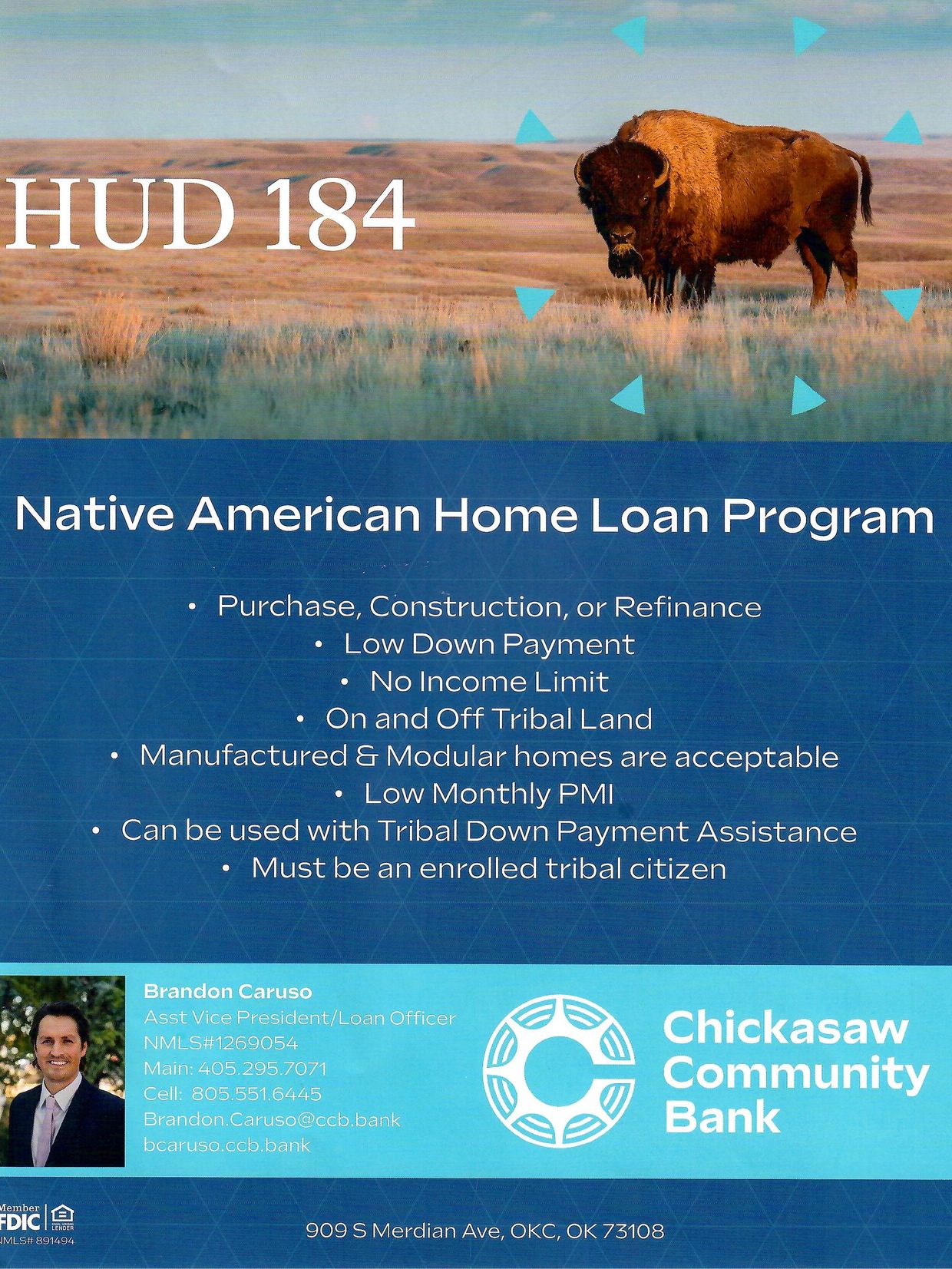
HUD Section 184 Indian Home Loan Guarantee Program:
- What it is: This is the most widely utilized program. It’s not a direct loan from HUD but a loan guaranteed by HUD. This guarantee protects lenders from loss in case of borrower default, encouraging them to lend in Native communities where they might otherwise be hesitant.
- Who it’s for: Members of federally recognized tribes (including Alaska Natives) purchasing homes on or off tribal trust lands, ANCSA lands, or even standard fee simple land.
- Key Features:
- Low Down Payment: Often as low as 2.25% for loans over $50,000, and 1.25% for loans under $50,000.
- Flexible Underwriting: More lenient credit requirements compared to conventional loans.
- No Mortgage Insurance (PMI): While there’s an upfront guarantee fee (1% of the loan amount, which can be financed), there are no monthly mortgage insurance premiums, significantly reducing monthly payments.
- Competitive Interest Rates: Often comparable to FHA or conventional rates.
- Versatile Use: Can be used for purchasing, refinancing, new construction, or rehabilitation.
- Loan Limits: Based on FHA limits for the area, which are higher in Alaska to account for increased costs.
- Acceptance of Unique Land Titles: Specifically designed to work with ANCSA lands, restricted allotments, and tribal trust lands, often requiring leasehold mortgages.
-
VA Native American Direct Loan (NADL) Program:
- What it is: This program is a direct loan from the Department of Veterans Affairs (VA) to eligible Native American veterans.
- Who it’s for: Native American veterans (members of federally recognized tribes) who are eligible for VA home loan benefits and wish to purchase, construct, or improve a home on Federal Trust Land.
- Key Features:
- No Down Payment: 100% financing is often available.
- Low Interest Rates: Set by the VA, often very competitive.
- No Private Mortgage Insurance (PMI): A significant cost-saving benefit.
- Limited Fees: Veterans pay a funding fee, which can be waived for those with service-connected disabilities.
- Direct Loan: The VA is the lender, which can streamline the process but also means limited flexibility compared to guaranteed loans.
- Focus on Trust Land: Crucially, NADL loans are only for homes on Native American Trust Land. In Alaska, this primarily refers to restricted allotments.
-
USDA Rural Development (RD) Housing Programs:
- While not exclusively "Native American" loans, USDA RD programs (such as Section 502 Direct and Guaranteed Loans) are vital in rural Alaska, where many Native communities are located. They offer 100% financing with low-interest rates and flexible credit, often serving the same demographic as the Section 184 program, especially in areas not designated as "tribal trust land" for NADL purposes.
Advantages (Pros) of Native American Home Loans in Alaska
These specialized programs offer significant benefits, particularly for Alaska Natives facing the unique challenges of the state:
- Accessibility for Unique Land Titles: This is perhaps the greatest advantage. Both Section 184 and NADL are specifically designed to navigate the complexities of ANCSA lands, restricted allotments, and tribal trust lands, where conventional lenders often refuse to lend. They provide mechanisms for leasehold mortgages, making homeownership possible on lands that were previously unfinanceable.
- Lower Down Payment Requirements: The Section 184’s low down payment (1.25% or 2.25%) and the NADL’s potential for 0% down are game-changers in a high-cost environment like Alaska, where saving a substantial down payment can be extremely difficult.
- Flexible Underwriting Standards: These programs often have more lenient credit score requirements and consider non-traditional credit histories (e.g., utility payments, rent history), which is beneficial for individuals who may not have extensive credit files.
- No Monthly Mortgage Insurance (PMI): Both Section 184 and NADL eliminate the recurring monthly cost of PMI, which can save borrowers hundreds of dollars each month, significantly improving affordability.
- Competitive Interest Rates: The government backing or direct lending often translates to interest rates comparable to or better than conventional loans, even with less-than-perfect credit.
- Versatility for Construction and Rehabilitation: Many homes in rural Alaska are either aging or need to be built from scratch. These programs can finance new construction, rehabilitation of existing homes, and even modular or manufactured homes, offering much-needed flexibility.
- Cultural Sensitivity and Support: Lenders experienced in these programs, particularly those with a focus on Alaska, often have a better understanding of the cultural nuances and specific housing needs of Alaska Native communities, including subsistence living and extended family structures. HUD-approved housing counseling agencies can also provide invaluable guidance.
- Higher Loan Limits in Alaska: Recognizing the elevated costs, these programs adjust their loan limits upwards for Alaska, allowing for financing of more expensive homes or construction projects.
Disadvantages (Cons) of Native American Home Loans in Alaska
Despite their numerous benefits, these programs are not without their drawbacks, many of which are exacerbated by the Alaskan context:
- Limited Lender Participation: While the programs exist, finding lenders in Alaska (or even outside Alaska) who are experienced and willing to originate Section 184 or NADL loans can be challenging. Many financial institutions lack the expertise or the appetite for the perceived risk associated with these loans, especially in remote areas.
- Land Eligibility Restrictions (NADL Specific): The NADL program’s strict requirement for Federal Trust Land limits its applicability in Alaska, where ANCSA corporation lands and restricted allotments are more common than tribal trust land. This means many Native veterans may not be able to utilize NADL.
- Appraisal Challenges: Appraising properties in remote Alaska is inherently difficult. Comparables are scarce, construction costs are highly variable, and the unique nature of some land titles can complicate valuations, leading to lower-than-expected appraisals or delays.
- Infrastructure Deficiencies and Property Standards: Lenders often require homes to meet certain property standards (e.g., safe water, septic systems). Many homes in rural Alaska lack these, or the cost of installing them is prohibitive, making financing difficult.
- Processing Times: The specialized nature of these loans, coupled with the complexities of Alaskan land tenure and the need for federal approvals, can lead to longer processing times compared to conventional loans.
- Upfront Guarantee Fee (Section 184): While there’s no monthly PMI, the 1% upfront guarantee fee (which can be financed) adds to the total loan amount and closing costs.
- Awareness and Education Gap: Many Alaska Natives and even some financial professionals are not fully aware of these programs or how to navigate them effectively, leading to missed opportunities.
- Reliance on Tribal/Village Cooperation: For loans on ANCSA lands or restricted allotments, cooperation from village or regional corporations, or the Bureau of Indian Affairs (BIA), is often necessary for leases or title clearances, which can introduce additional layers of bureaucracy and potential delays.
Who Are These Loans For? (Target Audience/Best Fit)
Native American Home Loans are particularly well-suited for:
- Alaska Natives who are members of federally recognized tribes (essential eligibility for Section 184 and NADL).
- Individuals looking to purchase or build a home in rural or remote Alaska Native communities, especially on ANCSA lands or restricted allotments.
- Alaska Native veterans seeking to utilize their VA benefits for homeownership on eligible trust lands.
- First-time homebuyers who may have limited savings for a down payment or a less-than-perfect credit history.
- Individuals planning new construction or significant rehabilitation of existing homes in challenging locations.
- Those prioritizing lower monthly payments due to the absence of PMI.
Recommendation: Unlocking the Alaskan Dream with Due Diligence
Overall Assessment: A Resounding "Yes, with Caveats"
Native American Home Loans, particularly the HUD Section 184 program, are not just "good products"; they are essential tools for addressing the profound housing needs of Alaska Natives. Without them, the dream of homeownership would remain out of reach for countless individuals and families across the Last Frontier. They are uniquely designed to overcome systemic barriers related to land, credit, and affordability that conventional loans simply cannot address.
However, their effectiveness is heavily dependent on the borrower’s due diligence, the lender’s expertise, and the specific circumstances of the property and location.
Recommendation for Purchase/Action:
For any eligible Alaska Native considering homeownership, these specialized loan programs should be the first avenue to explore. Here’s a multi-faceted recommendation:
-
Start with Education and Counseling:
- Contact HUD-Approved Housing Counselors: Seek out agencies specializing in Section 184 loans and Alaska Native housing. They can provide unbiased advice, help with financial readiness, and guide you through the initial steps.
- Understand Your Land: Thoroughly research the specific land status of the property you are interested in (ANCSA, restricted allotment, fee simple, etc.). This will dictate which programs are viable and what documentation is needed.
-
Find the Right Lender:
- Seek Experienced Lenders: Do not simply go to your local bank if they lack specific experience with Section 184 or NADL loans in Alaska. Actively seek out lenders (which may be based outside Alaska but licensed to operate there) who specialize in these programs and have a proven track record in the state. Ask for references and inquire about their experience with specific land types.
- Compare Lenders: Even with limited options, compare interest rates, fees, and the lender’s responsiveness and understanding of your unique situation.
-
Prepare for the Process:
- Gather Documentation: Be prepared to provide extensive documentation regarding tribal enrollment, income, credit history (including non-traditional sources), and property details.
- Anticipate Challenges: Be realistic about potential delays related to appraisals, land title clearances (especially with the BIA or ANCSA corporations), and infrastructure requirements. Patience and persistence are key.
- Focus on Credit Health: While flexible, a stronger credit history will always result in better terms and a smoother process. Work on improving your credit score if possible.
-
Explore All Options (Complementary Programs):
- Don’t Discount USDA RD: If you are in a rural area, USDA Rural Development programs can be an excellent alternative or complement, offering 100% financing and favorable terms, even if you are not buying on tribal-specific land.
- Look for Tribal/Village Initiatives: Many Alaska Native corporations and tribal organizations have their own housing assistance programs, down payment assistance, or land leasing agreements that can work in conjunction with federal loans.
-
New Construction and Rehabilitation:
- Work with Experienced Builders: If planning new construction or significant rehabilitation in a remote area, partner with builders who have experience with the unique logistical and environmental challenges of Alaska.
- Budget for Overruns: Always have a contingency fund for construction projects in Alaska, as costs can quickly escalate.
In conclusion, Native American Home Loans are indispensable for fostering homeownership among Alaska Natives. They are not merely financial products but instruments of empowerment, designed to overcome historical and geographical barriers. While navigating the process requires diligence, education, and the right partners, the rewards of stable, culturally appropriate, and affordable housing are immeasurable. For eligible Alaska Natives, these programs represent a powerful pathway to securing their place in the Last Frontier.


