
Navigating Homeownership: HUD 184 Loan vs. Traditional Mortgage for Native Americans
Introduction: The Path to Homeownership
For many Native Americans, the dream of homeownership is a significant aspiration, embodying stability, wealth building, and cultural connection. However, the path to achieving this dream can be complex, often encountering unique challenges related to land tenure, credit history, and access to traditional financial institutions. Fortunately, specific programs like the HUD Section 184 Indian Home Loan Guarantee Program have been developed to address these unique needs, offering a vital alternative to conventional mortgages.

This comprehensive guide will provide a detailed comparison between the HUD 184 Loan and Traditional Mortgages, empowering Native Americans to make informed decisions about the best financing option for their homeownership journey. We will delve into the features, benefits, eligibility, and application processes of both, highlighting the crucial differences that can impact your choice.
Understanding the HUD Section 184 Indian Home Loan Guarantee Program
The Section 184 Indian Home Loan Guarantee Program is a unique federal mortgage product specifically designed to increase homeownership opportunities for Native American and Alaska Native families, tribes, and tribal housing entities. Administered by the U.S. Department of Housing and Urban Development’s Office of Native American Programs (ONAP), it aims to overcome barriers often faced by Native Americans in accessing traditional mortgage financing.
Key Features of the HUD 184 Loan:
-
- Target Audience: Exclusively for enrolled members of federally recognized Native American Tribes or Alaska Native Villages.
- Property Eligibility: Can be used to purchase, construct, or rehabilitate homes on and off trust land, in tribal areas, and in approved non-tribal areas. This is a critical advantage, as traditional mortgages often struggle with the unique legal complexities of trust land.
- Low Down Payment: Typically requires a low down payment, often as little as 2.25% for loans over $50,000, and 1.25% for loans under $50,000.
- Flexible Underwriting: Lenders are encouraged to use flexible underwriting standards that consider non-traditional credit histories (e.g., utility payments, rent history) and varying income structures common in Native American communities.
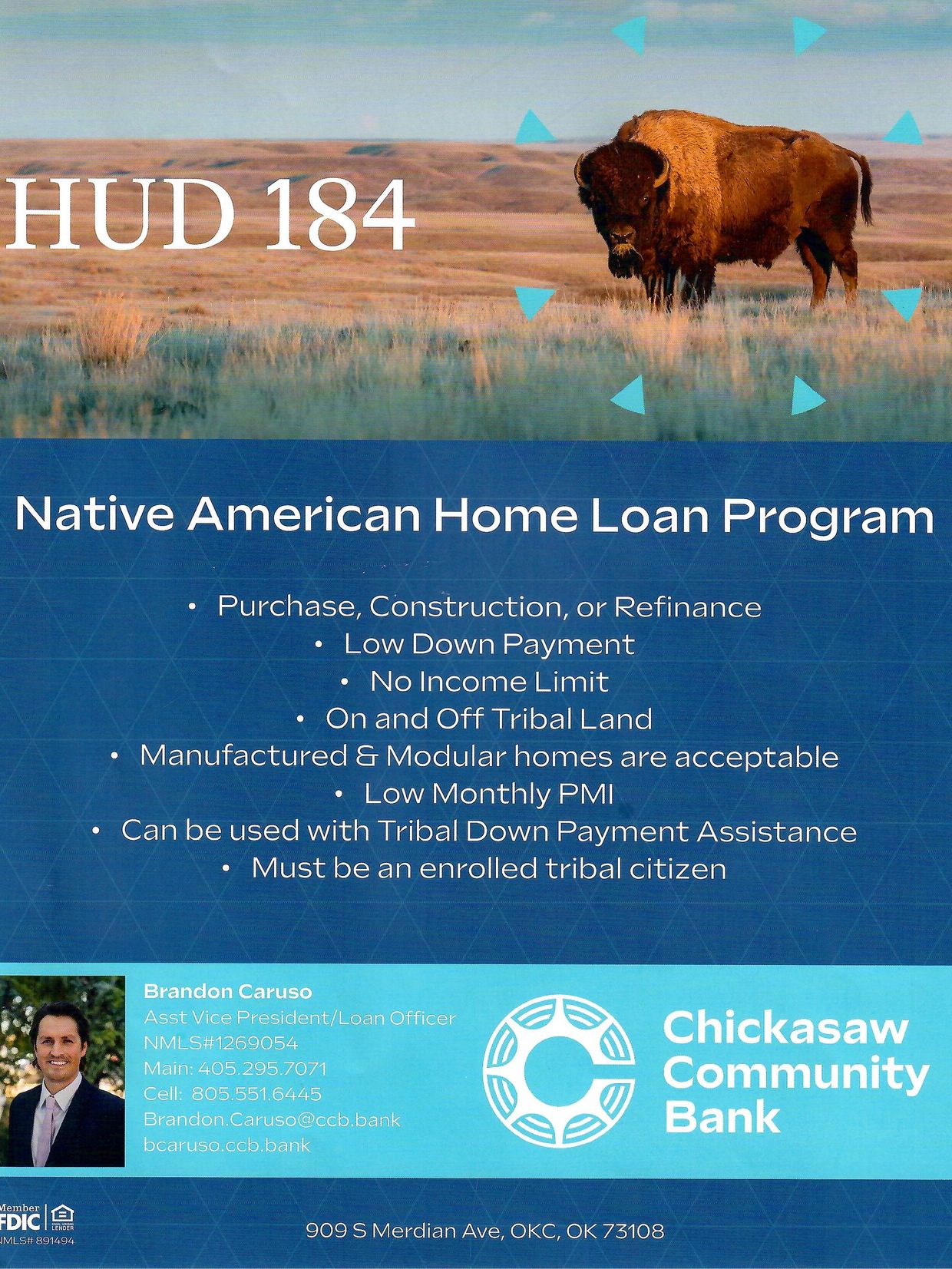
- No Private Mortgage Insurance (PMI): Instead of PMI, the loan requires an upfront guarantee fee (1.5% of the loan amount, which can be financed into the loan) and an annual guarantee fee (0.25% of the unpaid principal balance). These fees are generally lower than typical FHA mortgage insurance premiums.
- Competitive Interest Rates: Interest rates are typically market-driven but can be highly competitive, often comparable to or better than FHA loans.
- Loan Limits: Follows FHA loan limits, which vary by county.
- Assumption: Section 184 loans are assumable, meaning a qualified buyer can take over the existing mortgage.
Understanding Traditional Mortgages
Traditional mortgages encompass a broad range of loan products offered by banks, credit unions, and other private lenders. For the purpose of this comparison, we will primarily refer to Conventional, FHA (Federal Housing Administration), VA (Department of Veterans Affairs), and USDA (United States Department of Agriculture) loans, as these are the most common types available to the general public.
Key Features of Traditional Mortgages:
- Target Audience: Generally available to any qualified borrower, regardless of their tribal affiliation.
- Property Eligibility: Primarily for properties on “fee simple” land, where the homeowner holds direct, outright ownership. Financing homes on tribal trust land is often challenging or impossible due to complex land titles and jurisdiction issues.
- Down Payment:
- Conventional: Can range from 3% to 20% or more, with 20% often required to avoid PMI.
- FHA: As low as 3.5% for borrowers with a credit score of 580 or higher.
- VA: Often 0% down payment for eligible veterans and active-duty service members.
- USDA: Often 0% down payment for eligible properties in rural areas.
- Credit Standards: Generally stricter, relying heavily on FICO credit scores and traditional credit histories.
- Mortgage Insurance:
- Conventional: Private Mortgage Insurance (PMI) is required if the down payment is less than 20% and typically lasts until 20% equity is reached.
- FHA: Requires Upfront Mortgage Insurance Premium (UFMIP) and an Annual Mortgage Insurance Premium (MIP) for the life of the loan.
- VA & USDA: Do not require monthly mortgage insurance but may have a funding fee (VA) or guarantee fee (USDA).
- Interest Rates: Vary widely based on credit score, down payment, loan type, and market conditions.
- Loan Limits: Vary by loan type and county.
- Assumption: While some traditional loans are assumable (like VA and FHA under certain conditions), it is less common than with HUD 184 loans.
HUD 184 Loan vs. Traditional Mortgage: A Head-to-Head Comparison
| Feature | HUD Section 184 Loan | Traditional Mortgage (Conventional, FHA, VA, USDA) |
|---|---|---|
| Target Borrower | Enrolled members of federally recognized tribes | General public, based on financial qualifications |
| Property Eligibility | On & off trust land, tribal areas, approved non-tribal | Primarily “fee simple” land; trust land often problematic |
| Down Payment | Low (e.g., 2.25% for loans > $50k, 1.25% for < $50k) | Varies: 0% (VA, USDA), 3.5% (FHA), 3-20%+ (Conventional) |
| Credit Standards | Flexible underwriting, considers non-traditional credit | Stricter, relies heavily on FICO scores & traditional history |
| Mortgage Insurance | Upfront (1.5%) & Annual (0.25%) Guarantee Fee | PMI (Conventional), UFMIP & MIP (FHA), Funding Fee (VA) |
| Interest Rates | Competitive, market-driven, often comparable to FHA | Varies widely based on credit, down payment, loan type |
| Lender Pool | Limited to HUD-approved Section 184 lenders | Broad network of banks, credit unions, and mortgage companies |
| Understanding of Native Issues | Designed with an understanding of tribal land and cultural contexts | Less familiarity with unique tribal land and legal structures |
| Loan Assumption | Generally assumable for qualified buyers | Less common, though possible for some FHA/VA loans |
| Counseling | Often encouraged or required (pre-purchase/homebuyer) | May be recommended, but rarely required |
Eligibility Requirements: What You Need to Know
HUD Section 184 Loan Eligibility:
- Tribal Membership: Must be an enrolled member of a federally recognized Native American Tribe or Alaska Native Village. Proof of enrollment will be required.
- Property Location: The home must be located in an eligible area, which includes most tribal trust lands, Indian Country, and approved areas outside of Indian Country.
- Income and Credit: While flexible, borrowers must demonstrate a stable income and a reasonable credit history to meet repayment obligations.
- Occupancy: The home must be the borrower’s primary residence.
Traditional Mortgage Eligibility:
- Credit Score: Generally, higher credit scores lead to better terms and easier approval.
- Debt-to-Income (DTI) Ratio: Lenders assess your ability to manage monthly debt payments relative to your gross monthly income.
- Employment History: Stable employment history (typically 2 years) is usually required.
- Down Payment: Sufficient funds for the down payment and closing costs, unless using a 0% down program (VA, USDA).
- Property Appraisal: The property must meet appraisal standards for the specific loan type.
The Application Process: Step-by-Step
Applying for a HUD Section 184 Loan:
- Research & Find a Lender: Locate a HUD-approved Section 184 lender. Not all lenders offer this program. HUD maintains a list of approved lenders on its website.
- Pre-Qualification/Pre-Approval: Work with your chosen lender to get pre-qualified or pre-approved. This involves providing financial documents (income, assets, credit history) to determine how much you can afford.
- Housing Counseling: While not always mandatory, HUD often encourages or requires homebuyer education/counseling from an approved agency, especially for first-time homebuyers.
- Property Search: Find a home within an eligible area that meets your needs and budget.
- Offer & Contract: Make an offer on the home and enter into a purchase agreement.
- Appraisal & Underwriting: The lender will order an appraisal, and the loan will go through underwriting, where your financial information and the property’s value are thoroughly reviewed. This process often involves additional steps for properties on tribal trust land to ensure proper lease agreements are in place.
- Closing: Once approved, you’ll sign all necessary documents, pay closing costs, and take ownership of your new home.
Applying for a Traditional Mortgage:
- Research & Compare Lenders: Shop around with various banks, credit unions, and mortgage brokers to compare rates and terms.
- Pre-Approval: Obtain a pre-approval letter from a lender. This strengthens your offer when buying a home.
- Property Search: Find a home that fits your budget and preferences.
- Offer & Contract: Make an offer and sign a purchase agreement.
- Appraisal & Underwriting: The lender will order an appraisal to ensure the property’s value supports the loan amount. Your loan application will then go through a detailed underwriting process.
- Closing: Attend the closing, sign documents, and finalize the purchase.
Pros and Cons for Native American Borrowers
HUD Section 184 Loan:
Pros:
- Access to Trust Land: The primary advantage, allowing homeownership on tribal trust lands, which is often impossible with traditional financing.
- Lower Down Payment: Makes homeownership more accessible for those with limited savings.
- Flexible Underwriting: Accommodates unique financial situations and non-traditional credit histories.
- Culturally Sensitive: Designed with an understanding of Native American legal structures and community dynamics.
- Assumable: Can be an attractive feature for future resale.
Cons:
- Limited Lenders: Fewer lenders offer Section 184 loans compared to traditional mortgages.
- Guarantee Fees: While generally lower than FHA, the upfront and annual guarantee fees add to the loan cost.
- Specific Eligibility: Only available to enrolled members of federally recognized tribes.
- Processing Time: Can sometimes take longer due to specialized underwriting requirements, especially for tribal land.
Traditional Mortgage:
Pros:
- Wider Lender Choice: A vast network of lenders offers conventional, FHA, VA, and USDA loans.
- Potentially Lower Overall Cost (if high credit/down payment): For borrowers with excellent credit and a substantial down payment, a conventional loan without PMI might offer the lowest long-term cost.
- Faster Processing: Can sometimes have quicker closing times, especially for straightforward conventional loans.
- Variety of Options: Diverse loan products to fit various financial situations (e.g., 0% down for VA/USDA, low down for FHA).
Cons:
- Trust Land Incompatibility: Generally unsuitable for homes on tribal trust land due to legal complexities.
- Stricter Credit Requirements: Can be a barrier for those with limited or non-traditional credit histories.
- Higher Down Payments (for Conventional): Can require significant upfront cash.
- PMI/MIP Costs: Can add substantially to monthly payments for many loan types.
- Less Understanding of Unique Native American Circumstances: Lenders may not be as familiar with tribal sovereignty, land issues, or specific income structures.
Making the Right Choice: When to Choose Which
The decision between a HUD 184 loan and a traditional mortgage depends heavily on your individual circumstances, financial profile, and property location.
Choose the HUD 184 Loan if:
- You are an enrolled member of a federally recognized tribe.
- You plan to purchase a home on tribal trust land or within Indian Country.
- You have limited funds for a down payment.
- Your credit history is non-traditional or has some challenges.
- You prefer a loan program specifically designed to understand and support Native American homeownership.
Choose a Traditional Mortgage if:
- You are not an enrolled member of a federally recognized tribe.
- You are purchasing a home on fee simple land outside of Indian Country.
- You have excellent credit and can qualify for the most competitive rates.
- You have a substantial down payment (especially for conventional loans to avoid PMI).
- You are an eligible veteran (VA loan) or purchasing in a rural area (USDA loan).
Important Considerations and Tips
- Financial Literacy is Key: Regardless of the loan type, understanding your finances, credit, and the mortgage process is crucial.
- Housing Counseling: Seek out HUD-approved housing counselors who can provide free or low-cost advice on budgeting, credit repair, and the home-buying process. Many are specifically knowledgeable about Section 184 loans.
- Pre-Approval is Essential: Get pre-approved before you start seriously looking for a home. This clarifies your budget and makes your offer more attractive to sellers.
- Shop Around: Even with HUD 184, compare offers from different approved lenders. For traditional mortgages, comparing multiple lenders is standard practice.
- Understand Closing Costs: Beyond the down payment, be prepared for closing costs, which typically range from 2-5% of the loan amount.
- Tribal Housing Programs: Explore if your tribe offers additional down payment assistance, grants, or housing programs that can complement either loan type.
Conclusion: Empowering Your Homeownership Journey
The journey to homeownership is a significant step, and for Native Americans, programs like the HUD Section 184 Loan offer a tailored pathway to achieve this dream. By thoroughly understanding the distinct advantages and considerations of both the HUD 184 Loan and traditional mortgages, you can make a choice that best aligns with your financial situation, property goals, and cultural context.
We encourage you to utilize the resources available, consult with HUD-approved lenders and housing counselors, and take the time to compare your options carefully. With the right information and support, the dream of homeownership can become a reality for you and your family.


