
Navigating the Path to Homeownership: A Comprehensive Review of the HUD 184 Loan in Texas
The dream of homeownership is a cornerstone of the American ethos, representing stability, wealth accumulation, and a place to call one’s own. For many, however, this dream remains elusive due to the formidable barriers of down payments, stringent credit requirements, and navigating a complex mortgage landscape. Recognizing these challenges, particularly within Native American and Alaska Native communities, the U.S. Department of Housing and Urban Development (HUD) introduced the Section 184 Indian Home Loan Guarantee Program.
In the vast and diverse landscape of Texas, where a significant Native American population resides, understanding specialized financial instruments like the HUD 184 loan is paramount. This article offers an in-depth review of the HUD 184 loan program, specifically tailored to its application and impact in Texas. We will explore its core mechanics, dissect its advantages and disadvantages, and provide a clear recommendation for those considering this unique pathway to homeownership.
Understanding the HUD 184 Loan Program: A Foundation
The Section 184 Indian Home Loan Guarantee Program, authorized by the Indian Housing Act of 1992, is designed to increase homeownership and access to capital for Native Americans, Alaska Natives, and their families. It is a loan guarantee program, meaning HUD does not directly lend money. Instead, it guarantees loans made by private lenders to eligible Native American and Alaska Native borrowers, reducing the risk for lenders and encouraging them to participate.

The primary goal of HUD 184 is to address the unique housing needs and economic disparities often faced by tribal communities. It provides a flexible and affordable mortgage option for purchasing, constructing, or rehabilitating homes, as well as refinancing existing mortgages, both on and off Native American trust lands.
The HUD 184 in the Texas Context
Texas, with its rich history and diverse population, is home to several federally recognized tribes, including the Alabama-Coushatta Tribe of Texas, the Kickapoo Traditional Tribe of Texas, and the Ysleta del Sur Pueblo. Beyond these tribal lands, many Native Americans live in urban and rural areas across the state. The HUD 184 loan program is a vital resource for these communities, extending its benefits beyond just reservation boundaries.
Eligibility in Texas:
For a borrower in Texas to be eligible, they must be an enrolled member of a federally recognized tribe. The property being financed can be located on:
- Indian trust land (e.g., parts of the Ysleta del Sur Pueblo reservation near El Paso).
- Land within an Indian or Alaska Native Area.
- Approved off-reservation areas. In Texas, this typically includes any area of the state, as long as it is an eligible area as designated by HUD. This broad geographic coverage makes the HUD 184 highly relevant for Native Americans living anywhere from Houston to El Paso, Dallas to San Antonio.
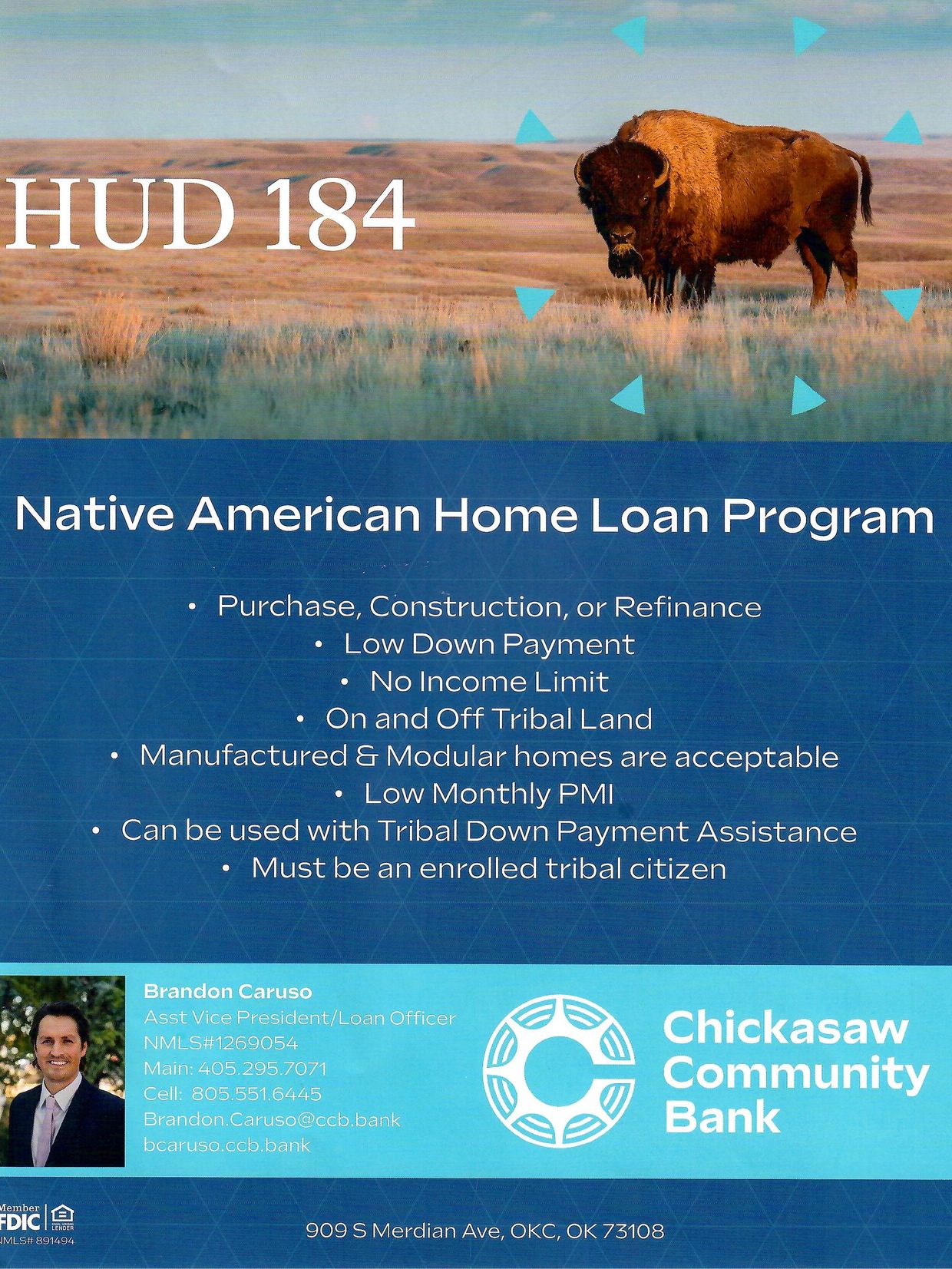
The program directly supports economic development and community building within Native American populations across Texas by fostering stable homeownership.
Key Features and Mechanics of the HUD 184 Loan
Before delving into the pros and cons, it’s essential to understand the operational features that define the HUD 184 loan:
- Borrower Eligibility: Must be an enrolled member of a federally recognized tribe. Verification of tribal enrollment is a critical first step.
- Property Eligibility: The property must meet HUD’s minimum property standards and be located in an eligible area. It can be a single-family home, a manufactured home (permanently affixed to a foundation), a condominium, or even a multi-unit property (up to four units, if one unit is owner-occupied).
- Down Payment: One of the most attractive features. For loans over $50,000, the down payment is 2.25%. For loans $50,000 or less, it’s an even lower 1.25%. This significantly reduces the upfront cost of homeownership.
- Mortgage Insurance Premiums (MIP):
- Upfront Mortgage Insurance Premium (UFMIP): A one-time fee of 1% of the loan amount, which can be financed into the loan.
- Annual Mortgage Insurance Premium (MIP): An ongoing fee of 0.35% of the outstanding loan balance, paid monthly. This is significantly lower than FHA’s annual MIP.
- Interest Rates: HUD 184 loans offer competitive, fixed interest rates, providing stability and predictable monthly payments over the life of the loan. Rates are typically market-driven, similar to conventional or FHA loans.
- Credit Requirements: While not a "no credit check" loan, HUD 184 offers more flexible underwriting than conventional loans. Lenders are encouraged to consider non-traditional credit histories (e.g., rent, utility payments) and may be more lenient with lower credit scores if compensating factors are present.
- Loan Limits: These vary by county and are tied to FHA loan limits, ensuring that the program can support home purchases in various housing markets across Texas.
Advantages (Pros) of the HUD 184 Loan
The HUD 184 loan program presents several compelling advantages, particularly for its target demographic in Texas:
- Low Down Payment Requirement: This is arguably the most significant benefit. With down payments as low as 1.25% or 2.25%, the HUD 184 dramatically lowers the barrier to entry for homeownership. This is especially impactful in Texas’s competitive housing markets where saving for a substantial down payment can be daunting.
- Flexible Credit Underwriting: The program recognizes that many Native Americans may not have extensive or traditional credit histories. Lenders are trained to look beyond just credit scores, evaluating alternative credit sources like rental payment history, utility bills, and other consistent financial obligations. This inclusivity opens doors for many who would be turned away by conventional lenders.
- Competitive Fixed Interest Rates: HUD 184 loans offer stable, fixed interest rates, which protect borrowers from fluctuating market conditions. These rates are often competitive with, if not better than, FHA or even some conventional rates, leading to predictable and affordable monthly payments over the long term.
- No Geographic Restrictions (within eligible areas): Unlike some programs limited strictly to tribal lands, the HUD 184 loan can be used anywhere in Texas that HUD designates as an "eligible area." This broad reach empowers Native American families to purchase homes in urban, suburban, or rural settings, providing flexibility and choice.
- Lower Mortgage Insurance Premiums: Compared to FHA loans, the HUD 184’s annual MIP of 0.35% is significantly lower (FHA’s can be 0.55% to 0.75% or higher depending on loan terms and down payment), resulting in lower monthly housing costs for the borrower. While there is an upfront MIP, it can be financed into the loan.
- Versatile Use: The loan can be used for a wide array of housing needs: purchasing an existing home, constructing a new one, rehabilitating an older property, or refinancing an existing mortgage. This flexibility caters to diverse housing goals across Texas.
- Cultural Sensitivity: The program is specifically designed with the unique needs and cultural contexts of Native American communities in mind, offering a more understanding and supportive pathway to homeownership.
- Wealth Building and Community Stability: By facilitating homeownership, the HUD 184 loan directly contributes to wealth creation for Native American families, offering an asset that can appreciate over time. This, in turn, fosters greater economic stability and strengthens communities across Texas.
Disadvantages (Cons) of the HUD 184 Loan
Despite its significant benefits, the HUD 184 loan program also comes with certain limitations and potential drawbacks:
- Limited Eligibility: The most obvious limitation is that only enrolled members of federally recognized tribes are eligible. This excludes a vast majority of the population, even those who might share similar financial challenges.
- Mandatory Mortgage Insurance Premiums (MIP): While lower than FHA, the upfront (1%) and annual (0.35%) mortgage insurance premiums are still an added cost to the loan. Unlike conventional loans, where private mortgage insurance (PMI) can eventually be canceled, HUD 184 MIP is typically paid for the life of the loan. This increases the overall cost of borrowing.
- Fewer Lender Options: Because it’s a specialized program, not all mortgage lenders offer HUD 184 loans. Borrowers in Texas might need to search specifically for HUD-approved Section 184 lenders, which could mean less competition among lenders and potentially fewer options for rates or service.
- Property Restrictions and Appraisal Process: Properties financed with a HUD 184 loan must meet specific HUD minimum property standards. The appraisal process can sometimes be more rigorous or take longer than for conventional loans, as it needs to ensure the property is safe, sound, and sanitary. This could potentially complicate transactions, especially in "as-is" sales or in very rural areas.
- Perceived Complexity and Paperwork: While the process itself is similar to other mortgage applications, the initial understanding of the program’s unique requirements (like tribal enrollment verification) can make it seem more complex to some borrowers or less experienced lenders. This can lead to more paperwork and potentially longer processing times if not handled by an experienced lender.
- Awareness and Education: Despite its benefits, there’s still a lack of widespread awareness about the HUD 184 program, both among potential borrowers and even some real estate professionals. This can lead to missed opportunities or difficulties in finding knowledgeable assistance in Texas.
- Potential for Higher Interest Rates (in some cases): While generally competitive, if a borrower has an excellent credit score and a significant down payment, a conventional loan might offer a slightly lower interest rate without the mandatory MIP, depending on market conditions. However, this scenario is less common for the target demographic of the HUD 184.
Who is the HUD 184 Loan For?
The HUD 184 loan program is unequivocally designed for enrolled members of federally recognized tribes in Texas who are seeking an affordable and accessible path to homeownership. It is particularly well-suited for:
- First-time homebuyers: The low down payment and flexible credit requirements are ideal for those just starting their homeownership journey.
- Individuals with non-traditional or limited credit history: The program’s accommodating underwriting allows for a broader assessment of financial responsibility.
- Families looking to purchase, build, or refinance a home anywhere in Texas: As long as the property is in an eligible area, the program’s geographic flexibility is a major asset.
- Those seeking long-term financial stability: Fixed interest rates and lower annual MIP contribute to predictable and manageable housing costs.
The Application Process: A Brief Overview
For those in Texas considering a HUD 184 loan, the process typically involves:
- Find an Approved Lender: Seek out a mortgage lender in Texas that is approved to originate HUD Section 184 loans. These lenders will have experience with the specific requirements.
- Pre-qualification/Pre-approval: Provide your financial information and tribal enrollment verification to get an estimate of how much you can borrow.
- Property Search: Work with a real estate agent to find a home that meets your needs and HUD’s property standards.
- Application & Underwriting: Submit a full application, including income, asset, and credit documentation. The lender will review everything to ensure you meet the program’s criteria.
- Appraisal & Inspection: The property will undergo a HUD-approved appraisal and inspection to determine its value and ensure it meets safety and habitability standards.
- Closing: Once all conditions are met, you’ll sign the final loan documents and become a homeowner.
Recommendation
For eligible individuals in Texas, the HUD 184 loan is unequivocally a powerful and highly recommended tool for achieving homeownership. Its unique benefits, particularly the low down payment and flexible credit underwriting, directly address some of the most significant barriers faced by Native American communities. While the mandatory mortgage insurance and fewer lender options are considerations, the overall advantages typically far outweigh these drawbacks for the target demographic.
Our recommendation is a strong "YES" for eligible borrowers. However, it comes with the caveat that prospective homebuyers should:
- Do their research: Understand all aspects of the program.
- Shop around for lenders: Find an experienced and reputable HUD 184 lender in Texas who can guide them through the process effectively.
- Compare with other options: Although often superior for eligible individuals, it’s always wise to briefly compare with FHA or conventional loans if your financial profile allows for it, to ensure the HUD 184 truly is the best fit.
Conclusion
The HUD 184 Indian Home Loan Guarantee Program stands as a testament to targeted policy designed to foster equity and opportunity. In Texas, a state with a vibrant Native American presence, this program is more than just a mortgage product; it’s a crucial mechanism for building generational wealth, strengthening communities, and realizing the fundamental dream of homeownership. For enrolled members of federally recognized tribes across the Lone Star State, the HUD 184 loan offers a unique, accessible, and highly beneficial pathway to planting roots and securing a stable future. Embracing this program can pave the way for a new era of economic empowerment and housing stability within Texas’s Native American communities.


