A Comprehensive Review: The HUD 184 Loan – A Gateway to Homeownership for Native American Communities
Homeownership is a cornerstone of economic stability, wealth building, and community strength. Yet, for many Native American and Alaska Native communities, particularly those in rural areas, the path to owning a home has been historically fraught with unique challenges. Conventional mortgage products often fail to account for the distinct land tenure systems, tribal laws, and economic realities prevalent in Indian Country. Enter the HUD Section 184 Indian Home Loan Guarantee Program – a specialized financial instrument designed to bridge this gap and foster homeownership for eligible Native Americans and Alaska Natives.
This comprehensive review will delve into the intricacies of the HUD 184 loan, examining its features, assessing its advantages and disadvantages, and ultimately providing a recommendation for its adoption as a vital tool for rural Native American communities.
What is the HUD 184 Loan? An Overview of a Specialized Product
The HUD Section 184 loan, often simply referred to as the "184 loan," is a mortgage product specifically tailored for Native American and Alaska Native families, federally recognized tribes, and Tribally Designated Housing Entities (TDHEs). Its core mechanism is a loan guarantee provided by the U.S. Department of Housing and Urban Development’s Office of Native American Programs (ONAP). This guarantee protects approved lenders against loss in the event of borrower default, thereby encouraging them to lend in areas and to populations they might otherwise deem too risky.

The program was established in 1992 and has since become a critical resource, supporting the purchase, construction, or rehabilitation of homes, as well as refinancing existing mortgages. It operates on a broad geographic scope, covering properties both on and off reservation, within Alaska Native Villages, and on individually allotted or tribal trust lands, as well as fee simple lands. This flexibility in land type is a crucial differentiator, as traditional mortgages often struggle with the unique legal status of tribal lands.
Key Features of the HUD 184 Loan:
- Targeted Eligibility: Exclusively for enrolled members of federally recognized tribes.
- Broad Property Eligibility: Can be used for properties on fee simple land, tribal trust land, allotted land, or in Alaska Native Villages. This includes single-family homes, manufactured homes (permanently affixed), and multi-unit properties (up to 4 units if the borrower occupies one).
- Loan Types: Available for home purchase, construction (including new construction, rehabilitation, and modular homes), and refinancing of existing mortgages.
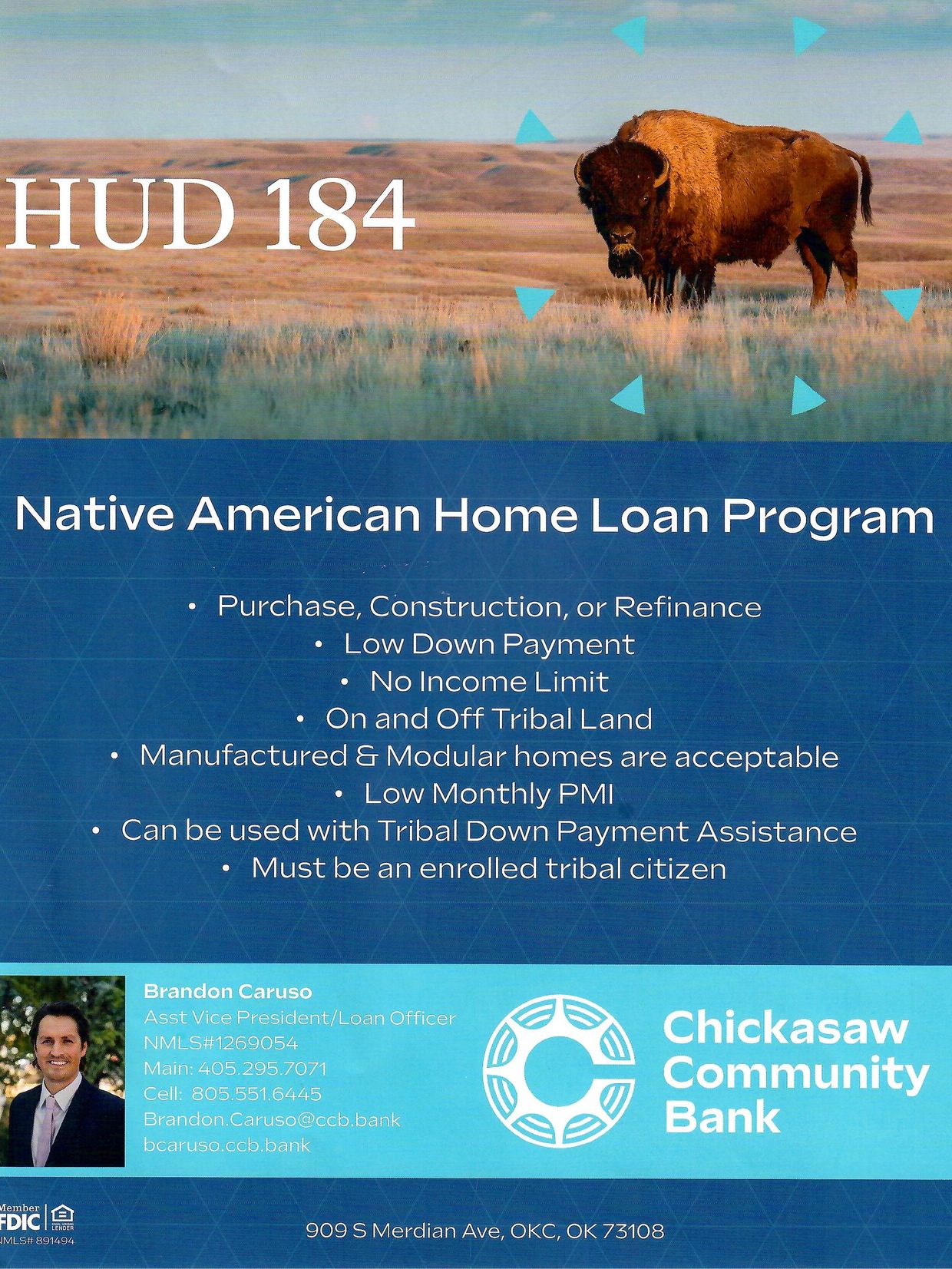
- Low Down Payment: One of its most attractive features, requiring as little as 2.25% down for loans over $50,000 and 1.25% for loans $50,000 or less.
- Flexible Underwriting: Lenders are encouraged to consider non-traditional credit references and income sources, recognizing the unique financial landscapes within Native communities.
- Competitive Interest Rates: Rates are often comparable to FHA loans, determined by the lender and market conditions.
- Upfront Mortgage Insurance Premium (UFMIP) and Annual Mortgage Insurance Premium (MIP): Similar to FHA loans, these premiums protect the lender, but the UFMIP can often be financed into the loan.
- Streamlined Process for Tribal Lands: While still requiring due diligence, the program has established procedures for navigating the complexities of tribal leaseholds and approvals.
In essence, the HUD 184 loan is not just a financial product; it’s a policy tool designed to address historical inequities and provide a culturally sensitive, economically viable pathway to homeownership for Native Americans and Alaska Natives.
The Advantages: Why the HUD 184 Loan Stands Out
For rural Native American communities, the HUD 184 loan offers a suite of benefits that make it an exceptionally valuable tool for fostering homeownership and economic development.
-
Accessibility through Low Down Payment: The most immediate and significant advantage is the minimal down payment requirement. For many families in rural Native communities, accumulating a substantial down payment for a conventional loan can be an insurmountable barrier. The 184 loan’s low threshold dramatically lowers the entry barrier, making homeownership a tangible goal for more individuals and families. This directly translates into more families moving from rental situations or multi-generational households into their own homes.
-
Flexible Underwriting Standards: Traditional lenders often rely heavily on established credit scores and consistent, verifiable employment histories that may not perfectly align with the economic realities of all Native communities. The HUD 184 program encourages lenders to adopt more flexible underwriting, considering alternative credit references (e.g., utility payments, tribal rental histories) and diverse income streams, including tribal per capita payments, trust fund income, and self-employment common in rural settings. This flexibility is crucial for serving a population that may have different financial profiles.
-
Competitive Interest Rates: Despite the perceived risk associated with lending in some Native communities, the HUD guarantee allows lenders to offer competitive interest rates, often on par with FHA loans. This ensures that borrowers are not penalized with higher costs simply due to their location or tribal affiliation, making the loans genuinely affordable over their lifetime.
-
Addressing Unique Land Tenure Challenges: This is perhaps the most profound advantage for rural Native communities. The 184 loan is specifically designed to navigate the complexities of tribal trust lands, allotted lands, and restricted fee lands. It provides established procedures for obtaining necessary tribal approvals, leases, and agreements, which are often bewildering and time-consuming for conventional lenders. By streamlining this process, the 184 loan opens up lending opportunities on lands that would otherwise be considered unmortgageable by the broader market.
-
Broad Geographic Reach: The loan’s applicability across both reservation and off-reservation lands, including remote Alaska Native Villages, ensures that it serves the diverse geographical spread of Native communities. This is particularly vital for rural areas where conventional lenders may be scarce or unwilling to operate due to perceived logistical challenges or lack of market familiarity.
-
Fosters Community Development and Stability: Beyond individual homeownership, the HUD 184 loan contributes to broader community development. Increased homeownership rates lead to greater community stability, a stronger tax base (where applicable), and increased local spending. It helps stem out-migration by providing housing options and encourages economic investment within tribal jurisdictions. Furthermore, owning a home allows families to build equity, which can be passed down through generations, contributing to intergenerational wealth building and cultural preservation.
-
Options for Construction and Rehabilitation: Many rural Native communities face a severe shortage of adequate housing, with existing homes often requiring significant repairs. The 184 loan’s provisions for new construction, rehabilitation, and even manufactured homes provide vital solutions for expanding the housing stock and improving living conditions.
The Disadvantages: Navigating the Hurdles of the HUD 184 Loan
While undeniably beneficial, the HUD 184 loan is not without its challenges and limitations, particularly in the context of rural Native American communities. Understanding these drawbacks is essential for a realistic assessment.
-
Limited Lender Availability, Especially in Rural Areas: Despite the HUD guarantee, not all mortgage lenders offer 184 loans. In many rural Native American communities, the number of approved lenders can be extremely limited, or even non-existent. This forces potential borrowers to seek out-of-area lenders, which can complicate the process, increase travel costs, and lead to a lack of localized understanding from the lender. The limited pool of lenders can also reduce competition, potentially affecting service quality or responsiveness.
-
Complexity of Land Status Documentation and Tribal Approvals: While the 184 loan is designed to handle unique land statuses, the process is still inherently complex and can be time-consuming. Securing tribal consents, leases, and other necessary documents for trust land can involve multiple layers of tribal government, BIA (Bureau of Indian Affairs), and HUD review. This administrative burden can lead to longer processing times compared to conventional loans on fee simple land, requiring significant patience and coordination from borrowers, tribal housing authorities, and lenders.
-
Appraisal Challenges: Appraising properties in rural Native communities can be difficult. A scarcity of comparable sales (comps) in remote areas, unique construction types, and the complexities of valuing homes on non-fee simple land can lead to appraisals that are lower than expected or take longer to complete. This can sometimes result in the loan amount being insufficient to cover the home’s true value or construction costs, or it can delay the closing process significantly.
-
Upfront and Annual Mortgage Insurance Premiums (MIP/UFMIP): Like FHA loans, the HUD 184 program requires both an Upfront Mortgage Insurance Premium (UFMIP) and an Annual Mortgage Insurance Premium (MIP). While the UFMIP can be financed into the loan, these premiums add to the overall cost of homeownership. For some borrowers, particularly those with limited disposable income, these additional costs can be a burden, distinguishing it from conventional loans that might not require MIP with a larger down payment.
-
Need for Borrower and Lender Education: Many potential borrowers in rural Native communities may be unfamiliar with the mortgage process in general, and the specific nuances of the 184 loan. Similarly, some lenders, even if approved, may lack deep experience with the program or specific tribal requirements. This creates a significant need for education and technical assistance for both sides, which can add time and effort to the process. Without proper understanding, miscommunications and delays are common.
-
Perceived Bureaucracy and Processing Delays: Although HUD aims for efficiency, the multi-agency involvement (HUD, BIA, tribal governments, lenders) can sometimes lead to a perception of bureaucracy and extended processing times. While not always the case, these delays can be frustrating for borrowers, especially in rural areas where access to internet and quick communication might be limited.
-
Loan Limits: While generally sufficient for most rural areas, the HUD 184 loan has specific loan limits that vary by county. In some rapidly appreciating markets, or for borrowers seeking larger homes, these limits might become a constraint, although this is less common in many rural Native communities.
User Experience and Implementation
The user experience with the HUD 184 loan is highly variable, largely dependent on the chosen lender and the specific tribal community. For a borrower in a rural Native American community, the journey typically involves:
- Initial Research and Counseling: Many start by contacting their Tribal Housing Authority or a HUD-approved housing counseling agency specializing in Native American programs. This step is crucial for understanding eligibility and the overall process.
- Finding an Approved Lender: This can be the most challenging step in rural areas. Borrowers may need to actively search for lenders willing and experienced in offering 184 loans, sometimes extending their search beyond their immediate geographic region.
- Application and Documentation: This involves standard financial documentation, but also specific tribal enrollment verification and, if on tribal land, engagement with tribal government for necessary land leases and approvals. This phase often highlights the need for patient communication and strong advocacy from the borrower or their housing counselor.
- Appraisal and Underwriting: The appraisal, as noted, can be a hurdle. The underwriting process by the lender, followed by HUD’s review of the loan for guarantee, requires attention to detail.
- Closing: Once all approvals are in place, the closing process formalizes the loan. This can be complex due to the various parties involved, especially for trust land properties.
While the process can be lengthy and require persistent effort, the support provided by tribal housing programs and experienced 184 lenders can significantly smooth the path. The "product" itself, in terms of its design, is robust, but its "implementation" relies heavily on the human element and the existing infrastructure around it.
Recommendation: Is the HUD 184 Loan a Worthwhile "Purchase"?
For Native American and Alaska Native individuals and families in rural communities, the HUD Section 184 Indian Home Loan Guarantee Program is highly recommended and often the most viable and appropriate pathway to homeownership.
Why it’s a "Must-Buy" for its Target Audience:
- Unparalleled Suitability: No other mainstream mortgage product is specifically designed to address the unique cultural, legal, and economic realities of Native American land and communities. Its flexibility in land tenure and underwriting is critical.
- Empowerment and Equity Building: It provides a tangible mechanism for families to build equity, create stable homes, and contribute to the economic well-being of their tribal nations. For rural areas often overlooked by conventional finance, this is transformative.
- Addressing Historical Disparities: The program actively works to correct historical inequities in housing access and financial inclusion for Native peoples.
However, potential "buyers" should be prepared for:
- Proactive Lender Search: Be prepared to research and potentially reach out to lenders outside your immediate area. Don’t settle for the first option; compare experiences.
- Patience and Persistence: The process, especially on tribal lands, can be longer and require more documentation and coordination than a conventional loan. Strong communication with all parties is key.
- Seek Expert Guidance: Engage with your Tribal Housing Authority, HUD-approved Native American housing counseling agencies, and lenders experienced with the 184 program. Their expertise is invaluable.
Conclusion:
The HUD Section 184 Indian Home Loan Guarantee Program is more than just a mortgage; it is a vital instrument for self-determination and community development within Native American and Alaska Native communities. Despite some inherent complexities and the need for dedicated effort from borrowers and lenders, its unique design directly addresses the barriers to homeownership that have long existed. For rural Native American communities seeking to build strong foundations for their families and futures, the HUD 184 loan stands as an indispensable and highly recommended product, unlocking the dream of homeownership one family at a time. It represents a significant step forward in ensuring equitable access to housing finance and fostering sustainable growth in Indian Country.


