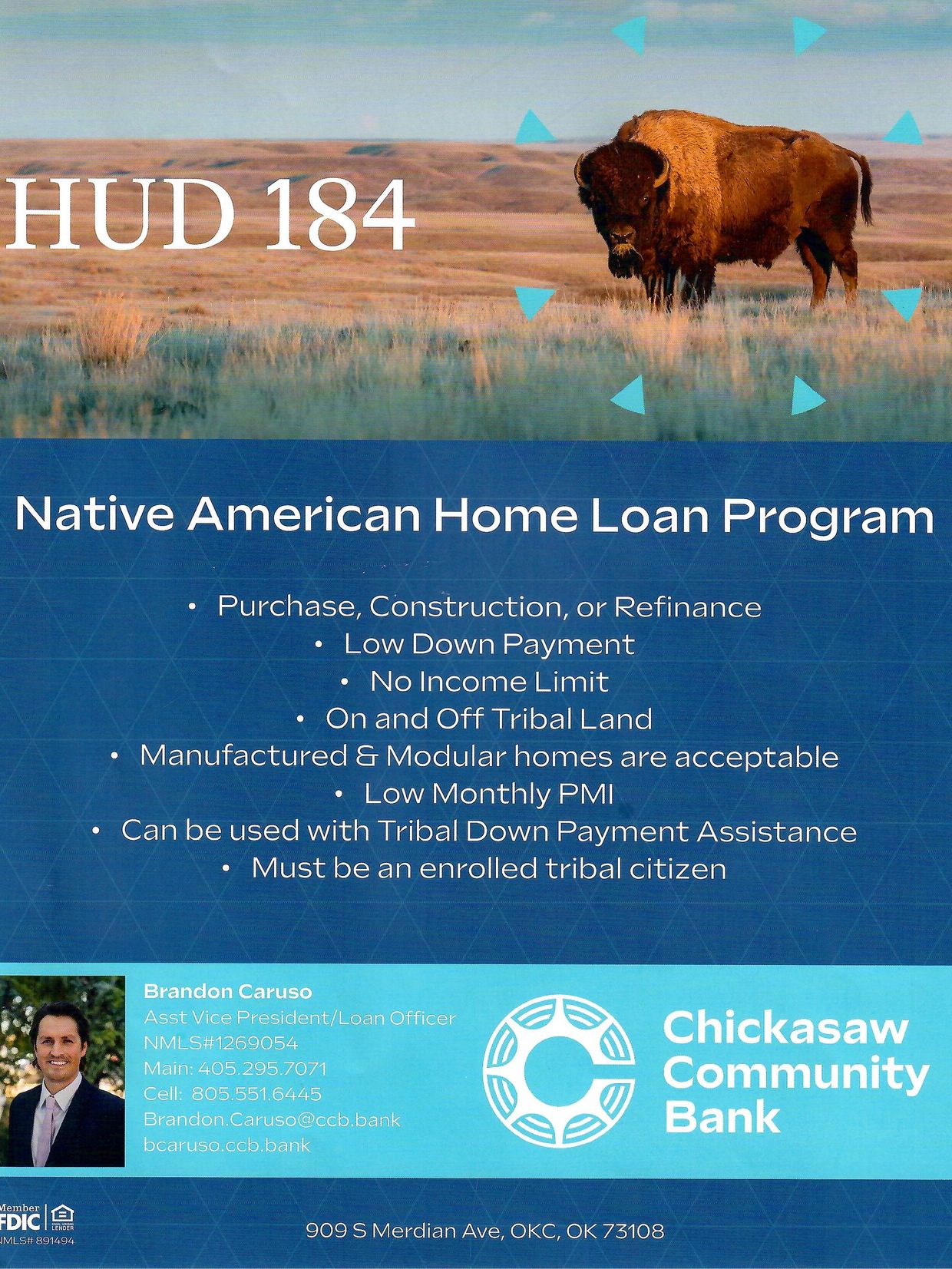
Navigating the HUD Section 184 Loan for Manufactured Homes: A Comprehensive Step-by-Step Guide
The dream of homeownership is a fundamental aspiration for many, and for Native American and Alaska Native communities, the HUD Section 184 Indian Home Loan Guarantee Program provides a powerful pathway to achieving this. While often associated with traditional site-built homes, this program can also be a vital tool for purchasing or refinancing manufactured homes. However, utilizing a Section 184 loan for a manufactured home comes with specific requirements and considerations that differ from other property types.
This comprehensive guide will walk you through the intricacies of the HUD Section 184 loan program, focusing specifically on its application for manufactured homes. We’ll cover eligibility, specific property requirements, the application process, and essential tips for a smooth journey to homeownership.
1. Understanding the HUD Section 184 Loan Program
The HUD Section 184 program is a loan guarantee program designed to increase homeownership and access to capital for Native Americans and Alaska Natives. It is not a direct loan from HUD, but rather HUD guarantees a portion of the loan made by approved private lenders. This guarantee reduces the risk for lenders, making it easier for eligible borrowers to obtain financing with more favorable terms.

Key Features of the HUD 184 Loan:
- Target Audience: Members of federally recognized Native American Tribes or Alaska Native Villages.
- Low Down Payment: As low as 2.25% for loans over $50,000, and 1.25% for loans $50,000 or less.
- Flexible Credit Guidelines: While creditworthiness is assessed, the program offers more flexibility than conventional loans.
- Competitive Interest Rates: Rates are often favorable due to the government guarantee.
- No Monthly Mortgage Insurance Premium (MIP): Unlike FHA loans, there is no recurring monthly MIP, though an upfront Guarantee Fee is paid at closing.
- Variety of Property Types: Can be used for purchasing, constructing, or rehabilitating single-family homes, duplexes, triplexes, fourplexes, and manufactured homes.
- Eligible Locations: Loans can be made on and off tribal lands, in approved areas where the program operates.

2. Manufactured Homes and HUD 184: Specific Requirements
This is where the nuances become critical. While Section 184 can finance manufactured homes, these properties must meet stringent requirements to be considered real estate rather than personal property.
The Most Crucial Requirements:
- Permanent Foundation: The manufactured home must be permanently affixed to a foundation that meets HUD and local building codes. This means the home cannot be easily moved and is anchored to the ground in a way that makes it a permanent structure. The foundation must be engineered and inspected.
- De-Titling (Conversion to Real Property): This is perhaps the most significant hurdle. A manufactured home, when it leaves the factory, is typically titled as personal property (like a vehicle) with a VIN. For a HUD 184 loan (or any traditional mortgage), the home must be de-titled and converted to real property. This process legally merges the home with the land it sits on, making it a single piece of real estate.
- Why is this important? Mortgage loans are secured by real estate. If the home is personal property, it cannot serve as collateral for a traditional mortgage.
- How it works: The process varies by state but generally involves surrendering the home’s title to the state’s Department of Motor Vehicles (or equivalent) and recording an affidavit of affixation with the county recorder’s office.
- Land Ownership/Lease: The borrower must either own the land on which the manufactured home is permanently affixed, or have a long-term, HUD-approved leasehold interest (common on tribal lands). The term of the lease must typically exceed the term of the mortgage.
- HUD Code Compliance: The manufactured home must have been built in accordance with the Federal Manufactured Home Construction and Safety Standards (HUD Code). This is usually indicated by a data plate and a red certification label on the exterior of each section of the home.
- Condition and Age: While there’s no strict age limit, the home must be in good condition, structurally sound, and meet all safety and habitability standards. Older homes may require significant repairs or updates to qualify.
- New vs. Existing Manufactured Homes:
- New Homes: Generally easier to finance as they are typically installed on a permanent foundation and de-titled as part of the purchase process.
- Existing Homes: Can be more complex, as you must verify that the home is already on a permanent foundation, has been de-titled, and meets current HUD and local codes. If not, the costs and effort to bring it into compliance can be substantial.
3. Borrower Eligibility Criteria
Before diving into property specifics, ensure you meet the basic borrower eligibility for a HUD 184 loan:
- Tribal Membership: You must be an enrolled member of a federally recognized American Indian Tribe or Alaska Native Village. Proof of tribal enrollment (e.g., tribal ID, Certificate of Degree of Indian Blood) will be required.
- Creditworthiness: While flexible, lenders will review your credit history. A stable payment history and reasonable debt-to-income ratio are important.
- Stable Income/Employment: You must demonstrate a stable and verifiable source of income sufficient to make your mortgage payments.
- Primary Residence: The home financed with a HUD 184 loan must be your primary residence.
- No Default on Federal Debt: You must not be in default on any federal debt.
4. The Step-by-Step Application Process for Manufactured Homes
Navigating the HUD 184 loan for a manufactured home requires a methodical approach. Follow these steps for a smoother process:
Step 1: Research and Education
Before engaging with lenders or looking at homes, thoroughly understand the HUD 184 program and, crucially, the specific requirements for manufactured homes. This guide is a great start, but consider visiting the HUD Office of Native American Programs (ONAP) website and reviewing their guidelines.
Step 2: Find a HUD 184 Approved Lender
Not all mortgage lenders offer HUD 184 loans. It’s essential to find a lender experienced with the program, and ideally, one that also has experience with manufactured homes.
- How to find one: HUD ONAP provides a list of approved lenders on its website. Contact several to compare their experience, rates, and specific processes for manufactured homes.
- Ask specific questions: Inquire about their experience with de-titling, permanent foundations, and appraisals for manufactured homes.
Step 3: Pre-Qualification and Pre-Approval
Once you’ve identified a potential lender, begin the pre-qualification or pre-approval process.
- Pre-qualification: A preliminary assessment based on verbal information, giving you an estimate of what you might afford.
- Pre-approval: A more thorough process where the lender verifies your financial information (income, assets, credit). This results in a letter stating the amount you’re approved to borrow, which is invaluable when making an offer on a home.
- Documents needed: Be prepared to provide tribal enrollment verification, pay stubs, W-2s, bank statements, and other financial documents.
Step 4: Property Search and Offer (Manufactured Home Focus)
With your pre-approval in hand, you can confidently begin your search for a manufactured home.
- Look for compliant properties: Prioritize homes that are already on a permanent foundation and have been de-titled. This will significantly simplify and speed up the process.
- Consider new manufactured homes: Purchasing a new manufactured home from a reputable dealer often means the foundation installation and de-titling process are handled as part of the sale, making it easier to meet loan requirements.
- Existing homes: Due Diligence: If considering an existing manufactured home, immediately verify its foundation type, and its titling status. Ask the seller for documentation proving it’s been de-titled and is on a permanent foundation. If not, understand the costs and feasibility of undertaking these steps yourself before making an offer.
- Land status: Confirm that the land is owned by you, or if on tribal land, that a HUD-approved long-term lease is available.
- Make an Offer: Once you find a suitable property, work with a real estate agent experienced with manufactured homes and HUD 184 loans to make an offer.
Step 5: Appraisal and Inspections
After your offer is accepted, the property evaluation phase begins.
- HUD-Approved Appraiser: An appraiser approved by HUD will evaluate the home’s value and ensure it meets HUD’s minimum property standards, with a specific focus on the manufactured home’s permanent foundation and overall condition.
- Home Inspection: It’s highly recommended to get an independent home inspection. This professional will identify any potential issues with the home’s structure, systems (electrical, plumbing, HVAC), and overall condition, which could impact its eligibility or lead to costly future repairs.
- Compliance Verification: The appraiser and inspector will confirm the home meets HUD Code standards and any local building codes.
Step 6: Underwriting
This is the lender’s final review of all submitted documentation for both you and the property.
- Comprehensive Review: The underwriter will scrutinize your financial documents, credit history, the appraisal, inspection reports, and all property-related documentation (especially regarding de-titling and foundation).
- Conditions: The underwriter may issue "conditions" – requests for additional documents or clarifications. Respond promptly to avoid delays.
- Manufactured Home Specifics: Expect extra scrutiny on the de-titling affidavit, foundation certification, and proof of HUD Code compliance.
Step 7: Closing
Once underwriting is complete and all conditions are met, your loan is approved, and you’ll proceed to closing.
- Review Documents: Carefully review all closing documents, including the Promissory Note, Mortgage/Deed of Trust, and the Closing Disclosure (CD), which details all costs and fees.
- Signatures: You’ll sign numerous documents, legally obligating you to the loan terms and transferring ownership of the property (or the leasehold interest).
- Funding: The loan funds are disbursed, and you officially become the homeowner!
5. Key Advantages of HUD 184 for Manufactured Homes
- Affordable Homeownership: Provides a viable path to homeownership for eligible individuals who might otherwise struggle to qualify for conventional financing.
- Low Barrier to Entry: The low down payment and flexible credit requirements make it more accessible.
- Investment in Community: Supports homeownership on and off tribal lands, strengthening Native communities.
- Long-Term Security: Allows borrowers to build equity and provides the stability of owning a permanent residence.
6. Potential Challenges and Considerations
- De-Titling Complexity: This remains the biggest potential hurdle. Ensure you understand your state’s specific process and costs.
- Lender Availability: Fewer lenders offer HUD 184 loans compared to conventional or FHA, and even fewer specialize in manufactured homes.
- Property Sourcing: Finding a manufactured home that already meets all the permanent foundation and de-titling requirements can take time.
- Appraisal Challenges: Appraising manufactured homes, especially older ones or those that need conversion, can be more complex than site-built homes.
- Timeframe: The process can sometimes take longer than other loan types due to the specific requirements and documentation.
7. Tips for a Smooth Process
- Partner with Experts: Work with a HUD 184-approved lender and a real estate agent who are highly experienced with manufactured homes. Their expertise will be invaluable.
- Get Pre-Approved Early: This clarifies your budget and demonstrates your seriousness to sellers.
- Understand De-Titling: If purchasing an existing manufactured home that hasn’t been de-titled, thoroughly investigate the process, costs, and timeline before committing.
- Maintain Good Credit: Even with flexible guidelines, a strong credit history will always lead to a smoother approval process.
- Be Patient and Persistent: The process can be detailed, but with diligent effort and the right team, homeownership is achievable.
Conclusion
The HUD Section 184 Loan offers an incredible opportunity for Native Americans and Alaska Natives to achieve homeownership, including through the purchase of manufactured homes. While there are specific requirements, particularly concerning the home’s permanent foundation and its conversion from personal to real property, these hurdles are manageable with proper guidance and preparation. By understanding the program, partnering with experienced professionals, and diligently following each step, you can successfully navigate the process and unlock the door to your manufactured home dream.


