The Blueprint for Homeownership: A Comprehensive Review of the HUD 184 Construction-to-Permanent Loan
The dream of homeownership, a cornerstone of the American experience, often presents unique challenges, especially when building a new home from the ground up. For eligible Native American and Alaska Native individuals and tribal communities, these challenges can be compounded by historical barriers to traditional financing. Enter the HUD Section 184 Indian Home Loan Guarantee Program, a powerful federal initiative designed to address these disparities. When combined with a Construction-to-Permanent (C2P) loan structure, the HUD 184 loan transforms into a uniquely tailored and incredibly impactful financial product, offering a streamlined path from vacant land to a brand-new home.
This comprehensive review delves into the HUD 184 Construction-to-Permanent loan, dissecting its features, advantages, and disadvantages, and ultimately offering a recommendation for those considering this specialized financing option. We’ll explore how this innovative product functions not just as a loan, but as a catalyst for community development and individual prosperity.
Understanding the Foundation: What is the HUD 184 Loan?
Before diving into the construction-to-permanent aspect, it’s crucial to grasp the core of the HUD 184 loan program itself. Established under the Housing and Community Development Act of 1992, the HUD 184 program is specifically designed to provide mortgage financing opportunities for eligible Native American and Alaska Native families, federally recognized tribes, and Tribally Designated Housing Entities (TDHEs).

Unlike conventional or even FHA loans, the HUD 184 loan is backed by a federal guarantee from the U.S. Department of Housing and Urban Development’s Office of Native American Programs (ONAP). This guarantee protects lenders from losses in case of default, encouraging them to lend in areas or to populations they might otherwise deem high-risk. This critical feature makes homeownership more accessible and affordable.
Key characteristics of the HUD 184 loan include:
- Eligibility: Restricted to enrolled members of federally recognized tribes or Alaska Natives.
- Property Location: Can be used to purchase or build homes on fee simple land, individually owned trust land, or tribal trust land. This flexibility is a significant advantage, particularly for properties located within tribal jurisdictions where conventional financing can be complex.
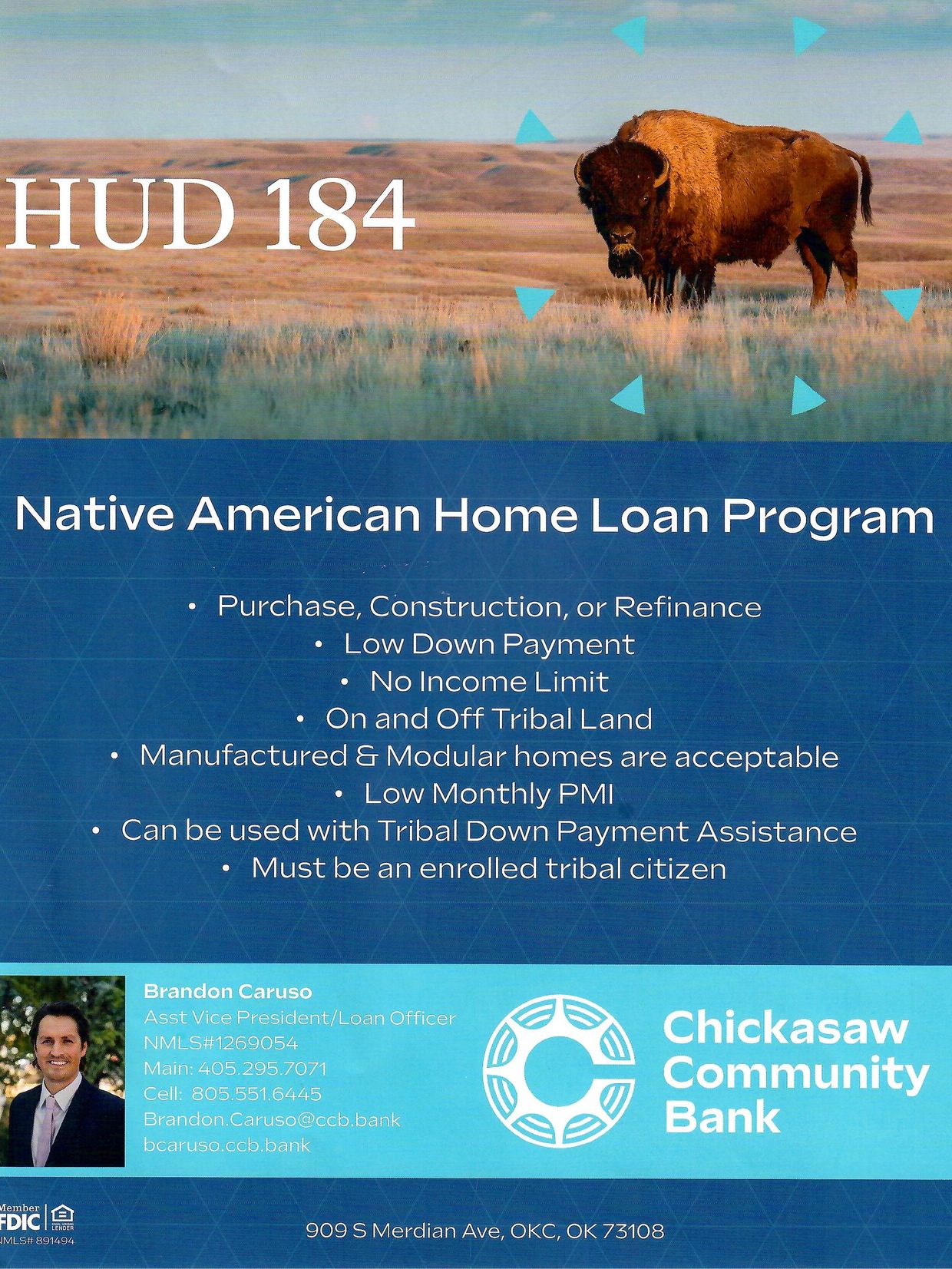
- Low Down Payment: Typically, a down payment as low as 2.25% for loans over $50,000, and 1.25% for loans $50,000 or less, making it highly accessible.
- Flexible Underwriting: While creditworthiness is still assessed, HUD 184 underwriting standards are generally more flexible than conventional loans, taking into account non-traditional credit histories and tribal income sources.
- Competitive Interest Rates: Due to the federal guarantee, interest rates are often competitive with FHA loans, and sometimes even lower.
- Mortgage Insurance Premium (MIP): An upfront and annual MIP is required, similar to FHA, though the annual premium is often lower than FHA.

The Construction-to-Permanent Mechanism: Building Seamlessly
Building a home typically involves two separate loans: a short-term construction loan to finance the building process, and then a permanent mortgage to pay off the construction loan once the home is complete. This "two-closing" process means two sets of closing costs, two application processes, and the potential for interest rate fluctuations between the two phases.
A Construction-to-Permanent (C2P) loan streamlines this process into a single loan with a single closing. Here’s how it generally works:
- Single Application & Closing: The borrower applies for one loan that covers both the construction phase and the permanent mortgage. All closing costs are paid upfront at this single closing.
- Construction Phase: During construction, the borrower typically makes interest-only payments on the funds disbursed to the builder (known as "draws"). Funds are released in stages as construction milestones are met, subject to inspections by the lender or a third-party inspector to ensure work is completed to specification.
- Conversion to Permanent Mortgage: Once construction is complete, the certificate of occupancy is issued, and a final inspection confirms the home’s readiness, the loan automatically converts into a permanent mortgage. The interest rate (which was typically locked in at the initial closing) then applies to the full loan amount, and the borrower begins making principal and interest payments.
The beauty of the C2P loan lies in its simplicity, cost-effectiveness, and stability.
The Synergistic Power: HUD 184 Construction-to-Permanent
Combining the unique benefits of the HUD 184 program with the efficiency of a C2P loan creates a potent financial tool for eligible borrowers looking to build a new home. This hybrid product allows Native American and Alaska Native families to leverage the federal guarantee and flexible underwriting for their construction project, while simultaneously benefiting from the streamlined, cost-saving C2P structure.
This specific product review will now examine the advantages and disadvantages of this powerful combination.
Advantages (Pros) of the HUD 184 Construction-to-Permanent Loan
- Unmatched Accessibility for Eligible Borrowers: This is the paramount advantage. The HUD 184 program exists specifically to address historical barriers to homeownership for Native Americans and Alaska Natives. The C2P option extends this accessibility to new construction, empowering individuals and tribes to build homes where traditional financing might be difficult or impossible, especially on trust lands.
- Low Down Payment Requirement: With down payments as low as 1.25% or 2.25%, the upfront financial barrier to building a home is significantly reduced. This is a crucial factor, as the cost of land acquisition and construction materials often leaves little capital for a large down payment.
- Flexible Underwriting Standards: The program’s understanding of unique tribal financial structures, varied employment histories, and non-traditional credit helps more eligible individuals qualify. This flexibility is particularly beneficial for those who might not meet the stringent requirements of conventional construction loans.
- Single Closing, Significant Savings: The C2P structure means only one set of closing costs, saving the borrower potentially thousands of dollars compared to taking out a separate construction loan and then refinancing into a permanent mortgage. This also reduces administrative hassle and paperwork.
- Interest Rate Stability: Locking in the interest rate at the initial closing protects the borrower from potential rate increases during the construction period, providing financial predictability and peace of mind.
- Federal Guarantee Encourages Lending: The HUD guarantee provides lenders with security, making them more willing to offer financing for new construction in tribal areas or for eligible borrowers, where they might otherwise hesitate. This expands the pool of available financing.
- No Geographic Restrictions (within eligible areas): While for eligible populations, the HUD 184 loan can be used to purchase or build a home in any location where a federally recognized tribe has a presence, on or off tribal lands, or within Alaska Native villages. This flexibility is vital for those who wish to build within their community.
- Strong Project Oversight & Builder Vetting: The federal guarantee means HUD has an interest in ensuring quality construction. Lenders typically require builders to be approved, licensed, and insured, and conduct regular inspections during the construction phase. This provides an added layer of protection for the borrower, ensuring the home is built to code and quality standards.
- Support for Economic Development: By facilitating new home construction, the HUD 184 C2P loan stimulates local economies, creates jobs, and contributes to the growth and stability of Native American and Alaska Native communities.
- Fixed-Rate Option: Most HUD 184 loans are offered with a fixed interest rate, providing long-term payment stability once the loan converts to the permanent phase.
Disadvantages (Cons) of the HUD 184 Construction-to-Permanent Loan
- Strict Eligibility Requirements: The primary drawback is its limited accessibility. Only enrolled members of federally recognized tribes or Alaska Natives are eligible. This is by design, but it means the vast majority of the population cannot utilize this product.
- Limited Lender Participation: Because it is a specialized program, not all mortgage lenders offer HUD 184 loans, and even fewer specialize in the construction-to-permanent variation. Finding a knowledgeable and experienced lender can be challenging and may require more research.
- Builder Approval and Vetting Process: While a pro for quality, it can be a con for flexibility. Builders must meet specific criteria, be licensed, insured, and approved by the lender and/or HUD. This can sometimes limit the borrower’s choice of builder, or slow down the process if a preferred builder isn’t already approved.
- Mandatory Mortgage Insurance Premium (MIP): Like FHA loans, HUD 184 requires both an upfront and an annual MIP. While often less expensive than FHA’s, it is an added cost that increases the overall expense of the loan and cannot be canceled without refinancing the loan into a conventional product.
- Stringent Construction Oversight and Draws: While beneficial for quality, the inspection and draw schedule can sometimes slow down the construction process if there are delays in inspections or if the builder isn’t accustomed to the federal program’s requirements.
- Potentially Slower Processing Times: The federal guarantee and additional layers of oversight can sometimes lead to longer processing times compared to conventional construction loans, requiring patience from the borrower.
- Loan Limits: While generous, there are loan limits tied to specific counties (usually 150% of the FHA loan limit for that area). For very high-cost areas or luxury builds, this might be a limiting factor.
- Appraisal Challenges: Appraising new construction, especially in rural or tribal areas where comparable sales data might be scarce, can sometimes be challenging and potentially impact the final loan amount.
Who is this "Product" For?
The HUD 184 Construction-to-Permanent loan is specifically designed for and best suited to:
- Enrolled members of federally recognized tribes or Alaska Natives who are looking to build a new primary residence.
- Individuals or families who value a streamlined financing process (single closing) and the stability of a locked-in interest rate during construction.
- Borrowers who may have good but non-traditional credit histories or who need a lower down payment option to achieve homeownership.
- Those planning to build on trust land or in areas where conventional financing options are limited or more expensive.
- Individuals who are comfortable with the federal oversight and inspection process for construction projects, understanding it’s for their protection.
Recommendation: Is the HUD 184 Construction-to-Permanent Loan Worth It?
For eligible borrowers, the HUD 184 Construction-to-Permanent loan is not just a viable option; it is often the superior and most empowering choice.
Strongly Recommended For:
- First-time homebuyers within the eligible demographic who need a low down payment and flexible underwriting.
- Anyone planning to build a home on tribal trust land or within a Native American community where conventional financing can be complex.
- Borrowers who prioritize financial predictability and the cost savings of a single closing.
- Those seeking a high degree of oversight and quality assurance during the construction process.
Consider Alternatives If:
- You are not an enrolled member of a federally recognized tribe or Alaska Native (as you are not eligible).
- You have substantial capital for a large down payment and excellent credit, potentially allowing you to secure a conventional construction loan with no mortgage insurance.
- You require extreme flexibility in builder choice or want to avoid any federal oversight in the construction process (though this comes with its own risks).
- You are building an exceptionally high-value home that exceeds the HUD 184 loan limits in your area.
Final Verdict:
The HUD 184 Construction-to-Permanent loan is an expertly tailored and incredibly valuable financial instrument. It effectively addresses unique historical and economic challenges faced by Native American and Alaska Native communities, offering a clear, accessible, and secure pathway to building a new home. Its advantages, particularly the low down payment, flexible underwriting, and single-closing efficiency, far outweigh its limitations for those it is designed to serve.
For eligible individuals and families dreaming of building their own home, the HUD 184 C2P loan is more than just a product; it’s a partner in realizing that dream, fostering self-determination, and strengthening communities. It earns a resounding recommendation for its targeted efficacy and profound impact.
Before proceeding, however, it is crucial to:
- Verify your eligibility with a HUD 184 approved lender.
- Research and connect with lenders who specialize in HUD 184 and have experience with construction-to-permanent loans.
- Understand all program requirements, including builder approval processes and ongoing mortgage insurance premiums.
- Obtain multiple quotes and carefully compare terms.
With proper due diligence, the HUD 184 Construction-to-Permanent loan can lay the foundation for not just a house, but a home, for generations to come.


