Navigating the Path to Homeownership: A Comprehensive Review of Finding Lenders for Native American Home Loans
The dream of homeownership is a cornerstone of the American ideal, representing stability, wealth building, and a place to call one’s own. For Native Americans, this dream often comes with a unique set of challenges, rooted in historical injustices, complex land tenure systems, and a lack of access to mainstream financial services. Finding a suitable lender for a home loan, particularly on tribal lands, is not merely a transaction; it’s a journey through a specialized financial landscape that demands knowledge, persistence, and the right resources.
This article reviews the "product" of finding lenders for Native American home loans, examining the various avenues available, their inherent advantages and disadvantages, and ultimately providing a strategic recommendation for prospective homeowners. We treat the process of identifying and securing appropriate financing as the "product" under scrutiny, evaluating its effectiveness, accessibility, and overall value.
The Unique Terrain: Why Finding Lenders is Different for Native Americans
Before diving into specific lending "products," it’s crucial to understand the foundational differences that shape the Native American home loan market. The most significant factor is land tenure. Much of Native American land is held in trust by the U.S. government for the benefit of individual tribal members or the tribe itself. This "trust land" cannot be directly mortgaged or foreclosed upon in the same way fee-simple land can, presenting a significant hurdle for conventional lenders.
Additionally, historical discrimination, lower average incomes, limited credit histories in remote communities, and a general lack of awareness among mainstream lenders about Native American specific programs further complicate the landscape. These factors necessitate specialized programs and lenders who understand and are willing to navigate these complexities.
The "Products" on Offer: Lending Avenues for Native Americans
The "product" of finding lenders for Native American home loans isn’t a single entity but a constellation of programs, institutions, and strategies. Here, we break down the primary avenues:
1. The HUD Section 184 Indian Home Loan Guarantee Program
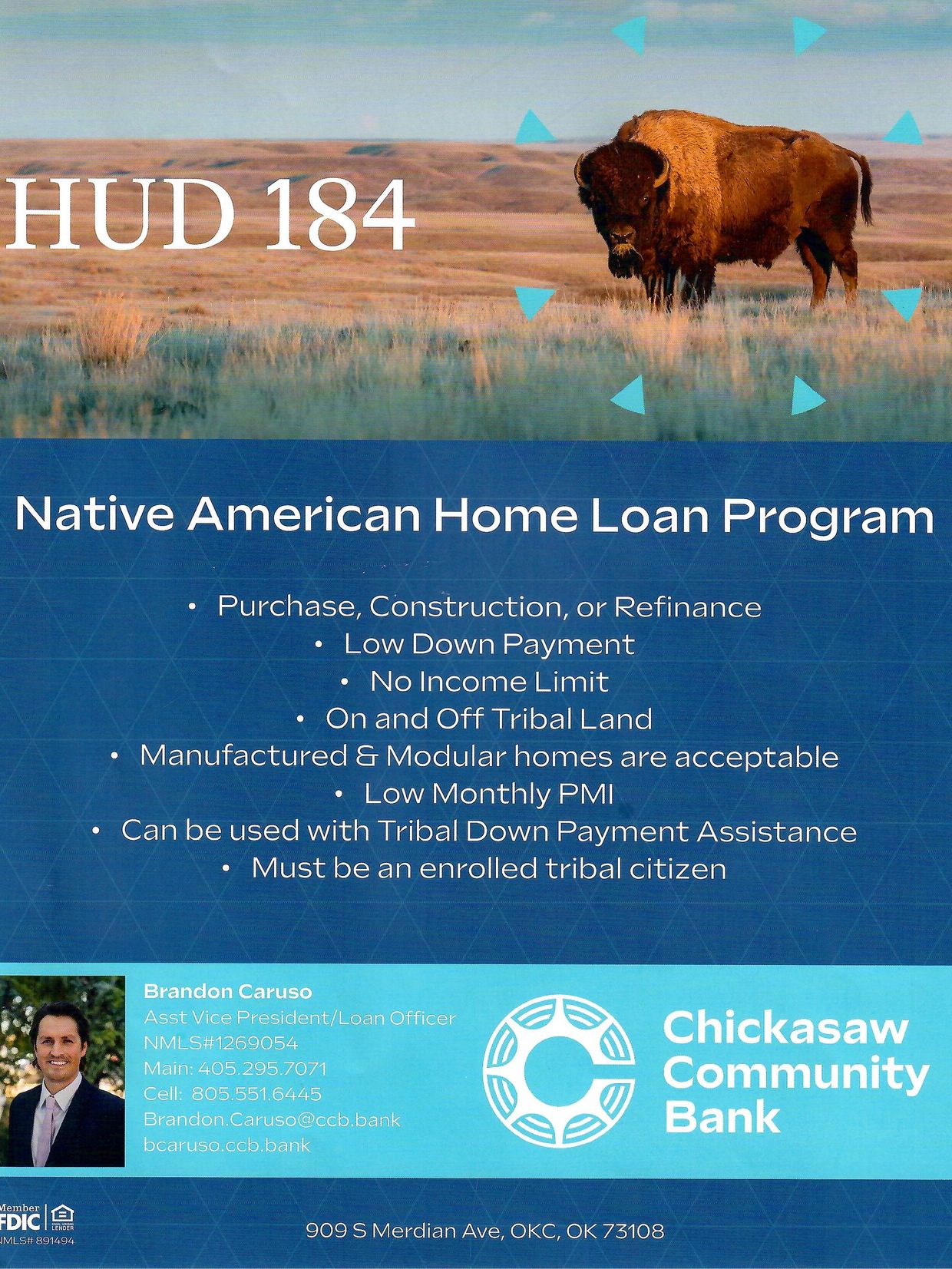
Overview: The HUD Section 184 program is arguably the most tailored and impactful "product" in this market. It’s a mortgage loan guarantee program specifically designed for Native Americans and Alaska Natives. The U.S. Department of Housing and Urban Development (HUD) guarantees loans made by private lenders to eligible borrowers, reducing the risk for lenders and making homeownership more accessible on and off tribal lands, including trust land.
Pros (Advantages):
- Trust Land Eligibility: This is its greatest strength. Section 184 is specifically designed to work on trust land, often requiring a leasehold agreement with the tribe or individual allottee, which HUD has pre-approved processes for.
- Low Down Payment: Borrowers typically need only a 2.25% down payment for loans over $50,000, and 1.25% for loans under $50,000.
- Flexible Underwriting: The program allows for more flexible credit score requirements and debt-to-income ratios compared to conventional loans, acknowledging unique financial circumstances in Native communities.
- Competitive Interest Rates: Because the loans are guaranteed by HUD, lenders are often willing to offer more competitive interest rates.
- No Mortgage Insurance Premium (MIP) for Life: Unlike FHA loans, the annual mortgage insurance premium for Section 184 loans is not required for the life of the loan, saving borrowers significant money over time. There is a one-time upfront guarantee fee, however.
- Broad Use: Loans can be used for purchasing an existing home, new construction, rehabilitation, or refinancing.
- Culturally Competent: The program’s design inherently recognizes and respects tribal sovereignty and land ownership structures.

Cons (Disadvantages):
- Limited Participating Lenders: While growing, the number of lenders approved to offer Section 184 loans is still smaller than for conventional or FHA loans. This can make finding a lender challenging, especially in more remote areas.
- Lender Knowledge Gaps: Even among approved lenders, the level of expertise in navigating trust land complexities can vary, potentially leading to delays or missteps.
- Processing Time: The unique nature of the program, especially on trust land, can sometimes lead to longer processing times compared to traditional mortgages.
- Tribal Enrollment Required: Borrowers must be an enrolled member of a federally recognized tribe or an Alaska Native village.
- Geographic Limitations: While broadly available, its practical application depends on the presence of willing lenders and tribal readiness for leasehold agreements.
2. VA Home Loans (for Eligible Native American Veterans)
Overview: The U.S. Department of Veterans Affairs (VA) home loan program offers significant benefits to eligible veterans. While not exclusively for Native Americans, it’s a powerful tool for those who have served. The VA also has a specific program, the Native American Direct Loan (NADL) program, which provides direct loans to eligible Native American veterans to purchase, construct, or improve homes on Federal Trust Land.
Pros (Advantages):
- No Down Payment (for VA-guaranteed loans): A major benefit, allowing veterans to purchase homes without a substantial upfront investment.
- No Private Mortgage Insurance (PMI): This saves veterans money monthly compared to conventional loans with less than 20% down.
- Competitive Interest Rates: VA loans often have some of the lowest interest rates available.
- Flexible Credit Requirements: The VA is generally more flexible than conventional lenders regarding credit scores and debt-to-income ratios.
- NADL for Trust Land: The NADL program directly addresses the trust land challenge, making it a highly effective "product" for eligible Native American veterans.
- Can be Combined: Some tribes and housing authorities offer down payment assistance that can be combined with VA loans.
Cons (Disadvantages):
- Eligibility Restricted to Veterans: Only those who meet VA service requirements can qualify.
- NADL Specifics: While excellent, the NADL program requires the veteran to be Native American and the home to be on trust land, limiting its broader applicability. It also has specific requirements regarding the tribal government’s role in the land lease.
- Lender Familiarity (for general VA loans on trust land): While VA loans can be used on trust land with a valid ground lease, finding a lender familiar with this specific intersection can still be a challenge.
3. USDA Rural Development Home Loans (Section 502 Direct and Guaranteed)
Overview: The U.S. Department of Agriculture (USDA) Rural Development program aims to help low- and moderate-income individuals purchase homes in rural areas. It offers both direct loans (financed by the USDA) and guaranteed loans (financed by approved lenders, guaranteed by USDA). Many tribal lands and surrounding communities fall within USDA-eligible rural areas.
Pros (Advantages):
- 100% Financing (No Down Payment): Both direct and guaranteed loans can offer 100% financing, eliminating the need for a down payment.
- Low Interest Rates (Direct Loans): USDA direct loans offer very low, fixed interest rates, sometimes as low as 1% with payment assistance.
- Flexible Underwriting: Similar to HUD 184 and VA, USDA loans have more flexible credit guidelines than conventional loans.
- Broad Geographic Reach (Rural): Covers a vast number of rural communities, including many Native American communities.
- Can Work on Trust Land: With appropriate lease agreements and tribal cooperation, USDA loans can be used on trust land, though it requires careful coordination.
Cons (Disadvantages):
- Income Limits: Borrowers must meet specific income thresholds, which vary by location.
- Geographic Restrictions: Homes must be located in USDA-designated rural areas.
- Not Specifically Tailored to Trust Land: While possible, the process for trust land is not as streamlined or central to the program’s design as with HUD 184 or NADL. It often requires strong tribal engagement and legal clarity on leaseholds.
- Limited Direct Loan Funding: Direct loans, while offering the best terms, are subject to funding availability and can have longer wait times.
4. Conventional Loans & FHA Loans (Mainstream Market)
Overview: These are the most common types of mortgages available through banks, credit unions, and mortgage companies. FHA (Federal Housing Administration) loans are government-insured, offering lower down payments and more flexible credit than conventional loans.
Pros (Advantages):
- Widespread Availability: Almost every lender offers conventional and FHA loans.
- FHA Flexibility: FHA loans offer lower down payments (as low as 3.5%) and more lenient credit requirements than conventional loans, making them accessible to a broader range of borrowers.
Cons (Disadvantages):
- Trust Land Incompatibility: This is the primary drawback. Conventional and FHA loans are generally not viable on trust land due to the inability to use the land as direct collateral. They are typically only an option for Native Americans purchasing homes on fee-simple land (off-reservation or privately owned land within a reservation).
- Higher Down Payments (Conventional): Conventional loans often require higher down payments (typically 5-20% or more) for competitive rates.
- Private Mortgage Insurance (PMI/MIP): Both require mortgage insurance if the down payment is less than 20% (FHA’s MIP is for the life of the loan in many cases), adding to monthly costs.
- Stricter Underwriting: Conventional loans, in particular, have stricter credit and debt-to-income requirements.
5. Tribal Housing Programs & Community Development Financial Institutions (CDFIs)
Overview: Many tribal nations have their own housing authorities, departments, or programs designed to assist members with homeownership. Additionally, CDFIs are specialized financial institutions that serve economically distressed communities, including many Native American communities, offering a range of financial products and services.
Pros (Advantages):
- Culturally Competent: These entities understand the unique cultural, historical, and economic context of Native communities.
- Direct Assistance: Tribal programs often provide down payment assistance, financial literacy training, credit counseling, and sometimes even direct lending for homes.
- Gap Filling: CDFIs and tribal programs can often bridge gaps not covered by federal programs, providing smaller loans, construction loans, or assistance for unique housing situations.
- Community-Focused: Their primary mission is community development and member welfare, not just profit.
- Local Expertise: They possess invaluable local knowledge of land tenure, tribal laws, and community needs.
Cons (Disadvantages):
- Limited Funding: Tribal programs and CDFIs often operate with limited budgets, meaning assistance might be capped or have waitlists.
- Geographic Specificity: Their services are typically limited to specific tribal lands or regions.
- Not Always Direct Mortgage Lenders: While some may offer direct loans, many focus on pre-purchase counseling, down payment assistance, or facilitating access to federal programs rather than originating full mortgages themselves.
- Varying Capacity: The effectiveness and scope of these programs can vary significantly from one tribe or CDFI to another.
Overarching Pros of the "Product" (The Process of Finding Lenders)
Despite the challenges, the overall "product" of finding lenders for Native American home loans offers several significant advantages:
- Access to Homeownership: It provides pathways for a historically underserved population to achieve the dream of homeownership, fostering stability and self-sufficiency.
- Wealth Creation: Homeownership is a primary driver of intergenerational wealth. These programs enable Native Americans to build equity and assets.
- Community Development: Increased homeownership strengthens tribal communities, reduces overcrowding, and supports local economies.
- Tailored Solutions: The existence of programs like HUD 184 and NADL demonstrates a recognition of unique needs and a commitment to providing appropriate solutions.
- Empowerment: Navigating these processes successfully empowers individuals and strengthens tribal sovereignty over their lands and resources.
Overarching Cons of the "Product" (The Process of Finding Lenders)
While the existence of these programs is positive, the "product" as a whole still faces considerable drawbacks:
- Complexity and Fragmentation: The landscape is complex, requiring borrowers to understand various programs, eligibility criteria, and land tenure systems.
- Information Asymmetry: Many mainstream lenders, and even some Native American borrowers, are unaware of the specialized programs or how to navigate them.
- Limited Lender Network: Even for programs like HUD 184, the number of truly knowledgeable and participating lenders remains a barrier, especially in rural or remote areas.
- Bureaucracy and Delays: The involvement of multiple government agencies (HUD, VA, USDA, BIA, tribal governments) can lead to bureaucratic hurdles and extended processing times.
- Risk of Predatory Lending: The complexity and lack of mainstream options can, in some cases, make borrowers vulnerable to less reputable lenders if they are not well-informed.
- Funding Limitations: Tribal programs and CDFIs, while invaluable, often face funding constraints that limit their reach and capacity.
Recommendation for "Purchase" (Pursuing Homeownership)
Given the nuanced landscape, a strategic and proactive approach is essential for Native Americans seeking home loans. The "purchase recommendation" for this "product" is not to choose one loan type, but to adopt a multi-faceted strategy:
Strong Recommendation: Leverage Specialized Programs and Seek Expert Guidance.
-
Start with Education and Preparation:
- Understand Your Land: Know whether the land you intend to build on or purchase is trust land, allotted land, or fee-simple. This is the foundational question that dictates viable loan options.
- Financial Literacy: Work on credit health, budgeting, and understanding debt-to-income ratios. Many tribal housing authorities and CDFIs offer free financial counseling.
- Gather Documents: Prepare tribal enrollment verification, income statements, tax returns, and any other relevant financial documentation.
-
Engage with Tribal Housing Authorities and CDFIs FIRST:
- These entities are invaluable resources. They can provide initial counseling, help you understand local options, offer down payment assistance, and connect you with approved lenders who specialize in Native American home loans. They are often the best "entry point" to the entire "product" landscape.
-
Prioritize HUD Section 184 for Trust Land:
- If you are buying or building on trust land, the HUD Section 184 program is your primary and most effective "product." Actively seek out lenders approved and experienced with Section 184 loans. Ask for their track record with trust land transactions.
-
Explore VA NADL for Eligible Veterans:
- If you are a Native American veteran and plan to build or buy on trust land, the VA Native American Direct Loan (NADL) is an unparalleled option. Connect directly with the VA or a VA-approved lender knowledgeable about NADL.
-
Consider USDA Rural Development for Rural Areas (with Caution on Trust Land):
- For homes in USDA-eligible rural areas (on or off tribal land), USDA loans offer 100% financing. If on trust land, ensure the lender and tribal authority are comfortable with the necessary lease agreements.
-
Seek Multiple Quotes and Vetting:
- Do not settle for the first lender you find. Shop around, compare interest rates, fees, and the lender’s experience with Native American home loans. Ask for references or testimonials.
-
Be Patient and Persistent:
- The process can be lengthy and require diligence. Maintain open communication with your lender, tribal housing authority, and any other involved parties.
Conclusion
The journey to homeownership for Native Americans is rich with unique challenges and specialized opportunities. While the "product" of finding lenders can be complex and fragmented, the existence of tailored programs like HUD Section 184 and VA NADL, coupled with the vital support of tribal housing authorities and CDFIs, represents a significant step forward.
For prospective Native American homeowners, success hinges on a commitment to education, proactive engagement with specialized resources, and a strategic selection of lending avenues. By understanding the landscape, leveraging available programs, and working with knowledgeable partners, the dream of a stable, culturally significant home on tribal or fee-simple land is not just possible, but increasingly within reach. The "product" is there; the key is knowing how to navigate it effectively.


