
Review: Navigating the Approved HUD 184 Loan Lenders List – A Gateway to Indigenous Homeownership
The dream of homeownership is a cornerstone of the American experience, representing stability, wealth building, and community roots. However, for many, particularly in underserved communities, traditional lending avenues can present significant hurdles. For Native American and Alaska Native individuals, families, and Tribal communities, the U.S. Department of Housing and Urban Development (HUD) Section 184 Indian Home Loan Guarantee Program stands as a vital and unique pathway to achieving this dream.
This comprehensive review delves into the "Approved HUD 184 Loan Lenders List," examining the program itself, its advantages and disadvantages, and providing recommendations for prospective borrowers. Understanding this list isn’t merely about finding a financial institution; it’s about connecting with a partner equipped to navigate the specific cultural, legal, and financial landscapes unique to Tribal lands and communities.
I. Understanding the HUD Section 184 Indian Home Loan Guarantee Program
Before dissecting the lenders, it’s crucial to grasp the essence of the HUD 184 loan program. Established in 1992, this program is specifically designed to increase homeownership and access to capital for Native American and Alaska Native families, Tribal governments, and Tribally Designated Housing Entities (TDHEs). Unlike conventional loans, or even other government-backed loans like FHA or VA, the HUD 184 program is tailored to the unique circumstances of Indigenous borrowers, including property on trust lands, restricted fee land, and fee simple land.
Key Features of the HUD 184 Loan:
- Guaranteed by HUD: This is the core of the program. HUD’s Office of Native American Programs (ONAP) guarantees 100% of the loan to the lender, reducing risk for financial institutions and making them more willing to lend in areas they might otherwise avoid.
- Eligible Borrowers: Must be an enrolled member of a federally recognized Tribe or an Alaska Native.
- Eligible Properties: Can be used for purchasing an existing home, new construction, rehabilitation, or refinancing an existing mortgage. Importantly, it covers properties on trust land, individual allotted land, tribal land, and fee simple land.
- Low Down Payment: Typically requires a low down payment, often as little as 2.25% for loans over $50,000, and 1.25% for loans $50,000 or less.
- Flexible Credit Requirements: While creditworthiness is still assessed, the program often offers more flexible underwriting guidelines compared to conventional loans.
- Competitive Interest Rates: Rates are typically market-driven but competitive, often comparable to FHA loans.
- Mortgage Insurance Premium (MIP): An upfront MIP (1% of the loan amount) and an annual MIP (0.25% of the outstanding loan balance) are required, similar to FHA loans, to help sustain the program.
- Loan Limits: Loan limits vary by county and are generally set at the FHA loan limits for that area.
- Portability: The loan can be assumed by another eligible Native American borrower.
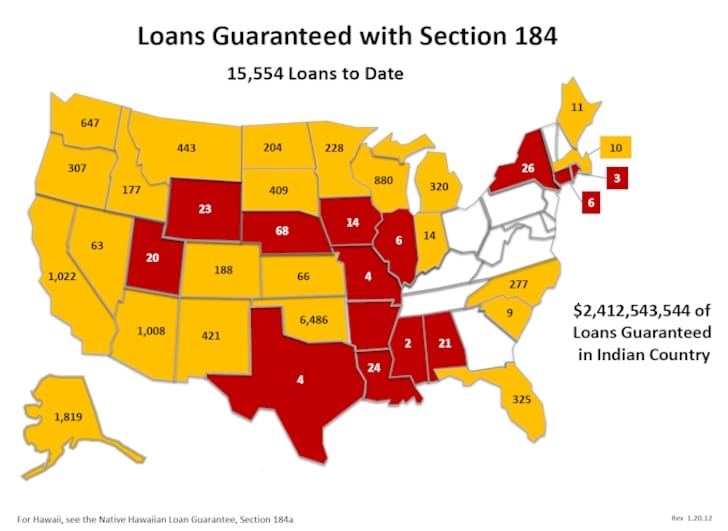
II. The Significance of the "Approved HUD 184 Loan Lenders List"
The "Approved HUD 184 Loan Lenders List" is not just a directory; it’s a curated roster of financial institutions that have undergone specific training and demonstrated expertise in originating and servicing HUD 184 loans. These lenders are critical conduits for the program’s success, bridging the gap between eligible borrowers and the unique requirements of the loan.
Why an Approved List is Crucial:
- Specialized Knowledge: Lending on Tribal lands involves complex legal frameworks (e.g., trust land leases, tribal ordinances) that differ from conventional real estate. Approved lenders are trained to understand these nuances.
- Compliance: They are familiar with HUD’s specific underwriting guidelines, property eligibility rules, and borrower qualifications for the 184 program.
- Risk Mitigation: By working with approved lenders, both borrowers and HUD can be assured that the loan process adheres to established standards, minimizing potential issues down the line.
- Access: The list helps borrowers identify institutions committed to serving the Native American community, rather than trying to educate a general lender about the program.
The most reliable place to find this list is directly on the HUD Office of Native American Programs (ONAP) website. This ensures you’re accessing the most current and accurate information.
III. Advantages (Pros) of the HUD 184 Loan Program and its Approved Lenders
The HUD 184 program, facilitated by its approved lenders, offers numerous compelling benefits:
- Increased Accessibility to Homeownership: This is the program’s primary strength. The low down payment and flexible credit criteria remove significant barriers, making homeownership a reality for many who might not qualify for conventional loans.
- Competitive and Stable Interest Rates: HUD 184 loans often offer fixed-rate mortgages, providing stability and predictability in monthly payments, which is invaluable for long-term financial planning.
- Tailored for Tribal Land Transactions: This is where the 184 program truly shines. Approved lenders understand and are equipped to handle the unique legal aspects of lending on trust or restricted fee land, including leasehold interests, title status reports, and tribal approvals. This capability is virtually non-existent in conventional lending.
- Reduced Risk for Lenders, Greater Access for Borrowers: The 100% HUD guarantee significantly reduces the risk for approved lenders, encouraging them to lend in areas or to borrowers they might otherwise deem high-risk. This translates directly into more options for eligible Native American borrowers.
- No Geographic Restrictions (Within Eligible Areas): While borrowers must be Native American, the program is available nationwide wherever an approved lender operates, not just on reservations. This allows Native Americans living off-reservation to also benefit.
- Supports Economic Development: By facilitating homeownership, the program contributes to wealth building within Native American communities, fostering economic stability and growth.
- Refinance Options Available: Borrowers can use the HUD 184 program to refinance existing mortgages, potentially lowering interest rates or converting adjustable-rate mortgages to fixed rates.
- Knowledgeable Lending Partners: Approved lenders often have dedicated staff who understand the cultural context and specific needs of Native American borrowers, leading to a more respectful and efficient process.
- Loan Portability: The ability for another eligible Native American borrower to assume the loan can be an advantage in certain circumstances, particularly within tribal communities.
IV. Disadvantages (Cons) of the HUD 184 Loan Program and its Approved Lenders
Despite its significant benefits, the HUD 184 program and the process of finding an approved lender come with certain challenges:
- Limited Number of Approved Lenders: While the list exists, the total number of lenders compared to conventional or FHA lenders is smaller. This can lead to less competition, potentially fewer options for borrowers, and might require borrowers in some rural areas to work with lenders based in distant cities.
- Geographic Specificity for Property: While borrowers can be anywhere, the property must be located within an eligible service area (which typically includes reservation lands, approved tribal trust lands, and other designated areas). This can sometimes create confusion for borrowers or their real estate agents if they aren’t familiar with the program’s scope.
- Perceived Complexity and Longer Processing Times: Due to the unique legal requirements of tribal land, such as obtaining Title Status Reports (TSRs) from the Bureau of Indian Affairs (BIA) and securing tribal approvals for leases, the process can sometimes be longer than conventional loans. This often isn’t the lender’s fault but rather a function of the necessary steps involved with multiple agencies.
- Mortgage Insurance Premium (MIP): Like FHA loans, the HUD 184 requires both an upfront and annual MIP. While this protects the lender and sustains the program, it adds to the overall cost of the loan and cannot be cancelled for the life of the loan.
- Less Familiarity Among General Real Estate Professionals: Because it’s a niche program, many real estate agents, particularly those not regularly working with Tribal communities, may be unfamiliar with the HUD 184 loan. This can sometimes lead to misunderstandings or delays if the agent isn’t prepared to work with a specialized lender and property requirements.
- Dependence on Tribal Approvals/BIA Processes: For properties on trust land, obtaining tribal consent or BIA documentation (like a TSR) is a mandatory step. The speed of these processes can vary greatly depending on the specific Tribe’s governance and the BIA office’s workload, potentially impacting closing timelines.
- Potential for Higher Closing Costs: While the down payment is low, borrowers should still budget for closing costs, which can include appraisal fees, title insurance (complex for trust land), lender fees, and potentially points.
- Not All Lenders Are Equal: Even among approved lenders, the level of experience, customer service, and efficiency can vary. Simply being on the list doesn’t guarantee a smooth process.
V. How to Choose an Approved HUD 184 Lender: Beyond the List
Having the "Approved HUD 184 Loan Lenders List" is a great starting point, but the real work begins in selecting the right lender for you. Here’s what to consider:
- Experience with 184 Loans: Ask how many 184 loans they’ve closed in the last year. A lender closing dozens will likely have a more streamlined process and greater expertise than one closing only a handful.
- Knowledge of Your Specific Tribe/Region: Some lenders specialize in particular regions or have established relationships with specific Tribal governments. This local knowledge can be invaluable.
- Communication and Responsiveness: The loan process can be complex. Choose a lender who communicates clearly, proactively, and promptly. You want a loan officer who will explain each step and answer your questions thoroughly.
- Understanding of Tribal Culture and Governance: A lender who demonstrates cultural sensitivity and an understanding of tribal sovereignty and local customs can make a significant difference in the experience.
- Fees and Interest Rates: While the program dictates some aspects, lenders can still have variations in their fees (origination, processing, etc.) and specific interest rate offerings. Compare Loan Estimates from multiple lenders.
- Customer Service and Reputation: Look for online reviews, ask for references, and gauge your comfort level during initial conversations. A good lender acts as a partner.
- In-House Processing vs. Brokerage: Some approved lenders underwrite and service the loans in-house, which can sometimes lead to a more controlled and efficient process. Others might act as brokers, connecting you to a different entity. Understand their model.
VI. Is the HUD 184 Loan Right for You? (Purchase Recommendation)
The HUD 184 loan program is an invaluable tool, but it’s not the only option, and it may not be the perfect fit for everyone.
You SHOULD strongly consider a HUD 184 loan if:
- You are an enrolled member of a federally recognized Tribe or an Alaska Native. This is the primary eligibility requirement.
- You are looking to purchase, build, or refinance a home on Tribal land (trust land, restricted fee, or fee simple within an eligible area). This is where the program’s unique benefits truly shine.
- You have a limited down payment. The low down payment requirement makes homeownership accessible.
- You have a less-than-perfect credit history. The program’s flexible underwriting can be a significant advantage.
- You prioritize a fixed-rate mortgage with stable payments.
- You are comfortable with the MIP structure.
- You are willing to navigate a potentially longer or more complex closing process due to tribal land requirements.
You MIGHT explore other options (or compare them closely) if:
- You are not an enrolled member of a federally recognized Tribe or Alaska Native. You are not eligible for this program.
- You have excellent credit and a substantial down payment. You might qualify for a conventional loan with potentially lower overall costs (no MIP or cancellable PMI).
- You are looking for the absolute fastest closing time. While many 184 loans close efficiently, the additional steps for tribal land can sometimes add time.
- You are purchasing a property in an area where very few 184 approved lenders operate. This might make the process more challenging.
Recommendation:
For eligible Native American and Alaska Native individuals, the HUD Section 184 Indian Home Loan Guarantee Program, facilitated by its approved lenders, is an outstanding and highly recommended option for achieving homeownership. It is specifically designed to address historical inequities and provide a tailored solution for a unique demographic and land tenure system.
The "Approved HUD 184 Loan Lenders List" is more than just a list of names; it’s a resource to connect you with specialized experts. While the process may have its complexities, the benefits of low down payments, flexible credit, and the ability to finance homes on Tribal lands are unparalleled.
Action Steps:
- Verify Eligibility: Confirm you are an enrolled member of a federally recognized Tribe or Alaska Native.
- Visit HUD ONAP: Go directly to the HUD Office of Native American Programs website to access the most current list of approved lenders.
- Contact Multiple Lenders: Don’t just pick the first one. Reach out to at least 2-3 approved lenders from the list. Discuss your specific situation, ask about their experience, and request a preliminary Loan Estimate.
- Educate Your Real Estate Agent: If your agent is unfamiliar with the 184 loan, provide them with information and encourage them to communicate directly with your chosen lender.
- Be Patient and Proactive: Understand that the process can involve multiple agencies (BIA, Tribal Housing Authorities). Be prepared to provide documentation promptly and follow up regularly.
VII. Conclusion
The HUD Section 184 Indian Home Loan Guarantee Program, and the dedicated network of approved lenders that support it, represents a critical and successful initiative in fostering homeownership and economic stability within Native American and Alaska Native communities. It is a powerful testament to targeted government programs that genuinely address specific needs. While potential borrowers must be prepared for the program’s unique requirements and due diligence in selecting a lender, the advantages far outweigh the disadvantages for those it is designed to serve. By carefully utilizing the "Approved HUD 184 Loan Lenders List" and engaging with experienced professionals, the dream of owning a home on Tribal lands, or elsewhere, can become a tangible reality.


