
A Second Chance at Homeownership: Native American Home Loans for Individuals with Prior Bankruptcy
The dream of homeownership is a cornerstone of the American experience, representing stability, wealth building, and a place to call one’s own. However, for many, this dream can be derailed by financial setbacks, most notably bankruptcy. The path back to mortgage eligibility after a bankruptcy can be long and challenging, often requiring years of diligent credit rebuilding and a pristine financial record. This challenge is often compounded for Native American individuals who, due to historical inequities and systemic barriers, may face additional hurdles in accessing conventional financing.
Yet, a beacon of hope exists in the form of specialized home loan programs designed to serve Native American communities. Among these, the HUD Section 184 Indian Home Loan Guarantee Program stands out as a powerful tool, particularly for those seeking a second chance after a prior bankruptcy. This article will delve deep into the intricacies of these loans, exploring their unique advantages and potential drawbacks, and ultimately offering a comprehensive recommendation for Native American individuals with a bankruptcy history considering this vital pathway to homeownership.
Understanding the Landscape: Homeownership Challenges and the Role of Section 184
For generations, Native American communities have faced significant challenges in achieving equitable homeownership rates. Issues such as a lack of access to traditional credit, the complexities of land tenure on tribal lands (trust land vs. fee simple), lower median incomes, and a history of discriminatory lending practices have created substantial barriers. Recognizing these disparities, the U.S. Department of Housing and Urban Development (HUD) established the Section 184 Indian Home Loan Guarantee Program.
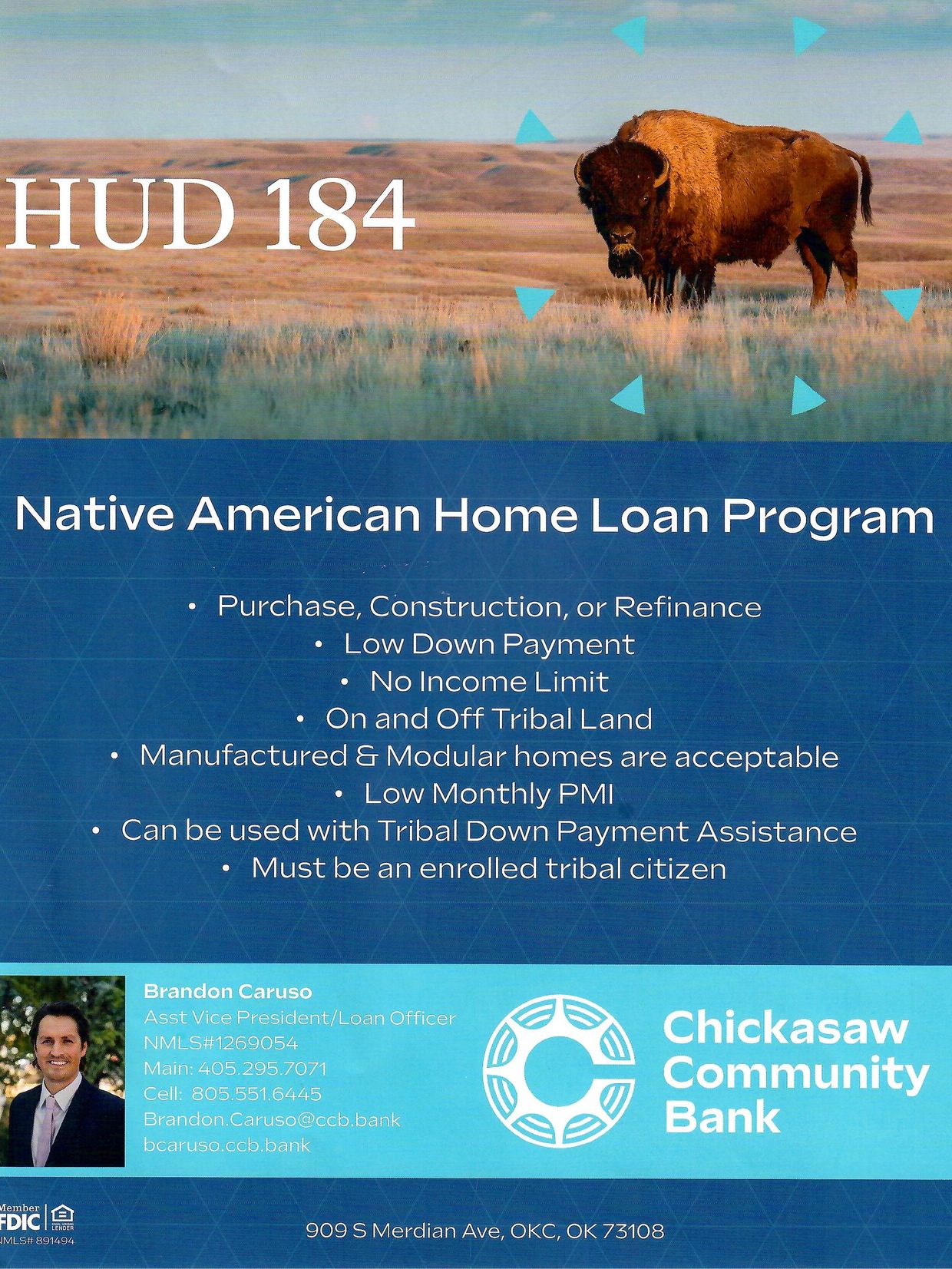
The Section 184 program is specifically designed to provide mortgage financing opportunities for eligible Native American and Alaska Native individuals, families, and Tribal governments. It works by guaranteeing a portion of the loan made by private lenders, reducing the risk for those lenders and making them more willing to offer financing to qualified borrowers who might otherwise struggle to obtain a mortgage. This guarantee is a crucial element, as it allows for more flexible underwriting standards than conventional loans, directly addressing some of the historical and systemic barriers faced by Native Americans.
Navigating Bankruptcy and Mortgage Eligibility
A prior bankruptcy, whether Chapter 7 (liquidation) or Chapter 13 (reorganization), significantly impacts a borrower’s ability to qualify for a mortgage. Lenders view bankruptcy as a major red flag, indicating a past inability to manage financial obligations. Traditional mortgage programs (FHA, VA, Conventional) typically impose strict "waiting periods" after a bankruptcy discharge before a borrower can even apply for a new loan:
- Chapter 7 Bankruptcy: Generally, a 2-year waiting period for FHA, 2 years for VA, and 4 years for conventional loans after discharge.
- Chapter 13 Bankruptcy: Often, a 1-year waiting period after discharge (or even during the repayment plan with court approval) for FHA and VA, and 2 years after discharge for conventional loans.
These waiting periods are designed to allow borrowers to re-establish a positive credit history and demonstrate financial stability. During this time, it’s crucial for individuals to focus on rebuilding their credit score, paying bills on time, and managing their finances responsibly.
The Intersection: Section 184 and Post-Bankruptcy Borrowers

This is where the Section 184 program truly shines for Native American individuals with a prior bankruptcy. While it doesn’t eliminate waiting periods entirely, its more flexible underwriting often allows for shorter and more nuanced considerations:
- Chapter 7 Bankruptcy: Section 184 guidelines typically require a minimum of 2 years after the discharge date. However, critically, the underwriter will also consider the reason for the bankruptcy, the borrower’s re-established credit, and their current financial stability. If the bankruptcy was due to extenuating circumstances (e.g., job loss, medical emergency, divorce) that are unlikely to recur, and the borrower has demonstrated responsible financial behavior since, they may still qualify.
- Chapter 13 Bankruptcy: For Chapter 13, Section 184 often allows for qualification after 1 year of on-time payments within the repayment plan, provided the borrower obtains court permission and demonstrates a consistent payment history. If the bankruptcy has been discharged, a 1-year waiting period from the discharge date is generally required.
This flexibility, combined with the program’s overall understanding of the unique financial circumstances within Native American communities, makes Section 184 a far more accessible option than conventional loans for those recovering from bankruptcy.
Advantages of Section 184 for Post-Bankruptcy Borrowers (Pros)
-
More Flexible Underwriting Standards: This is the primary benefit. While traditional lenders might strictly adhere to credit score cutoffs and DTI ratios, Section 184 allows for a more holistic review. Underwriters are trained to consider the unique financial histories of Native American borrowers, including non-traditional credit references and the circumstances surrounding a past bankruptcy. This doesn’t mean credit scores don’t matter, but rather that a slightly lower score might be acceptable if other factors demonstrate financial stability.
-
Shorter Waiting Periods Post-Bankruptcy: As detailed above, the waiting periods for Section 184 loans are generally shorter than those for conventional mortgages and often comparable to or slightly more flexible than FHA/VA, particularly for Chapter 13 scenarios. This significantly accelerates the path to homeownership.
-
Lower Down Payment Requirements: Section 184 requires a minimal down payment: only 2.25% for loans over $50,000 and 1.25% for loans $50,000 or less. This is substantially lower than the 3% to 5% often required for conventional loans and even slightly less than FHA’s 3.5%. For individuals rebuilding finances after bankruptcy, accumulating a large down payment can be a major hurdle.
-
No Monthly Mortgage Insurance (PMI): Unlike FHA loans (which have an upfront and annual mortgage insurance premium) and conventional loans with less than 20% down (which require Private Mortgage Insurance or PMI), Section 184 does not require ongoing monthly mortgage insurance. There is a one-time, upfront guarantee fee of 1.5% of the loan amount, which can be financed into the loan. Eliminating monthly PMI saves borrowers hundreds of dollars each year, making homeownership more affordable.
-
Competitive Interest Rates: Because the loans are guaranteed by HUD, lenders perceive less risk, allowing them to offer competitive interest rates similar to FHA or conventional rates. This ensures that borrowers aren’t penalized with excessively high rates due to their past bankruptcy.
-
Broad Eligibility for Property Location: Section 184 loans can be used to purchase homes on and off tribal lands, including fee simple land, individually owned trust land, and tribal trust land. This flexibility is crucial, as many Native American individuals may not reside on tribal lands but still benefit from the program.
-
Community-Focused Lending: Lenders approved to offer Section 184 loans are often more familiar with the specific challenges and nuances of lending to Native American communities. This can lead to a more understanding and supportive lending experience.
Disadvantages of Section 184 for Post-Bankruptcy Borrowers (Cons)
-
Strict Eligibility Requirements: The primary drawback is that the program is exclusively for enrolled members of federally recognized tribes or their Tribally Designated Housing Entities. This limits its applicability significantly.
-
Property Location Restrictions (Eligible Areas): While broader than just tribal lands, Section 184 loans can only be used in specific "eligible areas" designated by HUD. These generally include tribal areas, but also some broader regions with significant Native American populations. Borrowers must confirm their desired property is within an eligible area.
-
Not All Lenders Offer It: Section 184 is a specialized program, and not all mortgage lenders are approved to offer it. This means borrowers may need to do more research to find a qualified lender, which can sometimes limit options or require working with a lender that may not be local.
-
Still Requires Demonstrated Financial Stability: While the underwriting is flexible, it’s not a free pass. Borrowers must still demonstrate that they have re-established financial stability since the bankruptcy. This includes a consistent income, a good payment history on new credit, and a reasonable debt-to-income ratio. The bankruptcy must be in the past, and a clear path forward must be evident.
-
One-Time Upfront Guarantee Fee: While there’s no monthly PMI, the 1.5% upfront guarantee fee, while financeable, adds to the total loan amount. Borrowers should be aware of this cost.
-
Potential for Tribal-Specific Requirements: If purchasing a home on tribal trust land, there might be additional tribal-specific requirements or lease agreements that need to be navigated. This can add complexity to the closing process, requiring coordination between the borrower, lender, and tribal housing authority.
-
Credit Rebuilding is Still Essential: While waiting periods are shorter, the quality of credit rebuilding post-bankruptcy is paramount. Simply waiting out the period isn’t enough; actively demonstrating responsible financial behavior is critical for approval.
Rebuilding Credit and Financial Health Post-Bankruptcy
For any individual, especially a Native American borrower eyeing a Section 184 loan after bankruptcy, the period between discharge and loan application is crucial for financial rehabilitation. Here are key steps:
- Obtain Your Credit Report: Access free reports from AnnualCreditReport.com to identify any inaccuracies and understand your current credit standing.
- Establish New Credit Responsibly: Open a secured credit card or a small, installment loan (like a credit-builder loan) and make all payments on time, every time.
- Pay All Bills On Time: This is the single most important factor in rebuilding credit. Even non-credit accounts like utilities or rent, if reported, can help.
- Keep Credit Utilization Low: If you have credit cards, keep your balances below 30% of your credit limit.
- Create and Stick to a Budget: Demonstrate control over your finances by living within your means and saving for your down payment and closing costs.
- Build Savings: A healthy savings account provides a buffer and shows lenders financial prudence.
- Understand the Bankruptcy’s Cause: Be prepared to explain to a lender what led to the bankruptcy and what steps you’ve taken to prevent a recurrence.
The "Purchase Recommendation": Is Section 184 Right For You?
For Native American individuals who have experienced a prior bankruptcy, the HUD Section 184 Indian Home Loan Guarantee Program comes with a strong recommendation as a viable and often superior pathway to homeownership, provided certain conditions are met.
You should strongly consider a Section 184 loan if:
- You are an enrolled member of a federally recognized tribe. This is the non-negotiable prerequisite.
- You have completed the required waiting period (generally 2 years post-Chapter 7 discharge or 1 year post-Chapter 13 discharge/during repayment with court approval) and have actively worked to rebuild your credit and financial stability since the bankruptcy.
- You have a stable income and verifiable employment that demonstrates your ability to make consistent mortgage payments.
- You have a reasonable debt-to-income (DTI) ratio that shows you can manage your existing debts alongside a new mortgage.
- You have taken concrete steps to address the root causes of your bankruptcy and can articulate how you’ve changed your financial habits.
- The property you wish to purchase is in an eligible Section 184 area.
Why it’s a "Buy": The Section 184 program is uniquely tailored to empower Native American individuals. Its flexible underwriting, shorter post-bankruptcy waiting periods, low down payment, and lack of monthly PMI significantly reduce barriers that would otherwise be insurmountable for many recovering from bankruptcy. It’s a program built on understanding and opportunity, offering a second chance when conventional avenues remain closed.
However, it’s not a magic bullet. While the program offers flexibility, it still demands responsibility. You must demonstrate that your financial struggles are behind you and that you are committed to responsible homeownership. Simply having the eligibility doesn’t guarantee approval; it grants you a fairer opportunity to prove your readiness.
Conclusion
The dream of homeownership, even after the significant setback of bankruptcy, remains attainable for Native American individuals thanks to the HUD Section 184 Indian Home Loan Guarantee Program. This vital program acts as a bridge, connecting aspiring homeowners with the financial resources they need, even when their past credit history might deter traditional lenders. By offering more flexible underwriting, shorter post-bankruptcy waiting periods, and significant cost savings, Section 184 stands as a testament to the power of targeted programs in fostering equitable opportunities.
For those eligible, it represents not just a loan, but a pathway to rebuilding, stability, and the realization of a fundamental American dream. If you are a Native American individual with a prior bankruptcy, take the crucial first steps: diligently rebuild your credit, educate yourself on the program’s specifics, and connect with a Section 184 approved lender. Your journey to homeownership, once perhaps unimaginable, is truly within reach.


