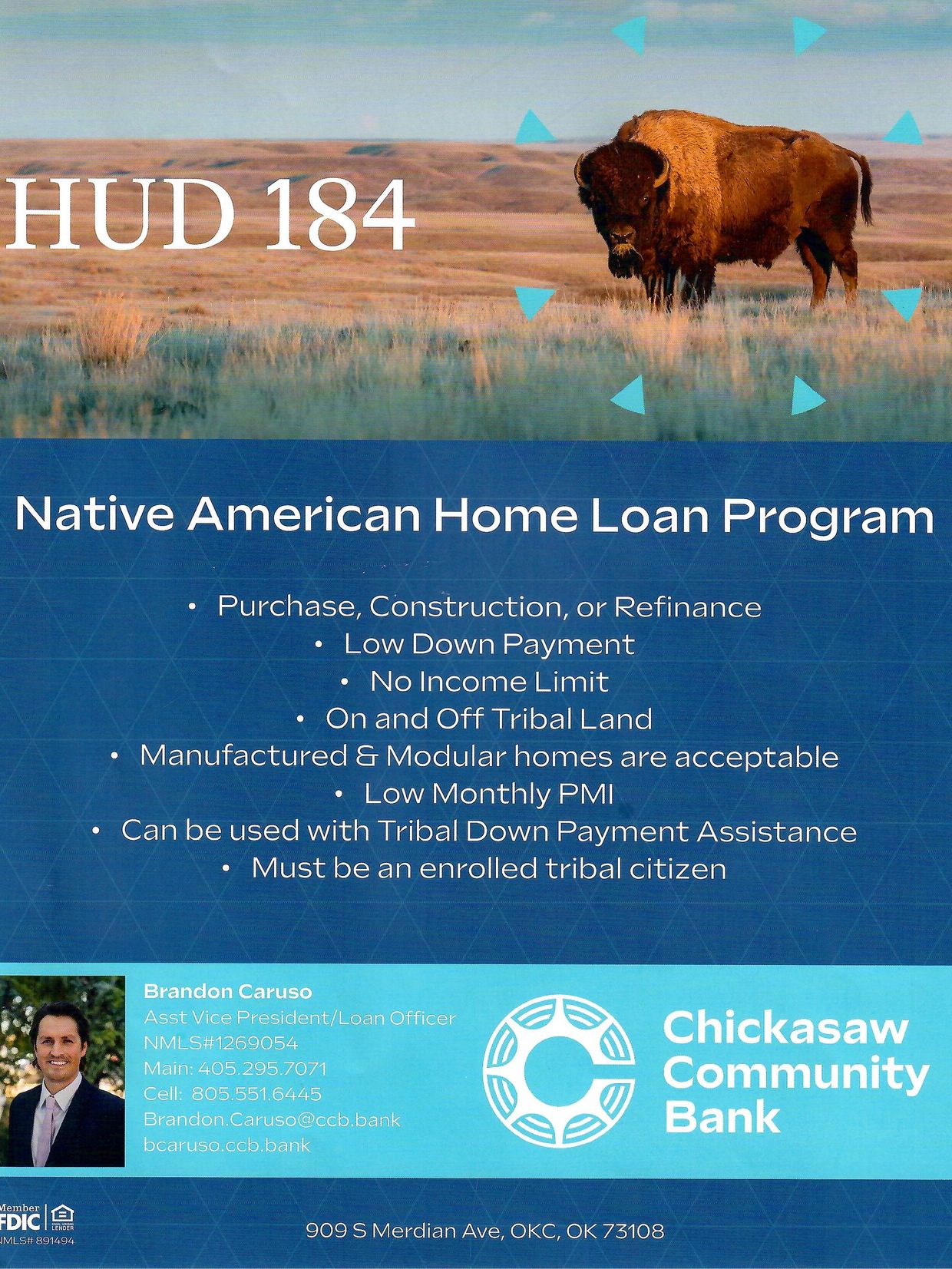
Unlocking Homeownership: Your Guide to Getting Pre-Approved for a HUD Section 184 Loan
The dream of homeownership is a universal aspiration, representing stability, security, and a legacy for future generations. For eligible Native American and Alaska Native individuals and families, the path to this dream is often made more accessible and affordable through the U.S. Department of Housing and Urban Development (HUD) Section 184 Indian Home Loan Guarantee Program. This unique program is designed to increase homeownership opportunities within Native American communities, offering flexible underwriting, competitive interest rates, and low down payment options.
However, navigating the world of mortgage loans can be daunting, and the Section 184 program, while beneficial, has its own specific requirements and processes. The crucial first step in this journey is obtaining pre-approval. This article will serve as your comprehensive guide to understanding the HUD Section 184 loan, detailing the pre-approval process, outlining its advantages and disadvantages, and providing a clear recommendation for those considering this powerful tool for homeownership.
What is the HUD Section 184 Indian Home Loan Guarantee Program?
Before diving into pre-approval, it’s essential to grasp the fundamentals of the Section 184 program. Established in 1992, this program aims to provide Native American and Alaska Native families with access to mortgage financing to purchase, construct, or rehabilitate homes, or to refinance existing mortgages. The "guarantee" aspect means that HUD guarantees 100% of the loan to the lender, reducing the lender’s risk and encouraging them to offer loans to a population that might otherwise face barriers in the conventional market.
Key characteristics of the Section 184 program include:
- Eligibility: Restricted to enrolled members of federally recognized American Indian and Alaska Native tribes.
- Purpose: Can be used for purchasing an existing home, constructing a new home, rehabilitating a home, or refinancing.
- Location: Loans can be used on trust land, restricted land, or fee simple land, both on and off reservations, provided the property is within an eligible area.
- Administration: Overseen by HUD’s Office of Native American Programs (ONAP).
The Section 184 program stands apart from conventional loans and even other government-backed options like FHA or VA loans, primarily due to its specific focus on tribal communities and its tailored underwriting guidelines designed to reflect unique financial circumstances within those communities.
The Crucial First Step: Getting Pre-Approved for a Section 184 Loan
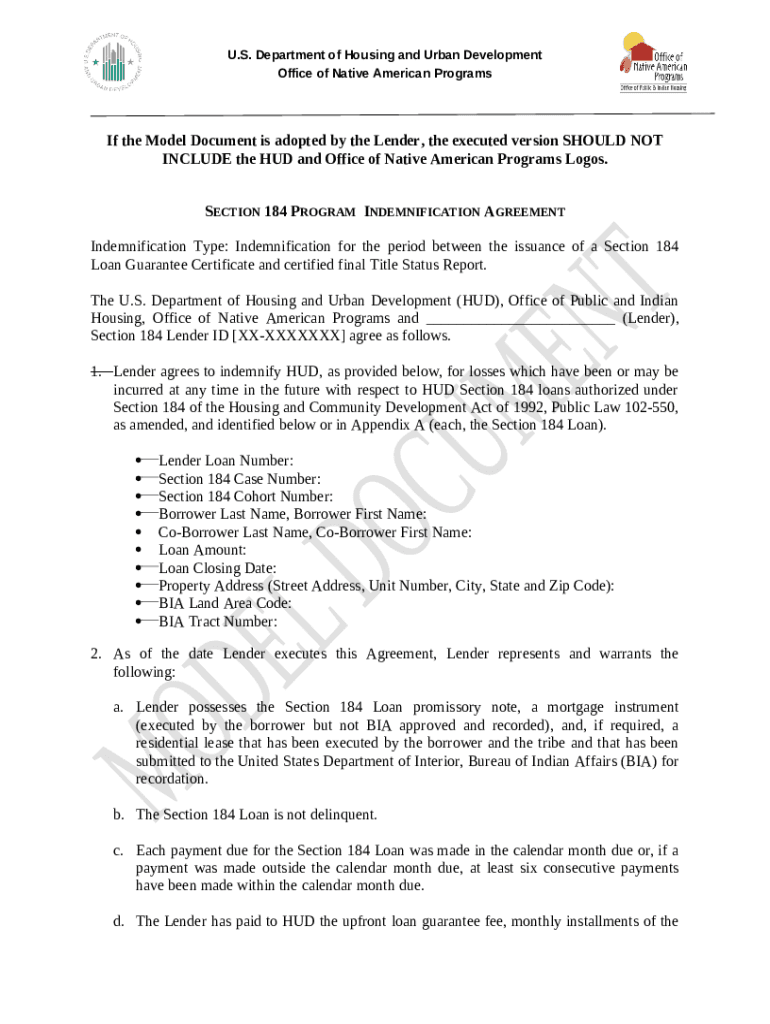
Pre-approval is more than just a formality; it’s a critical step that empowers you as a homebuyer. A pre-approval letter from a lender indicates that they have reviewed your financial information and determined that you are likely to qualify for a specific loan amount. This letter serves several vital purposes:
- Establishes Your Budget: It clearly defines how much home you can afford, preventing you from looking at properties outside your financial reach.
- Strengthens Your Offer: In a competitive housing market, sellers often prioritize offers from pre-approved buyers, as it signals that you are serious and financially capable.
- Streamlines the Buying Process: Knowing your borrowing capacity upfront allows you to focus on finding the right home, rather than worrying about financing.
- Identifies Potential Issues Early: The pre-approval process can uncover any credit or financial issues that need to be addressed before you make a formal offer on a home.
Here’s a step-by-step guide to getting pre-approved for a HUD Section 184 loan:
Step 1: Confirm Your Eligibility
Before you even speak to a lender, ensure you meet the fundamental requirement:
- Tribal Enrollment: You must be an enrolled member of a federally recognized American Indian or Alaska Native tribe. You will need official documentation (e.g., tribal ID, enrollment verification letter) to prove this.
Step 2: Find an Approved Section 184 Lender
This is arguably the most critical step. Not all mortgage lenders offer Section 184 loans. You need to find a lender specifically approved by HUD to originate these loans and, ideally, one with experience in the program.
- HUD Website: The HUD website (www.hud.gov/section184) is the best place to find a list of approved lenders.
- Tribal Housing Authorities: Your tribal housing authority or local tribal government may also have recommendations for experienced lenders.
- Ask Questions: When contacting lenders, ask about their experience with Section 184, their average processing times, and if they have dedicated Section 184 loan officers.
Step 3: Gather Your Financial Documents
Once you’ve identified a lender, they will request a comprehensive set of documents to assess your financial health. Being prepared with these documents beforehand can significantly speed up the pre-approval process.
- Proof of Tribal Enrollment: Official tribal ID card or letter of enrollment verification.
- Identification: Valid government-issued photo ID (driver’s license, passport).
- Social Security Card: For all applicants.
- Income Verification:
- Last two years of W-2 forms.
- Last two years of federal tax returns (all schedules).
- Most recent 30 days of pay stubs.
- If self-employed: Business tax returns, profit and loss statements.
- Proof of other income: Social Security, disability, pension, child support, etc.
- Asset Verification:
- Most recent two to three months of bank statements (checking and savings accounts).
- Statements for any investment accounts (401k, IRA, stocks, etc.).
- Documentation for any gifts you plan to receive for a down payment or closing costs.
- Credit History Information:
- While the lender will pull your credit report, having a general idea of your credit history (and being prepared to explain any discrepancies or past issues) is helpful.
- List of current debts (credit cards, auto loans, student loans, other mortgages).
- Housing History:
- If renting: Landlord’s contact information or last 12 months of canceled rent checks.
- If you own property: Mortgage statements, property tax bills, homeowner’s insurance policy.
Step 4: Complete the Loan Application
Your chosen lender will provide you with a mortgage loan application (typically a Uniform Residential Loan Application, Form 1003). You can complete this online, in person, or over the phone with the loan officer. Be thorough and accurate with all information.
Step 5: Lender Review and Underwriting
Once your application and documents are submitted, the lender’s loan officer and/or underwriter will:
- Pull Your Credit Report: They will review your credit history, payment patterns, and outstanding debts. Section 184 loans are generally more flexible with credit scores than conventional loans, but a history of responsible debt management is still important.
- Verify Income and Employment: They will contact your employer(s) and review your pay stubs and tax returns to ensure stable income.
- Calculate Debt-to-Income (DTI) Ratio: This ratio compares your total monthly debt payments to your gross monthly income. Section 184 generally has slightly more flexible DTI limits than conventional loans, but it’s still a key factor in determining affordability.
- Assess Assets: They will verify funds for down payment, closing costs, and any required reserves.
Step 6: Receive Your Pre-Approval Letter
If everything checks out, the lender will issue a pre-approval letter. This letter will state the maximum loan amount you qualify for, the estimated interest rate, and the terms. It will typically be valid for a specific period (e.g., 60-90 days), after which you may need to update your financial information.
Important Note: Pre-approval is not a guarantee of a loan. It’s a conditional commitment. The final loan approval is contingent upon a satisfactory appraisal of the property, a clear title, and no significant changes to your financial situation.
Advantages (Pros) of the HUD Section 184 Loan
The Section 184 program offers several significant benefits that make it an attractive option for eligible borrowers:
- Low Down Payment: Borrowers can put down as little as 2.25% for loans over $50,000 and 1.25% for loans $50,000 or less. This significantly reduces the upfront cash needed for homeownership.
- Flexible Underwriting: Section 184 lenders often have more flexible credit requirements compared to conventional loans. They consider alternative credit data (like rent or utility payments) and understand unique financial situations common in tribal communities, making homeownership accessible to those with less-than-perfect credit scores.
- Competitive Fixed Interest Rates: HUD sets maximum interest rates, which are often at or below market rates, providing borrowers with predictable and affordable monthly payments over the life of the loan.
- No Loan Size Limits (within reason): While there are loan limits, they are generally high, often matching or exceeding FHA limits for the area, allowing for the purchase of various home types.
- Versatile Use: The loan can be used for purchasing existing homes, new construction, rehabilitation, or refinancing, offering broad applicability to different housing needs.
- Ability to Use on Tribal Trust Land: This is a major advantage, as conventional lenders are often hesitant or unable to lend on trust land due to complex title issues. Section 184 has established processes for these unique land tenure situations.
- Single Mortgage Insurance Premium (MIP): Unlike FHA loans, which have both upfront and annual MIP that lasts for the life of the loan in many cases, Section 184 requires an upfront MIP of 1% of the loan amount and an annual MIP of 0.25% (for loans with LTV > 90%) or 0.10% (for loans with LTV ≤ 90%). The annual MIP can sometimes be removed after a certain period if certain conditions are met, depending on the loan-to-value (LTV) ratio.
- Focus on Financial Education: Many lenders and tribal housing authorities provide financial literacy and homeownership counseling, helping borrowers prepare for the responsibilities of homeownership.
Disadvantages (Cons) of the HUD Section 184 Loan
While highly beneficial, the Section 184 program does come with certain limitations and potential drawbacks:
- Strict Eligibility Requirements: The most significant limitation is the requirement of being an enrolled member of a federally recognized tribe. This restricts the program’s availability to a specific population.
- Limited Lender Availability: Not all mortgage lenders are approved to offer Section 184 loans. Borrowers may need to research and seek out specialized lenders, which can limit options and potentially lead to less competitive rates if only a few lenders operate in their area.
- Mortgage Insurance Premium (MIP): Although structured differently than FHA, the Section 184 loan still requires both an upfront (1%) and annual (0.25% or 0.10%) mortgage insurance premium. This adds to the overall cost of the loan and cannot be avoided.
- Perceived Slower Processing Times: Due to the specialized nature, the requirement for HUD approval on some aspects, and the unique property considerations (especially on trust land), the loan processing time can sometimes be longer than conventional loans. This can be a disadvantage in fast-moving housing markets.
- Property Requirements: While flexible, properties must meet HUD’s minimum property standards (MPS) to ensure they are safe, sanitary, and structurally sound. Appraisals can sometimes be more complex, particularly on trust land where comparable sales data might be scarce.
- Less Lender Familiarity: Even among approved lenders, the level of expertise can vary. Working with a lender who is less familiar with the nuances of Section 184 (especially regarding tribal land leases or specific tribal requirements) can lead to delays or complications.
- Not Ideal for High-Value Homes: While loan limits are generous, for very high-value properties, a conventional jumbo loan might offer more competitive terms if the borrower qualifies with a significant down payment and excellent credit.
Recommendation: Is the HUD Section 184 Loan Right for You?
For eligible Native American and Alaska Native individuals and families, the HUD Section 184 Indian Home Loan Guarantee Program is an unequivocally strong recommendation for achieving homeownership. Its tailored approach, low down payment, flexible credit requirements, and focus on addressing the unique needs of tribal communities make it an invaluable resource.
You should strongly consider pursuing a Section 184 loan if:
- You are an enrolled member of a federally recognized American Indian or Alaska Native tribe.
- You are looking for an affordable path to homeownership with a low down payment.
- You have a stable income but may have a less-than-perfect credit history or limited traditional credit.
- You are interested in purchasing a home on tribal trust land, restricted land, or fee simple land within an eligible area.
- You value a program designed specifically to support your community’s economic empowerment and housing needs.
However, it’s crucial to approach this with due diligence:
- Research Approved Lenders Thoroughly: Seek out lenders with extensive experience and a strong reputation for handling Section 184 loans. Ask for testimonials or references.
- Understand All Costs: While beneficial, ensure you understand the upfront and annual mortgage insurance premiums, closing costs, and other associated fees.
- Engage in Financial Counseling: Take advantage of any available homeownership education or counseling services offered by your tribe, HUD, or your lender. This will prepare you for the responsibilities of homeownership.
- Be Patient: While the process is designed to be efficient, the specialized nature of the loan can sometimes lead to longer processing times.
In conclusion, the HUD Section 184 Indian Home Loan Guarantee Program is more than just a mortgage product; it’s a vital tool for economic self-sufficiency and community development. By understanding the pre-approval process, weighing its distinct advantages against its minor disadvantages, and preparing thoroughly, eligible borrowers can confidently embark on their journey toward realizing the dream of owning a home. Don’t let the complexities deter you; with the right information and a dedicated lender, your path to homeownership through Section 184 can be a rewarding and empowering experience.


