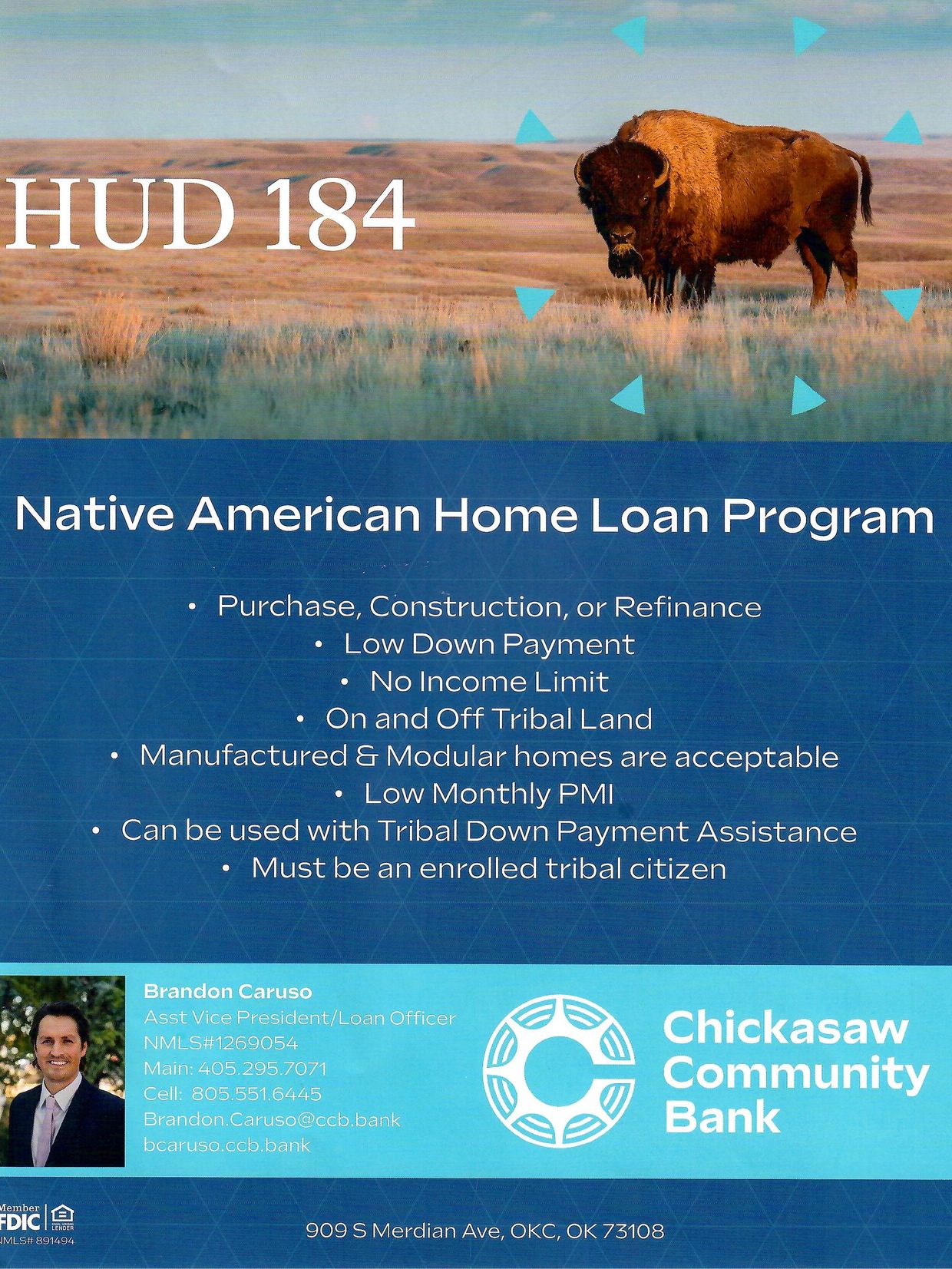
Unlocking Homeownership: A Comprehensive Review of the HUD Section 184 Loan in Colorado
Homeownership is a cornerstone of the American dream, representing stability, wealth building, and a place to call one’s own. However, for many, especially in competitive and high-cost markets like Colorado, the path to homeownership can be fraught with significant hurdles. Traditional mortgages often demand substantial down payments, impeccable credit scores, and navigating complex financial landscapes. For Native American individuals and families, a unique and powerful tool exists to bridge this gap: the HUD Section 184 Indian Home Loan Guarantee Program.
This comprehensive review delves into the HUD Section 184 loan, treating it as a vital financial "product" available to eligible Native Americans in Colorado. We will explore its core features, analyze its advantages and disadvantages, and ultimately provide a clear recommendation for its utilization in the diverse and challenging Colorado housing market.
Understanding the HUD Section 184 Loan: The Product Overview
The HUD Section 184 program was established under the Indian Housing Act of 1937 and later enhanced by the Native American Housing Assistance and Self-Determination Act of 1996 (NAHASDA). Its primary goal is to provide Native Americans and Alaska Natives with greater access to homeownership and affordable housing opportunities, both on and off tribal lands. The program works by allowing HUD to guarantee loans made by private lenders to eligible Native American borrowers. This guarantee significantly reduces the risk for lenders, making them more willing to offer favorable terms to a demographic that has historically faced barriers in the conventional mortgage market.

Key Features of the HUD 184 Loan:
- Eligibility: The most crucial feature. Borrowers must be an enrolled member of a federally recognized tribe. This is a strict requirement and the cornerstone of the program.
- Location: Unlike some programs, the HUD 184 loan can be used to purchase, construct, or rehabilitate homes not only on tribal trust lands but also in eligible areas off-reservation. Importantly for this review, the entire state of Colorado is an eligible area for the HUD 184 program.
- Low Down Payment: One of its most attractive aspects, requiring a down payment as low as 2.25% for loans over $50,000, and 1.25% for loans under $50,000.
- Flexible Credit Requirements: While not a "no credit check" loan, the program offers more flexible underwriting guidelines compared to conventional or even FHA loans. Lenders are encouraged to consider non-traditional credit histories and unique financial situations.
- Competitive Fixed Interest Rates: HUD 184 loans typically offer competitive fixed interest rates, providing stability and predictability in monthly payments over the life of the loan.
- No Private Mortgage Insurance (PMI): Instead of PMI, HUD 184 loans require a one-time upfront Guarantee Fee (1.00% of the loan amount, which can be financed into the loan) and an annual Mortgage Insurance Premium (MIP) of 0.25% of the outstanding principal balance. This is generally lower than FHA’s MIP and conventional PMI.
- Loan Uses: Can be used for:

- Purchasing an existing home.
- Constructing a new home.
- Refinancing an existing mortgage.
- Rehabilitating a home.
- Purchasing and rehabilitating a home.
- Assumable: The loan is assumable by another eligible Native American borrower, which can be an attractive feature for future resale.
Advantages (Pros) of the HUD Section 184 Loan in Colorado
For eligible borrowers in Colorado, the HUD 184 loan offers a suite of compelling advantages that can significantly ease the path to homeownership:
-
Accessibility and Lower Barrier to Entry:
- Low Down Payment: In a state where median home prices can easily exceed $500,000, a low down payment of 2.25% (e.g., $11,250 on a $500,000 home) is a game-changer. This dramatically reduces the upfront cash needed, allowing more families to enter the housing market sooner.
- Flexible Underwriting: Colorado’s diverse economy means a wide range of employment types. The HUD 184’s willingness to consider alternative credit histories (like utility payments, rent history) and understand unique income structures can be a lifeline for those who don’t fit the rigid mold of conventional lending.
-
Affordability and Financial Stability:
- Competitive Fixed Interest Rates: The stability of a fixed rate is invaluable, especially in a market prone to fluctuations. Borrowers can budget confidently, knowing their principal and interest payments won’t change.
- Lower Mortgage Insurance Costs: The combination of a 1.00% upfront guarantee fee and a 0.25% annual MIP is generally more cost-effective than FHA’s mortgage insurance (which typically has a higher upfront fee and higher annual premiums). This translates to lower monthly payments and more savings over the life of the loan.
- No Income Limits: Unlike some affordable housing programs, there are no income limits for HUD 184 loans, making it accessible to a broader range of income earners within the eligible population.
-
Versatility in a Diverse State:
- Applicable Across Colorado: From the bustling urban centers of Denver and Boulder to the rural plains and mountain communities, the HUD 184 loan can be utilized anywhere in Colorado. This is crucial for Native American families who may live or wish to live in various parts of the state, including near the Ute Mountain Ute and Southern Ute tribal lands in the southwest.
- Multiple Loan Uses: Whether purchasing a newly built home in a developing suburb, restoring a historic property in a mountain town, or constructing a custom home, the program’s flexibility accommodates various housing needs and preferences.
-
Cultural and Community Empowerment:
- Supports Self-Determination: By facilitating homeownership, the program directly supports the self-determination and economic empowerment of Native American individuals and communities, aligning with the spirit of NAHASDA.
- Building Generational Wealth: Homeownership is a primary driver of generational wealth. The HUD 184 loan provides a crucial pathway for Native American families to build equity and pass on assets.
Disadvantages (Cons) of the HUD Section 184 Loan in Colorado
While highly beneficial, the HUD 184 loan is not without its limitations and potential drawbacks:
-
Strict Eligibility Requirements:
- Federally Recognized Tribe Membership: This is the most significant "con" for anyone not meeting the criteria. If you are not an enrolled member of a federally recognized tribe, this program is simply not available to you. This narrows the scope of potential borrowers considerably.
-
Lender Availability and Awareness:
- Fewer Participating Lenders: Compared to conventional or FHA loans, there are fewer lenders specializing in or even offering HUD 184 loans, particularly in states like Colorado where the Native American population, while present, might not be as concentrated as in other regions. This can make finding a knowledgeable lender more challenging and may require more research on the borrower’s part.
- Limited Knowledge Among Real Estate Professionals: Similarly, some real estate agents and brokers may be less familiar with the nuances of the HUD 184 program, potentially leading to delays or misunderstandings during the home-buying process.
-
Processing Time and Bureaucracy:
- Potentially Longer Closing Times: Because HUD guarantees the loan, there can be additional layers of review and paperwork compared to a conventional mortgage. While efforts are made to streamline the process, it can sometimes lead to longer closing periods, which might be a disadvantage in Colorado’s fast-paced housing market where sellers often prefer quick closings.
- HUD Approval Process: Lenders must submit the loan for HUD approval, adding an extra step to the underwriting process.
-
Property Requirements:
- HUD Minimum Property Standards: Homes financed with a HUD 184 loan must meet specific HUD Minimum Property Standards (MPS) for health, safety, and structural soundness. While these are reasonable, some older homes or properties in disrepair might not qualify without significant (and potentially costly) renovations. This can limit options for buyers interested in "fixer-uppers" unless rehabilitation funds are part of the loan.
- Appraisal Process: The appraisal process can be stringent to ensure the property meets HUD guidelines and is valued correctly.
-
Mortgage Insurance (MIP) Costs:
- Still an Expense: While lower than FHA’s, the upfront guarantee fee and annual MIP are still costs associated with the loan that conventional loans (with 20% down) do not have. Borrowers need to factor these into their overall cost analysis.
The HUD 184 Loan in the Colorado Context
Colorado’s housing market presents unique challenges and opportunities. Major metropolitan areas like Denver, Boulder, and Colorado Springs are characterized by high home prices, competitive bidding wars, and limited inventory. Rural areas, while potentially more affordable, can still see significant price increases and have fewer lending options.
For eligible Native American buyers, the HUD 184 loan acts as a powerful equalizer. Its low down payment is particularly beneficial in a market where even 5% down on a median-priced home can be tens of thousands of dollars. The flexible credit requirements are also crucial, recognizing that credit histories can be complex and traditional scores may not always reflect a borrower’s true financial responsibility.
However, the challenge of finding a knowledgeable lender and real estate agent who understands the HUD 184 program is amplified in Colorado. While there are tribal communities in the state (Ute Mountain Ute and Southern Ute Indian Tribes), the overall population of Native Americans is dispersed. Therefore, proactive research and advocacy from the borrower’s side are essential.
Who is the HUD 184 Loan For? (Ideal User)
The HUD Section 184 loan is ideally suited for:
- Enrolled members of a federally recognized tribe who are seeking to purchase a home, build a new one, or refinance an existing mortgage anywhere in Colorado.
- Individuals or families with limited funds for a down payment but who have stable income and a desire for homeownership.
- Borrowers whose credit history may not be perfect or who have non-traditional credit references that would be overlooked by conventional lenders.
- Those looking for long-term financial stability with a fixed-rate mortgage and generally lower mortgage insurance costs.
- Individuals committed to building generational wealth through homeownership within their community.
Purchase Recommendation: A Resounding Yes (With Caveats)
Overall Recommendation: Highly Recommended for Eligible Borrowers.
For eligible Native American individuals and families in Colorado, the HUD Section 184 loan is an exceptionally valuable and often superior financial product compared to traditional mortgage options. Its advantages, particularly the low down payment, flexible credit underwriting, and lower mortgage insurance costs, directly address some of the most significant barriers to homeownership in a high-cost state like Colorado.
When to Strongly Consider It:
- If you meet the eligibility criteria: This is non-negotiable.
- If you have less than 20% for a down payment: The 2.25% (or 1.25%) down payment is a significant advantage over FHA (3.5%) or conventional (3-5% often with higher PMI).
- If your credit profile isn’t perfect: The flexibility in underwriting can open doors that other loans would close.
- If you value long-term predictability: Fixed rates and lower, stable mortgage insurance premiums offer peace of mind.
When to Explore Alternatives (Even if Eligible):
- If you have 20% or more for a down payment and excellent credit: A conventional loan without PMI might offer slightly better terms overall.
- If you need a very fast closing: While not always slow, the HUD 184 process can take longer. In a bidding war where sellers prioritize speed, this could be a minor disadvantage.
- If the property requires extensive, non-financeable repairs: Properties must meet HUD MPS. If a home needs significant work that can’t be rolled into the loan, other options might be more suitable.
Actionable Recommendations for Potential Buyers:
- Verify Eligibility: Contact HUD or a HUD-approved lender to confirm your tribal enrollment status meets the requirements.
- Research HUD 184 Approved Lenders in Colorado: Don’t just go to your local bank. Seek out lenders who actively originate HUD 184 loans and have experience with the program in Colorado. Ask about their typical processing times.
- Get Pre-Approved: A pre-approval letter from a HUD 184 lender will strengthen your offer when you find a home.
- Educate Your Real Estate Agent: Ensure your agent understands the HUD 184 program to avoid potential misunderstandings during the buying process.
- Understand All Costs: While the down payment is low, remember to budget for closing costs (which can often be financed or covered by seller concessions) and the upfront guarantee fee.
- Seek Housing Counseling: Non-profit housing counseling agencies can provide invaluable guidance throughout the home-buying process, often at no cost.
Conclusion
The HUD Section 184 Indian Home Loan Guarantee Program is an exceptionally well-designed and impactful financial instrument for eligible Native American individuals and families in Colorado. It directly addresses historical barriers to homeownership, offering a pathway that is often more accessible and affordable than conventional alternatives. While challenges like lender availability and processing times exist, the benefits—especially the low down payment and flexible credit requirements in a high-cost state—make it an indispensable tool for achieving the dream of owning a home. For those who qualify, exploring the HUD 184 loan is not just a recommendation, but a crucial step towards securing a stable and prosperous future in Colorado.


