VA Native American Direct Loan (NADL): A Path to Homeownership on Trust Land – A Comprehensive Review
For many, the dream of homeownership is a cornerstone of financial stability and community building. Yet, for Native American veterans seeking to establish roots on tribal trust lands, this dream has historically been fraught with unique challenges. Traditional mortgage lenders often shy away from properties on trust land due to the complexities of land tenure, which differs significantly from fee-simple ownership. Enter the VA Native American Direct Loan (NADL) program – a specialized offering from the U.S. Department of Veterans Affairs designed to bridge this gap.
This comprehensive review will delve into the intricacies of the VA NADL program, exploring its purpose, structure, and the unique landscape of homeownership on trust land. We will meticulously examine its advantages and disadvantages, providing a balanced perspective for Native American veterans considering this vital pathway to homeownership. Finally, we will offer a clear recommendation on whether the VA NADL is a worthwhile endeavor.
Understanding the Landscape: Homeownership on Trust Land
Before diving into the NADL itself, it’s crucial to understand the distinctive nature of land ownership within Indian Country. Tribal trust lands are held in trust by the U.S. federal government for the benefit of Native American tribes and individuals. This means that individuals do not own the land outright in fee simple, but rather hold a leasehold interest, an assignment, or an allotment. This fundamental difference creates several hurdles for conventional mortgage lenders:
+Program.jpg "VA NADL loan for homes on trust land")
- Collateral Issues: Lenders typically require fee simple title as collateral. Without it, the ability to foreclose and recover losses in case of default is severely complicated, if not impossible, under tribal and federal law.
- Jurisdictional Complexity: The interplay of federal, state, and tribal laws can create a labyrinth of regulations, further deterring lenders unfamiliar with the specific legal frameworks governing trust lands.
- Valuation Challenges: Appraising properties on trust land can be difficult due to limited comparable sales data and the unique land tenure.
These challenges have historically created a significant barrier to homeownership for Native American veterans, often forcing them to choose between their ancestral lands and the benefits of a VA home loan. The VA NADL was specifically crafted to address these deeply entrenched systemic issues.
What is the VA Native American Direct Loan (NADL)?
The VA Native American Direct Loan (NADL) program is a unique and vital offering that allows eligible Native American veterans to obtain a direct home loan from the VA itself, rather than from a private lender. Established under the Veterans Benefits Act of 1992, its primary mission is to help Native American veterans finance the purchase, construction, or improvement of homes on Federal Trust Land, or to refinance existing NADL loans.
Unlike the standard VA home loan program, where the VA guarantees a loan made by a private lender, the NADL is a direct loan provided directly by the VA. This distinction is critical because it means the VA, with its understanding of federal trust land regulations, assumes the role of the lender, thereby bypassing the hesitancy of conventional banks.
Key Features of the NADL Program:
- Eligibility: Must be a Native American veteran, or the spouse of a Native American veteran (in certain circumstances), who is eligible for VA home loan benefits. The home must be on Federal Trust Land.
- Loan Purpose: Can be used to purchase an existing home, construct a new home, make improvements to an existing home, or refinance an existing NADL loan.
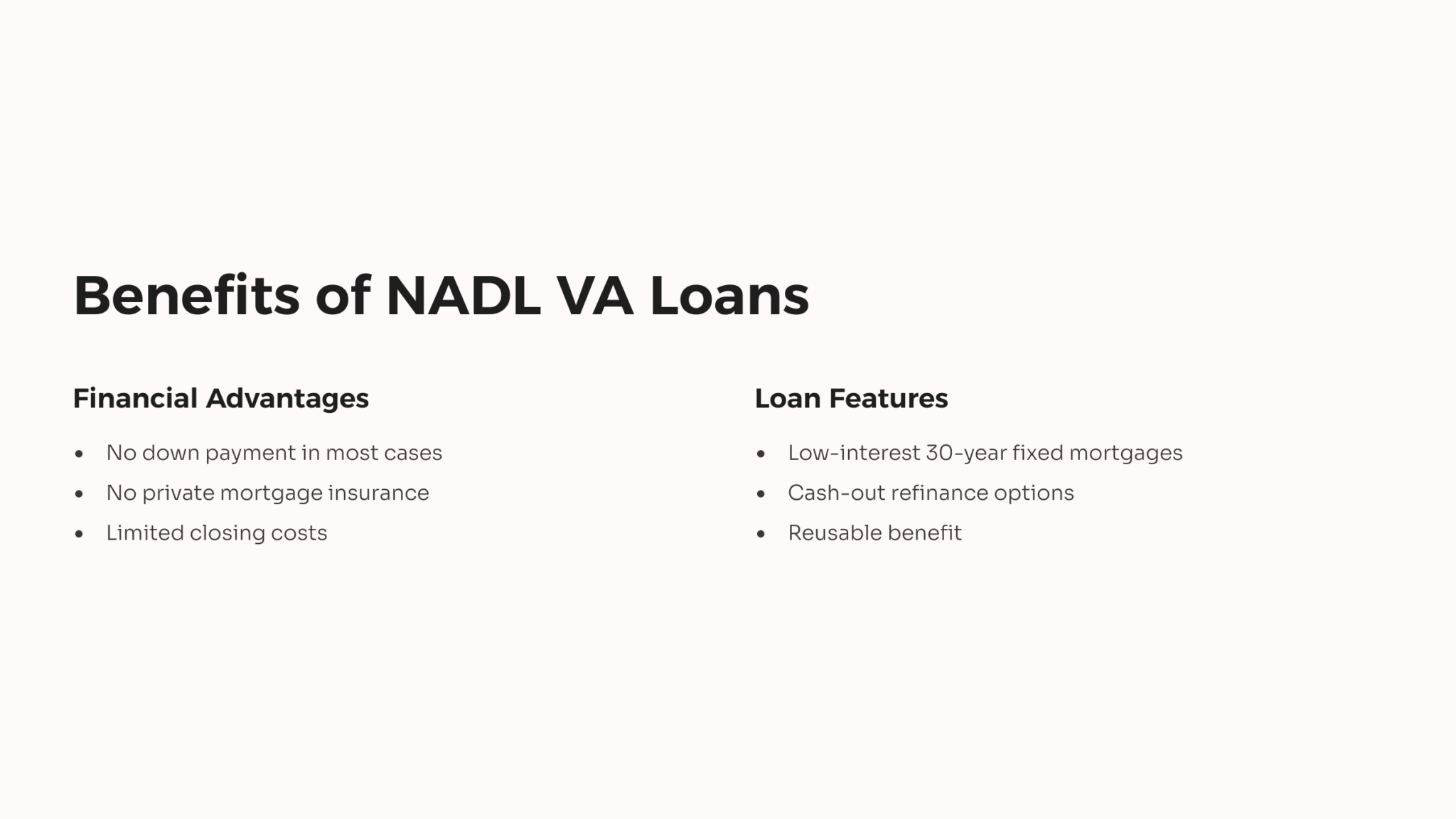
- No Down Payment: Like standard VA loans, the NADL generally requires no down payment, significantly reducing the upfront financial burden.
- Low Interest Rates: NADL interest rates are competitive and often lower than conventional loans, directly set by the VA.
- No Private Mortgage Insurance (PMI): Another substantial financial benefit, as PMI is typically required on conventional loans with less than 20% down.
- Limited Closing Costs: The VA often limits the closing costs a veteran can pay.
- Assumability: In some cases, NADL loans can be assumed by another eligible Native American veteran.
The NADL is more than just a financial product; it’s a testament to the VA’s commitment to ensuring that all veterans, regardless of their unique circumstances, have access to the benefits they have earned through service.
Advantages (Pros) of the VA NADL Program
The VA NADL program offers a compelling array of benefits, particularly when viewed against the backdrop of the challenges it seeks to overcome.
- Enables Homeownership on Trust Land: This is, without question, the paramount advantage. The NADL provides the only widely available and practical pathway for Native American veterans to secure financing for homes on federally recognized tribal trust lands. Without it, many would be unable to leverage their VA home loan benefits in their ancestral communities.
- Exceptional Financial Benefits:
- No Down Payment: Eliminates a significant barrier to entry, especially for younger veterans or those with limited savings.
- Competitive, Low Interest Rates: The VA sets the interest rate, which is often lower than market rates, leading to substantial savings over the life of the loan.
- No Private Mortgage Insurance (PMI): This translates to hundreds of dollars in savings per month, freeing up funds for other essential needs or wealth building.
- Limited Closing Costs: Further reduces the upfront financial burden on the veteran.
- Flexible Loan Uses: The NADL isn’t just for buying an existing home. It can be used for:
- New Construction: Allowing veterans to build a home tailored to their needs and preferences within their community.
- Home Improvements: Enabling veterans to upgrade or expand their existing homes, enhancing comfort, safety, and value.
- Refinancing: Providing options to reduce interest rates or change loan terms on an existing NADL.
- VA Expertise in Trust Land Issues: Unlike conventional lenders, the VA possesses a dedicated understanding of the unique legal and administrative frameworks governing trust lands. Their staff are trained to navigate the complexities of tribal resolutions, Bureau of Indian Affairs (BIA) lease approvals, and other specific requirements, acting as an informed partner rather than a hesitant outsider.
- Empowerment and Community Building: By facilitating homeownership, the NADL program empowers Native American veterans to build equity, establish stable households, and contribute to the economic and social fabric of their tribal communities. It supports the preservation of cultural ties and strengthens the presence of veterans within their nations.
- Direct Loan Relationship: The direct lending model means veterans work directly with the VA, streamlining communication and potentially offering a more personalized experience than navigating a third-party lender.
Disadvantages (Cons) of the VA NADL Program
While the NADL offers invaluable opportunities, it is not without its complexities and potential drawbacks. A thorough understanding of these challenges is essential for any veteran considering the program.
- Bureaucratic Complexity and Extended Timelines: This is arguably the most significant hurdle. Obtaining an NADL involves coordination between multiple entities: the veteran, the VA, the tribal government, and the Bureau of Indian Affairs (BIA).
- Tribal Resolution: The tribal government must agree to participate in the NADL program and provide necessary documentation. This can involve lengthy tribal council meetings and internal processes.
- BIA Lease Approval: The BIA must approve the land lease agreement, a process known for its potential for delays due to staffing, workload, and the specific requirements of federal trust management.
- VA Processing: While the VA is the lender, their internal processing for NADL loans can also take time, given the specialized nature and detailed due diligence required.
- Overall Impact: These layers of approval mean that NADL loan applications typically take significantly longer to process than conventional or standard VA loans, often extending to many months, or even over a year, from initial application to closing.
- Leasehold Interest, Not Fee Simple Ownership: While the NADL enables homeownership, it’s crucial to understand that the veteran owns the home and improvements, but holds a leasehold interest in the land. This has several implications:
- Equity: Building equity in the improvements is possible, but the underlying land is not owned, which can affect the perception of total wealth accumulation compared to fee simple ownership.
- Resale Challenges: Selling a home on leasehold land can be more complex and may appeal to a smaller pool of buyers who understand and are comfortable with the land tenure. Future buyers would also need to be eligible Native American veterans to utilize another NADL loan, or find alternative financing.
- Inheritance: While the lease can typically be inherited, the long-term implications and transferability require careful estate planning and understanding of tribal laws.
- Geographic and Tribal Participation Limitations: The NADL program is only available on federally recognized tribal trust lands. Furthermore, not all tribal governments have established the necessary agreements or processes with the VA and BIA to facilitate NADL loans. Veterans must confirm their tribe’s participation and willingness to work with the program.
- Property Requirements and Appraisals: While the VA is flexible, properties must still meet VA Minimum Property Requirements (MPRs) for safety, sanitation, and structural soundness. Appraising properties on trust land can be challenging due to a lack of comparable sales, potentially leading to lower valuations or requiring more extensive efforts to establish value.
- Limited Awareness and Specialized Staff: Because the NADL program is niche, awareness among veterans and even some VA staff can be limited. This might mean veterans need to actively seek out specific VA NADL specialists or housing counselors with experience in the program.
- Ongoing Lease Responsibilities: As a leaseholder, the veteran will have ongoing responsibilities and potentially lease payments to the tribal government, in addition to their mortgage payments. Understanding the terms of the lease is paramount.
- Potential for Cultural or Jurisdictional Misunderstandings: While the VA strives for cultural competency, the unique blend of federal and tribal jurisdiction can sometimes lead to misunderstandings or delays if communication isn’t perfectly aligned between all parties.
Recommendation: Is the VA NADL Worth It?
For eligible Native American veterans, the VA Native American Direct Loan program is, without reservation, a highly recommended and often essential pathway to homeownership on tribal trust land. Despite its complexities, its unique ability to overcome the systemic barriers to financing in Indian Country makes it an invaluable tool.
Why it’s Recommended:
- Unparalleled Access: It provides access to homeownership where virtually no other viable option exists for leveraging VA benefits.
- Significant Financial Advantages: The no down payment, low interest rates, and absence of PMI translate into substantial long-term savings and financial stability.
- Support for Tribal Communities: It empowers veterans to return to and build within their ancestral lands, fostering community growth and cultural preservation.
However, the recommendation comes with crucial caveats and advice for potential borrowers:
- Educate Yourself Thoroughly: Understand the NADL program, the nature of leasehold ownership, and the specific requirements of your tribal government and the BIA.
- Start Early and Be Patient: Expect the process to be lengthy. Begin inquiries well in advance of your desired homeownership timeline. Patience and persistence are key virtues for NADL applicants.
- Engage All Parties Proactively:
- Contact the VA NADL Program Office: They are your primary resource for eligibility and application guidance.
- Communicate with Your Tribal Housing Authority: Understand your tribe’s specific requirements, participation status, and any tribal housing programs that might complement the NADL.
- Work Closely with the BIA: Be prepared for their role in approving the land lease.
- Consider a Housing Counselor: Seek out counselors experienced with Native American housing issues and the NADL program.
- Understand the Lease Agreement: Read and fully comprehend the terms of the land lease agreement. This document governs your rights and responsibilities regarding the land, and it is distinct from your mortgage agreement with the VA.
- Long-Term Planning: Consider the implications of leasehold interest for future resale, inheritance, and equity building. While different from fee simple, it can still provide significant benefits and stability.
In conclusion, the VA Native American Direct Loan is not merely a loan product; it is a critical instrument of justice and opportunity. It acknowledges the unique service of Native American veterans and addresses historical inequities in access to homeownership. While the journey through the NADL program can be demanding due to its administrative layers, the destination – a stable home on tribal trust land – is a profound and lasting reward. For eligible veterans, the benefits far outweigh the bureaucratic hurdles, making the NADL an indispensable pathway to realizing the dream of homeownership within their cherished communities.


