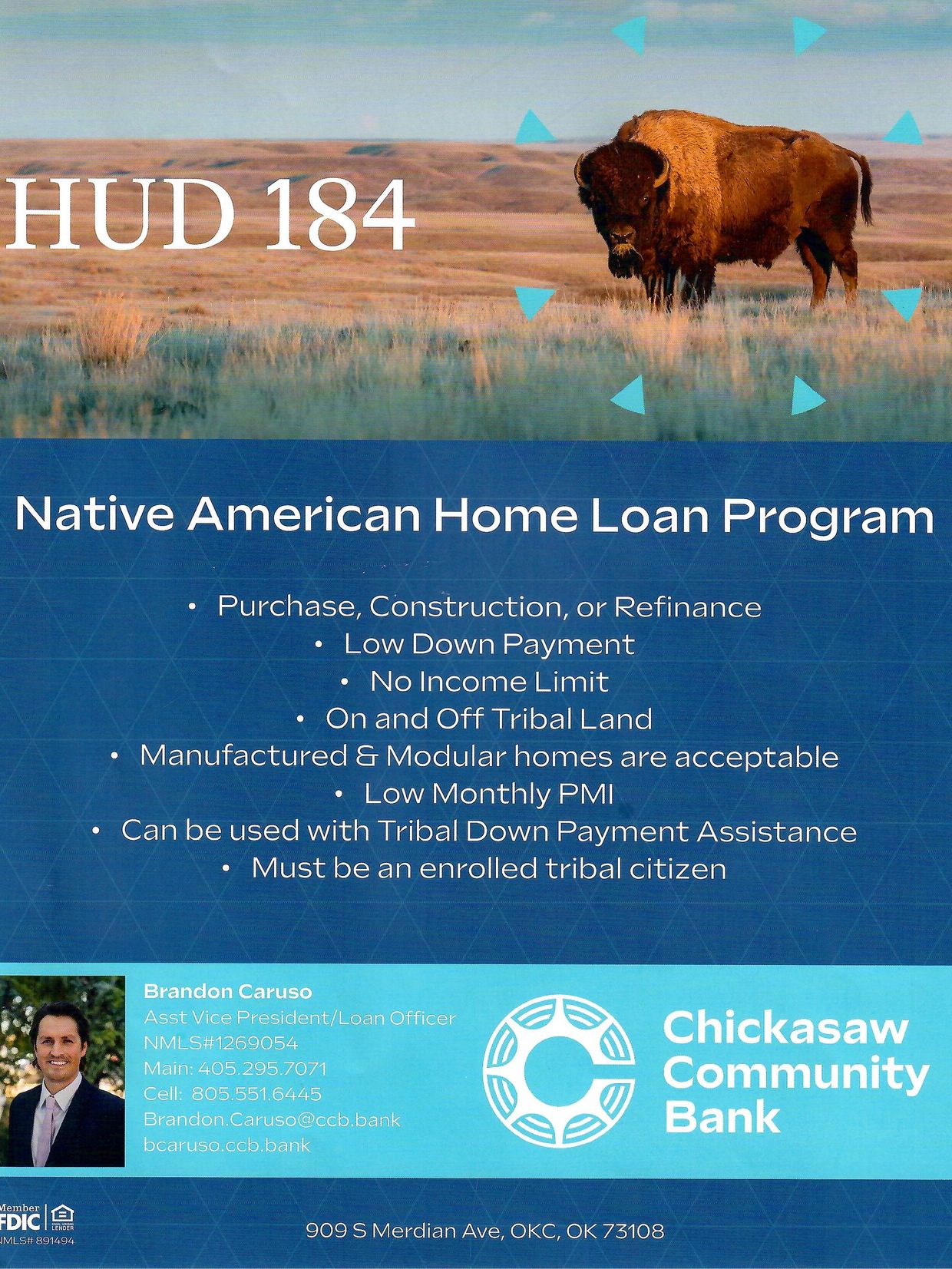
The HUD 184 Loan for Single-Family Homes: Unlocking Homeownership for Native American and Alaska Native Communities
For many, the dream of owning a home represents stability, wealth building, and a place to call their own. However, navigating the complex world of mortgages can be a daunting challenge, especially for specific demographics facing unique circumstances. Enter the HUD Section 184 Indian Housing Loan Guarantee Program – a specialized financial product designed to make homeownership a reality for Native American and Alaska Native individuals, families, and tribal governments.
More than just a loan, the HUD 184 program is a testament to the U.S. government’s commitment to fostering economic development and self-sufficiency within tribal communities. It acts as a bridge, connecting eligible borrowers with approved lenders by providing a federal guarantee on the loan. This guarantee significantly reduces the risk for lenders, making them more willing to offer mortgages on favorable terms to a population that might otherwise face barriers in the conventional lending market.
This comprehensive review will delve deep into the HUD 184 loan program for single-family homes, dissecting its core features, exploring its myriad advantages and potential drawbacks, and ultimately offering a recommendation on whether this unique financial instrument is the right choice for eligible borrowers.
What is the HUD Section 184 Loan Program?

At its heart, the HUD Section 184 program, officially known as the Indian Housing Loan Guarantee Program, is a mortgage product specifically tailored for American Indian and Alaska Native individuals, federally recognized tribes, and tribally designated housing entities. Established by the Department of Housing and Urban Development (HUD), its primary objective is to facilitate homeownership and housing development within Native American communities.
Unlike conventional mortgages, FHA, VA, or USDA loans, the HUD 184 loan is unique because it is guaranteed by the federal government. This means that if a borrower defaults on their loan, HUD will reimburse the lender for a portion of the loss. This guarantee empowers approved lenders to extend credit to eligible borrowers with more flexible underwriting guidelines than might be available through other loan products.
Key characteristics of the HUD 184 loan include:
- Eligibility: Restricted to enrolled members of federally recognized American Indian tribes or Alaska Native villages. Tribal governments and tribally designated housing entities are also eligible.
- Property Types: Can be used for purchasing, constructing, or rehabilitating single-family homes, as well as refinancing existing mortgages. The home must be located in an eligible area, which includes Indian trust lands, individual trust lands, tribal lands, and approved fee simple lands.
- Loan Guarantee: HUD guarantees 100% of the loan amount to the lender, making it a highly attractive and secure product for participating financial institutions.
- Lender Network: Loans are originated and serviced by private financial institutions (banks, credit unions, mortgage companies) that have been approved by HUD to participate in the Section 184 program.
- Purpose: Beyond just homeownership, the program aims to stimulate economic growth, create jobs, and improve housing conditions in Native American communities.

Understanding these foundational aspects is crucial before evaluating the specific pros and cons of this specialized mortgage product.
Advantages (The "Pros" / Kelebihan) of the HUD 184 Loan
The HUD 184 loan program offers a compelling suite of benefits, making it an invaluable tool for eligible individuals seeking homeownership.
-
Low Down Payment Requirement: One of the most significant advantages is the exceptionally low down payment. Borrowers are typically required to put down only 1.25% of the loan amount. This is substantially lower than many conventional loans, which often demand 5%, 10%, or even 20% down, making homeownership more accessible for those with limited savings. For example, on a $200,000 home, the down payment would be just $2,500.
-
Flexible Credit Underwriting: The HUD 184 program acknowledges the unique financial histories and credit profiles that may exist within Native American communities. Lenders are permitted to use more flexible underwriting guidelines compared to conventional loans. This means that applicants with less-than-perfect credit scores or those with non-traditional credit histories (e.g., utility payment history, tribal rental history) may still qualify. This flexibility is critical in serving a population that might otherwise be locked out of traditional mortgage markets.
-
Competitive Interest Rates: Because the loan is 100% guaranteed by HUD, lenders face significantly reduced risk. This often translates into competitive interest rates for borrowers, frequently comparable to or even better than FHA or conventional rates. While rates are market-driven, the guarantee ensures a stable and attractive pricing environment.
-
No Income Limits: Unlike some other affordable housing programs, the HUD 184 loan does not impose income limits on borrowers. While applicants must still demonstrate the ability to repay the loan (through debt-to-income ratios), their income level itself does not disqualify them from the program. This allows a broader range of Native American families to benefit.
-
Versatile Use: The program is highly versatile. It can be used for:
- Purchasing an existing single-family home.
- New Construction, including site acquisition and construction financing.
- Rehabilitation of existing homes.
- Refinancing existing mortgages, including Streamline Refinance options with reduced documentation.
- Purchase and Rehabilitation combined into one loan.
- Manufactured Homes (in some cases, if permanently affixed to a foundation and meeting HUD guidelines).
-
Ability to Finance on Tribal Trust Land: A distinguishing feature is the program’s ability to finance homes on Indian trust lands. This is a crucial advantage, as conventional lenders are often hesitant or unable to provide mortgages on lands where the federal government holds the title in trust for the tribe or individual. The HUD 184 program provides a mechanism for homeownership in these unique legal and land tenure situations.
-
No Loan-to-Value (LTV) Limits for Refinance: While there are limits on the maximum loan amount based on county FHA limits, the program typically does not have strict LTV limits for certain refinance options, offering more flexibility for homeowners looking to refinance.
-
Long-Term Homeownership Support: By facilitating access to affordable mortgages, the HUD 184 program fosters long-term homeownership, which is a cornerstone of wealth creation and community stability within Native American communities. It helps build equity and provides a stable environment for families.
-
Community Development: Beyond individual benefits, the program contributes to broader community development by encouraging investment in housing infrastructure and supporting tribal economies. It’s a tool for self-determination and economic empowerment.
Disadvantages (The "Cons" / Kekurangan) of the HUD 184 Loan
While the HUD 184 loan offers significant benefits, it also comes with certain limitations and potential drawbacks that eligible borrowers should be aware of.
-
Geographic and Eligibility Restrictions: This is perhaps the most significant limitation. The HUD 184 loan is exclusively for enrolled members of federally recognized American Indian tribes or Alaska Native villages and can only be used to finance homes in specific eligible areas. These areas are typically tribal lands or other locations approved for the program. This means that not every Native American or Alaska Native individual can use this loan, nor can it be used to purchase a home just anywhere in the country.
-
Mortgage Insurance Premium (MIP): Like FHA loans, HUD 184 loans require a Mortgage Insurance Premium (MIP), which adds to the overall cost of the loan. There are two components:
- Upfront MIP: A one-time payment of 1.00% of the loan amount, which can be financed into the loan.
- Annual MIP: An ongoing payment of 0.25% of the outstanding principal balance, paid monthly as part of the mortgage payment.
While these percentages are lower than FHA’s MIP, they are still an added expense that increases the total cost of borrowing and typically cannot be canceled for the life of the loan.
-
Limited Lender Pool: Not all mortgage lenders offer HUD 184 loans. Borrowers must seek out lenders who are approved by HUD to participate in the Section 184 program. This can sometimes make the search for a lender more challenging or limit options compared to conventional or FHA loans.
-
Perceived Complexity and Processing Time: Because it’s a specialized government-guaranteed program, some borrowers and even lenders might perceive the process as more complex or potentially slower than a conventional loan. While efficiency has improved, the additional layer of federal oversight and specific requirements (especially for homes on trust land) can sometimes lead to longer processing times.
-
Property Requirements and Appraisals: Homes financed with a HUD 184 loan must meet HUD’s minimum property standards, similar to FHA loans. Appraisals for properties on trust lands can sometimes be more intricate due to unique land tenure issues, lack of comparable sales, and varying tribal regulations. This can occasionally lead to delays or challenges in valuation.
-
Loan Limits: While flexible, HUD 184 loans are subject to maximum loan limits, which are based on FHA’s single-family mortgage limits for the county in which the property is located. These limits vary by county and are generally lower than those for conventional "jumbo" loans, potentially restricting options for higher-priced homes.
-
Servicing and Administration: While the federal guarantee is a pro, dealing with a government-backed loan can sometimes involve specific servicing requirements or regulations that differ from conventional loans, which borrowers should be aware of.
-
Awareness and Education Gap: Despite its benefits, there’s still a significant lack of awareness about the HUD 184 program among eligible individuals and even some housing professionals. This can lead to missed opportunities for those who could benefit most from it.
Who is the HUD 184 Loan For? (Recommendation)
Based on its unique features, advantages, and disadvantages, the HUD 184 loan is highly recommended for a very specific demographic:
- Enrolled members of federally recognized American Indian tribes or Alaska Native villages who are looking to purchase, build, or refinance a single-family home.
- Individuals seeking a low down payment option to achieve homeownership.
- Those with non-traditional credit histories or who might not qualify for conventional loans due to specific credit challenges, but who have demonstrated financial responsibility.
- Borrowers looking to finance a home on tribal trust land or in an approved eligible area where conventional financing is difficult or impossible to obtain.
- Families or individuals who want the security of a government-backed loan with competitive interest rates.
- Tribal governments or tribally designated housing entities aiming to develop housing within their communities.
Recommendation:
For eligible Native American and Alaska Native individuals and families, the HUD 184 loan is an invaluable and often superior product compared to conventional mortgages or even other government-backed loans like FHA, especially if purchasing on tribal lands. Its tailored flexibility in underwriting and the low down payment requirement directly address historical barriers to homeownership in these communities.
However, prospective borrowers should still exercise due diligence:
- Verify Eligibility: The first step is always to confirm eligibility as an enrolled member of a federally recognized tribe or Alaska Native village.
- Find an Approved Lender: Seek out mortgage lenders specifically approved to offer HUD 184 loans. These lenders will have the expertise to guide you through the unique aspects of the program.
- Understand All Costs: While the down payment is low, ensure you understand the upfront and annual Mortgage Insurance Premiums, closing costs, and other associated fees. Request a detailed Loan Estimate from your lender.
- Compare Options (if applicable): If you also qualify for other loan programs (e.g., FHA, VA, conventional), compare the interest rates, down payment requirements, mortgage insurance costs, and overall terms to ensure the HUD 184 is indeed the best fit for your specific situation.
- Seek Counseling: Consider consulting with a HUD-approved housing counselor, especially if you are a first-time homebuyer or are financing a home on trust land, to fully understand the process and your rights.
Conclusion
The HUD Section 184 Indian Housing Loan Guarantee Program stands as a unique and powerful tool designed to empower Native American and Alaska Native communities through homeownership. By providing a federal guarantee, it opens doors to affordable and accessible mortgage financing that might otherwise remain closed. While it comes with specific eligibility and geographic restrictions, along with the cost of mortgage insurance, its advantages – particularly the low down payment, flexible underwriting, and ability to finance on tribal trust land – make it an exceptionally valuable product for its target audience.
For those who meet the criteria, the HUD 184 loan is not just another mortgage option; it’s a pathway to building equity, fostering stability, and strengthening the economic fabric of Native American and Alaska Native nations. It is a product that not only facilitates individual dreams but also contributes significantly to the broader goals of self-determination and prosperity within these vibrant communities. For eligible individuals, exploring the HUD 184 loan should be a top priority in their journey toward homeownership.


