Unlocking the Dream: A Comprehensive Review of Native American Home Loan Benefits
The dream of homeownership is a cornerstone of the American ideal, representing stability, wealth accumulation, and a place to call one’s own. However, for many, particularly within Native American communities, this dream has historically been fraught with unique challenges, including access to conventional financing, property ownership complexities on tribal lands, and systemic barriers. Recognizing these disparities, the U.S. government, through various agencies, has developed specialized home loan programs designed to empower Native Americans and Alaska Natives in their pursuit of homeownership.
This comprehensive review will delve into the intricacies of these Native American home loan benefits, primarily focusing on the Department of Housing and Urban Development (HUD) Section 184 Indian Home Loan Guarantee Program and the Department of Veterans Affairs (VA) Native American Direct Loan (NADL) Program, alongside other relevant initiatives. We will explore their core features, dissect their advantages and disadvantages, and offer a clear recommendation on their suitability for eligible borrowers.
What are Native American Home Loan Benefits?
At their core, Native American home loan benefits are government-backed or direct loan programs specifically tailored to address the unique circumstances faced by Native American and Alaska Native individuals, families, and tribal governments. These programs aim to increase homeownership rates, facilitate housing development on and off tribal lands, and build generational wealth within these communities.
The two most prominent programs are:
-
HUD Section 184 Indian Home Loan Guarantee Program: This program, administered by HUD’s Office of Native American Programs (ONAP), provides a loan guarantee to approved lenders, enabling them to offer mortgage loans to eligible Native American and Alaska Native individuals, families, and tribal housing entities. The guarantee reduces the risk for lenders, making financing more accessible.
- Eligibility: Must be an enrolled member of a federally recognized tribe or an Alaska Native village.
- Property Type: Can be used for purchasing, constructing, or rehabilitating homes, or for refinancing existing mortgages. It can be applied to homes on trust land, individually allotted land, or fee simple land within eligible areas.
- Key Feature: The loan is guaranteed by HUD, but originated and serviced by approved private lenders.
-
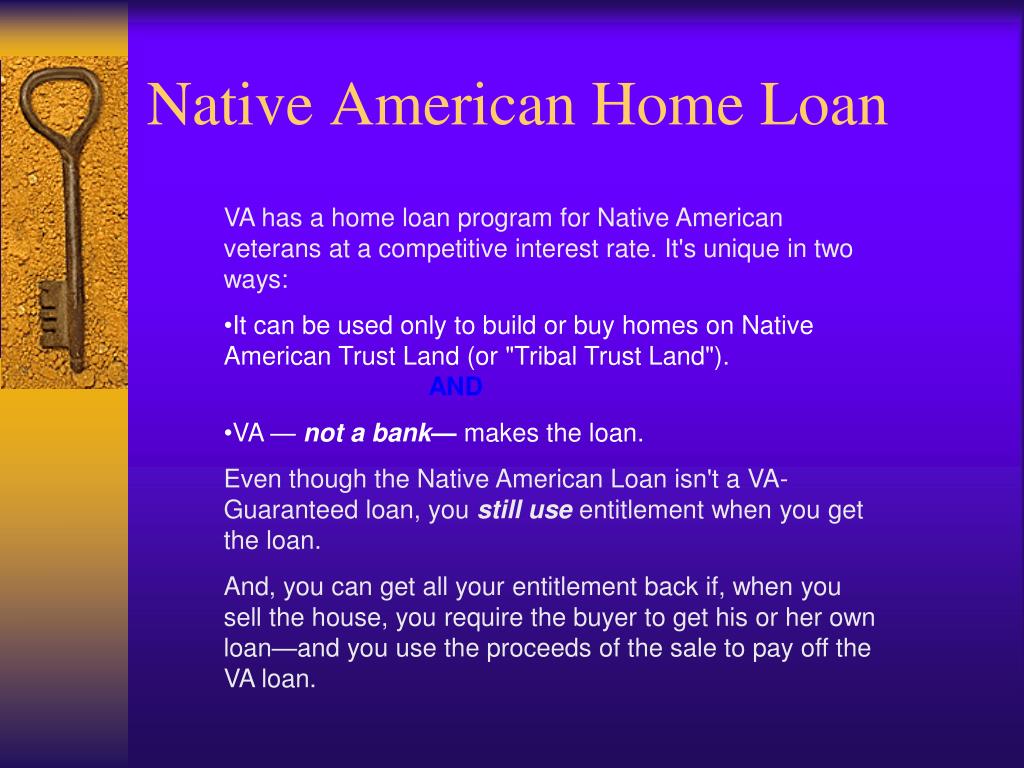
VA Native American Direct Loan (NADL) Program: This unique program directly lends money to eligible Native American veterans to purchase, construct, or improve homes on Federal Trust Land. Unlike the VA’s standard home loan guarantee, the NADL is a direct loan from the VA itself.
- Eligibility: Must be a Native American veteran (enrolled member of a federally recognized tribe or Alaska Native village) and eligible for VA home loan benefits. The property must be on Native American trust land.
- Property Type: Specifically for homes on Native American trust land. It can be used to purchase a home, construct a home, simultaneously purchase and improve a home, or refinance an existing NADL to reduce the interest rate.
- Key Feature: It’s a direct loan from the VA, and a tribal organization must be willing to allow the veteran to reside on tribal land and ensure the loan can be repaid.

Beyond these two primary programs, other initiatives, such as USDA Rural Development housing programs (e.g., Section 502 Direct and Guaranteed Loans), also play a significant role. While not exclusively for Native Americans, these programs often serve rural areas where many tribal communities reside, offering low-interest loans, no down payment options, and assistance for low- and very-low-income individuals to purchase, repair, or rehabilitate homes. Tribal housing authorities and other non-profits also offer various forms of assistance, grants, and affordable housing initiatives.
Advantages (Pros) of Native American Home Loan Benefits
These specialized programs offer a suite of compelling benefits designed to overcome traditional barriers to homeownership:
-
Lower Down Payment Requirements: Both Section 184 and NADL significantly reduce or eliminate the need for a large down payment. Section 184 typically requires a down payment as low as 2.25% for loans over $50,000, and just 1.25% for loans $50,000 or less. The VA NADL program requires no down payment at all, making homeownership accessible to those with limited savings. This is a crucial advantage, as the down payment is often the single largest hurdle for aspiring homeowners.
-
Flexible Credit and Income Requirements: While not a "no credit check" loan, these programs often have more flexible underwriting guidelines compared to conventional loans. Lenders approved for Section 184 are trained to understand the unique financial situations of Native American borrowers, including non-traditional credit histories or income sources. This flexibility can open doors for individuals who might not qualify for a conventional mortgage due to a lower credit score or less extensive credit history.
-
Competitive Interest Rates: Loans under both Section 184 and NADL typically offer competitive, often lower, interest rates compared to conventional mortgages. The government guarantee or direct lending mechanism reduces the risk for lenders, allowing them to pass on savings to borrowers. The NADL program, being a direct loan from the VA, offers particularly attractive interest rates.
-
Reduced Mortgage Insurance (MI): Section 184 loans come with a significantly lower Upfront Guarantee Fee (1.00%) compared to FHA loans (1.75%) and an annual guarantee fee of 0.25% (compared to FHA’s 0.55%-0.95%). This can result in substantial long-term savings for borrowers. The VA NADL program, like other VA loans, does not require monthly mortgage insurance, offering even greater savings.
-
Focus on Trust Land Homeownership: This is perhaps the most unique and vital advantage. These programs are specifically designed to navigate the complexities of lending on tribal trust lands, which often lack the traditional fee-simple ownership model common in conventional real estate. They provide a clear pathway for obtaining mortgages on these lands, which is incredibly difficult with standard financing. This not only facilitates individual homeownership but also supports tribal sovereignty and community development.
-
Protection Against Predatory Lending: The government backing and direct lending nature of these programs ensure a level of oversight and consumer protection. Borrowers are less likely to encounter predatory lending practices that can sometimes target vulnerable communities.
-
Education and Support: HUD’s Office of Native American Programs (ONAP) and the VA often provide resources, counseling, and technical assistance to borrowers and tribal housing authorities, helping them navigate the homebuying process effectively.
Disadvantages (Cons) of Native American Home Loan Benefits
While the benefits are substantial, these programs are not without their limitations and challenges:
-
Strict Eligibility Requirements: The primary drawback is the strict eligibility criteria. Only enrolled members of federally recognized tribes or Alaska Native villages qualify. The VA NADL program further restricts eligibility to Native American veterans, and the property must be on trust land. This means a significant portion of the population, even those with Native American heritage but not enrolled in a federally recognized tribe, cannot access these specific benefits.
-
Geographic Limitations: While Section 184 can be used on and off tribal lands, it’s restricted to specific eligible areas. These areas are typically near tribal communities or within designated regions. The VA NADL program is even more restrictive, exclusively for properties on Native American trust lands. This can limit options for those wishing to purchase homes outside these defined areas.
-
Lender Participation: Not all mortgage lenders are approved to originate Section 184 loans. Borrowers may need to actively seek out specific lenders who participate in the program, which might require more research and potentially limit choice compared to conventional loans. The NADL program, being a direct loan, has fewer intermediaries but requires navigating VA-specific processes.
-
Property Requirements and Appraisals: Homes financed through these programs must meet specific safety, sanitation, and quality standards, often similar to FHA guidelines. Appraisals on tribal lands can sometimes be more complex due to unique land tenure systems, potentially leading to longer processing times or valuation challenges. For NADL, the home must be on trust land and a tribal resolution must be in place to allow the veteran to use the land and ensure the loan can be repaid.
-
Bureaucracy and Processing Time: While efforts are made to streamline processes, dealing with government-backed or direct loan programs can sometimes involve more paperwork and longer processing times compared to conventional loans. This is particularly true for loans on trust land, which may require additional steps like leasehold agreements or tribal approvals.
-
Loan Limits: While generally generous, these programs do have loan limits based on county median home prices, similar to FHA and conventional conforming loan limits. For very high-cost areas, borrowers might find their options limited, though these limits are typically sufficient for the majority of eligible properties.
-
Limited for Non-Homeownership Purposes: These programs are primarily focused on home purchase, construction, or refinance. While some allow for rehabilitation, they are not designed for other forms of real estate investment or commercial development, for which other specific tribal economic development programs might exist.
Recommendation and Suitability
For whom are these Native American home loan benefits most recommended?
These programs are highly recommended and often the optimal choice for:
- Enrolled members of federally recognized tribes or Alaska Native villages who are first-time homebuyers or those with limited savings for a down payment.
- Native American veterans looking to purchase, construct, or improve a home on tribal trust land, as the VA NADL offers unparalleled benefits, including no down payment and competitive direct loan rates.
- Individuals and families seeking to purchase or build a home on tribal trust land, as these programs are uniquely equipped to navigate the complex land tenure issues involved.
- Borrowers with less-than-perfect credit scores or non-traditional credit histories, who may find it challenging to qualify for conventional mortgages but meet the more flexible criteria of Section 184.
- Those looking for lower overall costs, including reduced down payments, competitive interest rates, and significantly lower (or no) mortgage insurance premiums.
- Anyone committed to homeownership within or near Native American communities, leveraging programs specifically designed to support these areas.
When might alternatives be considered?
While these programs are powerful, they might not be the primary choice for:
- Individuals not eligible by tribal affiliation. These individuals would need to explore conventional, FHA, VA (non-NADL), or USDA loans based on their general eligibility.
- Those purchasing a home in an area not covered by the eligible areas for Section 184, or not on trust land for NADL. In such cases, other loan types would be necessary.
- Borrowers with excellent credit, substantial down payments, and purchasing a home well below conventional loan limits who might qualify for specific niche conventional loans with slightly better terms, though this is often rare when comparing the holistic benefits of Section 184 or NADL.
The overarching recommendation is clear: If you are an eligible Native American individual or veteran, exploring these specialized home loan benefits should be your first and foremost step in the homebuying journey. The advantages in terms of accessibility, affordability, and cultural sensitivity are profound and often unmatched by conventional lending products.
Conclusion
Native American home loan benefits, particularly the HUD Section 184 and VA NADL programs, represent vital tools in promoting homeownership and economic development within Native American and Alaska Native communities. They are thoughtfully designed to dismantle historical barriers, address unique land ownership structures, and provide a financially viable path to owning a home.
While they come with specific eligibility and geographic constraints, their advantages – including low down payments, flexible credit requirements, competitive rates, and a focus on tribal land – far outweigh these limitations for eligible borrowers. By understanding these programs, individuals can unlock significant opportunities to achieve the dream of homeownership, build equity, and contribute to the stability and prosperity of their communities for generations to come. It is imperative for eligible individuals to research these programs thoroughly and engage with approved lenders or the VA to understand how these powerful benefits can work for them.


