Navigating the Landscape: A Deep Dive into Tribal Loans for Nebraska Residents
In the vast and often complex world of personal finance, options for quick cash can seem like a lifeline, especially when faced with unexpected expenses or an urgent financial need. For residents of Nebraska, where traditional lending options may be limited due to credit history or state regulations, "tribal loans" have emerged as an alternative, often appearing in online searches promising rapid approval and funding. But what exactly are tribal loans, how do they operate within the context of Nebraska, and are they a viable, responsible solution?
This comprehensive review will delve into the intricacies of tribal loans, exploring their mechanics, highlighting their advantages and disadvantages specifically for Nebraskans, and ultimately providing a recommendation to help consumers make informed financial decisions.
What Are Tribal Loans?
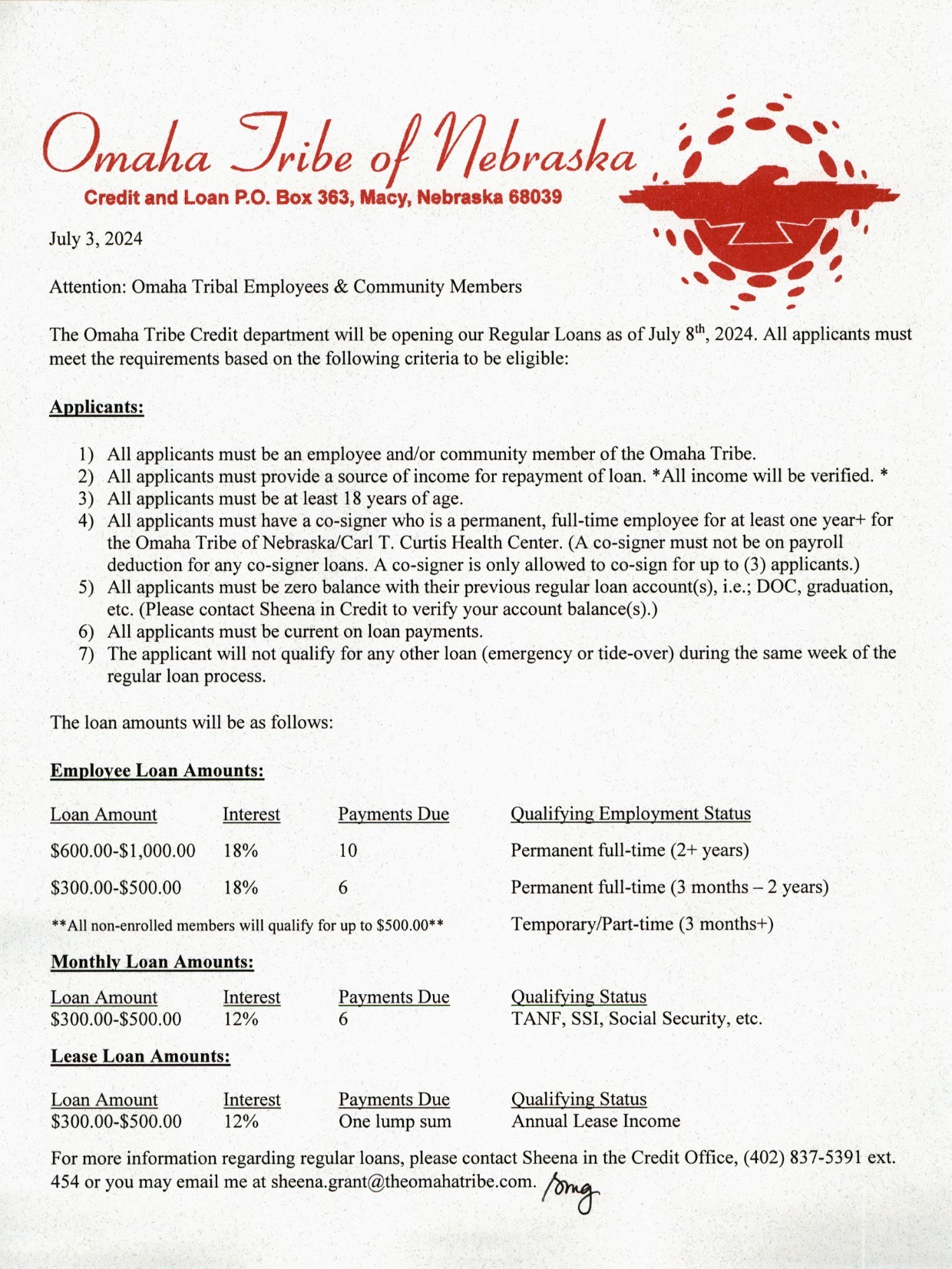
At their core, tribal loans are short-term, high-interest installment loans offered by lending entities owned and operated by Native American tribal governments. The defining characteristic of these lenders is their claim to sovereign immunity, a legal principle that asserts their right to operate independently of state laws, including those governing interest rate caps or licensing requirements. This means that a tribal lender, even if operating online and serving residents across the United States, asserts that it is not subject to the usury laws of states like Nebraska.
Unlike traditional payday loans, which typically require full repayment on the borrower’s next payday, tribal loans are often structured as installment loans, allowing borrowers to repay the debt over several weeks or months. However, the interest rates, often expressed as Annual Percentage Rates (APR), can be astronomically high, frequently ranging from 200% to over 700%, and sometimes even higher.
The Nebraska Context: Why Tribal Loans Emerge
Nebraska has specific state regulations regarding consumer lending, particularly concerning payday loans and small-dollar credit. The state has implemented measures designed to protect consumers from predatory lending practices, including caps on interest rates and fees for certain types of loans. For instance, Nebraska’s ballot initiative in 2020 significantly capped payday loan interest rates at 36%, a move intended to curb the cycle of debt often associated with such products.
While these regulations offer valuable protection for Nebraskans utilizing state-licensed lenders, they also inadvertently create a gap for individuals who may not qualify for traditional loans or who require funds exceeding the state-imposed limits. It is into this gap that online tribal lenders often step, marketing their services as a quick and easy solution, unburdened by state-level restrictions. For a Nebraska resident with a poor credit score or limited access to conventional credit, the promise of fast cash without a stringent credit check can be incredibly appealing.
How Tribal Loans Work for Nebraska Borrowers
The process of obtaining a tribal loan as a Nebraska resident is almost entirely online:
- Online Application: Borrowers typically fill out a short application form on the lender’s website, providing personal information, employment details, and banking information.
- Minimal Credit Check: While some tribal lenders might perform a soft credit check that doesn’t impact a credit score, many rely on alternative data points or simply disregard traditional credit scores, focusing instead on the borrower’s ability to repay based on income.
- Quick Approval and Funding: If approved, funds can often be deposited into the borrower’s bank account within one business day, sometimes even within hours.
- Installment Repayment: The loan is repaid in a series of fixed installments, typically bi-weekly or monthly, over a period agreed upon by the lender and borrower. Payments are usually automatically debited from the borrower’s bank account.

Advantages of Tribal Loans for Nebraska Residents
Despite their significant drawbacks, tribal loans do offer a few potential advantages, particularly for a specific demographic in Nebraska:
- Accessibility for Bad Credit/No Credit: This is arguably the most significant advantage. For Nebraskans with poor credit histories, limited credit scores, or no credit at all, tribal lenders often represent one of the few avenues to access funds quickly. Traditional banks and credit unions are unlikely to approve such applicants.
- Speed and Convenience: The online application process is streamlined, and approval and funding are typically very fast. This can be crucial for individuals facing immediate financial emergencies, such as unexpected medical bills, car repairs, or utility shut-off notices. The ability to apply from anywhere in Nebraska, 24/7, without needing to visit a physical storefront, adds to the convenience.
- Alternative When Other Options Fail: When all other traditional and state-regulated lending options have been exhausted, tribal loans can appear as a last resort. For some, the alternative might be even more dire, such as defaulting on critical bills or incurring even higher fees from other sources.
- No Physical Location Required: For residents in rural parts of Nebraska where access to banks or credit unions might be limited, the online nature of tribal loans offers a practical solution for obtaining funds without travel.
Disadvantages of Tribal Loans for Nebraska Residents
The disadvantages of tribal loans are substantial and far outweigh their potential benefits for most borrowers, especially given the protections Nebraska has tried to put in place:
- Exorbitant Interest Rates (APR): This is the most critical drawback. Tribal loans carry APRs that can be hundreds, even thousands, of percent higher than conventional loans. While they are often structured as installment loans, the sheer amount of interest accumulated means borrowers can end up paying back several times the original principal amount, effectively trapping them in a cycle of debt. For example, a $500 loan with a 400% APR repaid over six months could easily cost over $1,000 in total.
- Lack of State Regulation and Consumer Protection: Because tribal lenders claim sovereign immunity, they operate outside Nebraska’s state usury laws and consumer protection regulations. This means that if a Nebraska borrower has a dispute with a tribal lender regarding unfair practices, excessive fees, or aggressive collection tactics, their recourse through state legal channels is severely limited.
- Risk of Debt Cycle: The high cost of these loans makes it incredibly difficult for borrowers to repay them on time and in full without needing to borrow again. Many borrowers find themselves taking out additional loans to cover the payments of previous ones, leading to a spiraling debt that can be incredibly hard to escape.
- Automatic Withdrawals and Bank Fees: Tribal lenders often require access to the borrower’s bank account for automatic repayment debits. If there are insufficient funds in the account on the payment due date, the borrower can incur overdraft fees from their bank, in addition to late fees from the lender, further increasing the cost and financial strain.
- Ethical Concerns and Predatory Lending: Critics argue that the business model of many tribal lenders is predatory, targeting financially vulnerable individuals who have limited alternatives. While some tribal lending enterprises are legitimate arms of tribal governments, others have been accused of being "rent-a-tribe" schemes, where non-tribal entities partner with tribes to exploit sovereign immunity for profit, with minimal benefit to the tribal community itself.
- Limited Recourse for Disputes: While the federal Consumer Financial Protection Bureau (CFPB) or the Federal Trade Commission (FTC) may offer some oversight, their ability to intervene in disputes with genuinely tribal-owned lenders can be complex due to the sovereign immunity claim. Borrowers may be directed to tribal courts, which can be an intimidating and impractical option for an out-of-state resident.
- Impact on Credit Score (Potentially Negative): While initial credit checks might be soft, failure to repay a tribal loan can eventually lead to collections and reporting to credit bureaus, severely damaging a borrower’s credit score and making it even harder to access responsible credit in the future.
Regulatory Landscape and Borrower Protection in Nebraska
It’s crucial for Nebraska residents to understand that when they engage with a tribal lender, they are stepping outside the protective umbrella of Nebraska’s state laws. The 36% APR cap on payday loans, for example, does not apply to tribal lenders. This absence of state oversight means that the terms and conditions, fees, and collection practices of tribal lenders are not subject to the same scrutiny or enforcement mechanisms that protect borrowers from state-licensed lenders.
While some tribal lenders are members of the Online Lenders Alliance (OLA), an industry trade group that sets certain best practices, membership alone does not grant state regulatory authority or ensure the same level of consumer protection as state law. For a Nebraska resident, this means exercising extreme caution and understanding that their legal options in case of a problem are significantly diminished.
Alternatives to Tribal Loans for Nebraska Residents
Given the severe risks associated with tribal loans, Nebraska residents facing financial hardship should exhaust all other alternatives before considering them:
- Credit Unions: Many credit unions offer "Payday Alternative Loans" (PALs) with significantly lower interest rates and more flexible repayment terms than tribal or traditional payday loans. Membership requirements are often minimal.
- Community Assistance Programs: Local charities, non-profits, and government agencies in Nebraska offer various forms of financial assistance for rent, utilities, food, and other essential needs.
- Employer Advances: Some employers offer salary advances or flexible payment arrangements in emergencies.
- Friends and Family: While not always an option, borrowing from trusted individuals can provide interest-free relief.
- Debt Consolidation/Credit Counseling: Non-profit credit counseling agencies can help manage existing debt, negotiate with creditors, and create a budget.
- Secured Loans: If you have collateral (e.g., a car title), a secured loan might offer better terms than an unsecured tribal loan, though it carries the risk of losing your asset.
- Negotiate with Creditors: If you’re struggling to pay bills, contact your creditors (utility companies, landlords, etc.) directly to request extensions, payment plans, or hardship arrangements. Many are willing to work with you.
Who Should (and Shouldn’t) Consider Tribal Loans in Nebraska?
Who SHOULD NOT consider tribal loans:
- Anyone seeking a long-term financial solution or to consolidate existing debt.
- Individuals who do not have a clear, immediate plan for full repayment.
- Those who are uncomfortable with extremely high-interest rates and the risk of a debt trap.
- Anyone who values state-level consumer protections and clear legal recourse.
Who MIGHT (with extreme caution) consider tribal loans as an absolute last resort:
- Individuals facing an immediate, unavoidable financial emergency where all other, more responsible options have been exhausted and failure to obtain funds would result in a worse outcome (e.g., job loss, homelessness).
- Those who are absolutely certain they can repay the loan in full, including all fees and interest, by the next payment cycle without jeopardizing other essential expenses.
- Borrowers who have thoroughly read and understood every single term of the loan agreement, including the APR, repayment schedule, and all fees.
Recommendation
For Nebraska residents, the recommendation regarding tribal loans is overwhelmingly to AVOID THEM WHENEVER POSSIBLE.
While they offer quick access to funds for individuals with poor credit, the exorbitant interest rates and the absence of state-level consumer protections make them an extremely risky financial product. The potential for falling into a long-term debt cycle, where you end up paying back many times the original amount borrowed, is a severe threat to financial well-being.
Before even contemplating a tribal loan, Nebraska residents should diligently explore every alternative. Reach out to credit unions, local assistance programs, family, and even existing creditors. Understand that the immediate relief a tribal loan offers is almost always overshadowed by its long-term financial burden.
If, and only if, all other avenues have been exhausted, and you face an undeniable, urgent emergency, proceed with the utmost caution. Read every line of the loan agreement, understand the true cost of the loan (the total amount you will repay), and have a rock-solid plan for repayment. Be aware that you are operating outside the protective framework of Nebraska state law, and your recourse in case of a problem will be limited.
In conclusion, while tribal loans present themselves as a solution for those with limited options, for the vast majority of Nebraskans, they represent a high-cost, high-risk proposition that should be approached with extreme skepticism and only considered as a truly last resort after all safer alternatives have been thoroughly exhausted. Prioritizing financial health and seeking out more responsible lending practices is always the wiser path.


